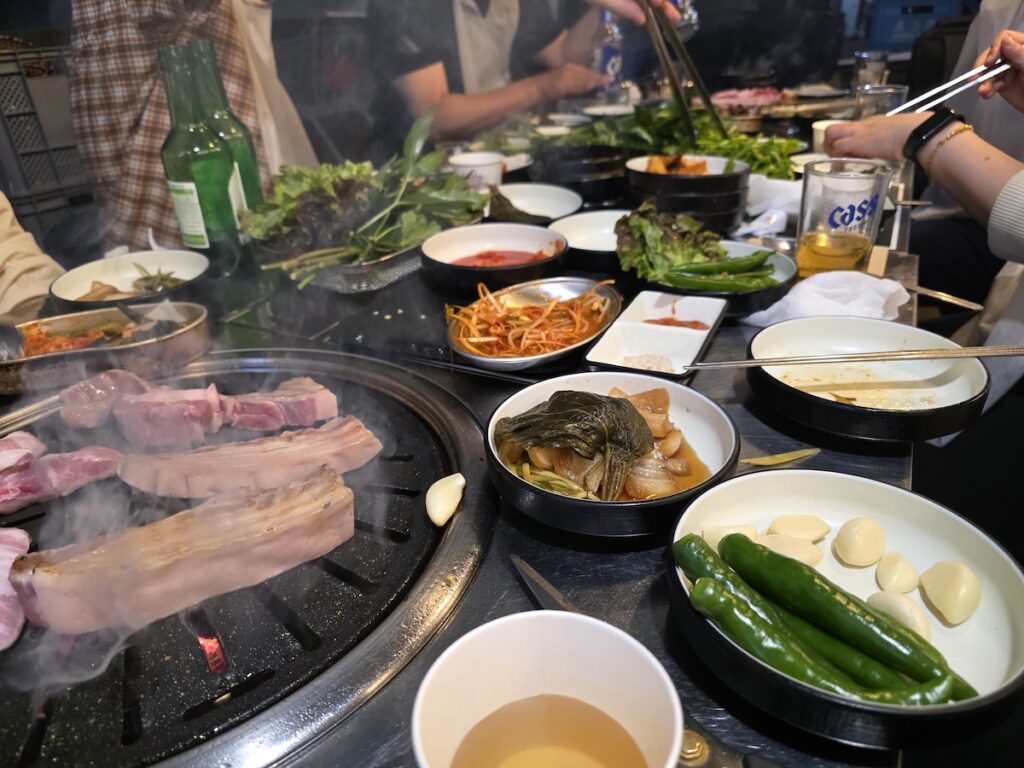
Walking into a bustling Samgyeopsal (pork belly) restaurant in Seoul is a sensory overload. The air is thick with the savory, smoky aroma of pork belly searing on active charcoal. The sound is a symphony of sizzling meat, clinking glasses of soju, and boisterous conversation. For many expats and tourists, this is the quintessential Seoul dining experience.
However, beneath the seemingly casual atmosphere lies a strict, unspoken ritual that often intimidates first-time visitors. A common mistake foreigners make is sitting back and waiting to be served, not realizing that Korean BBQ is inherently a participatory, team-oriented meal. To truly eat like a local, you must understand the mandatory division of labor that occurs around the grill. It’s not just dinner; it’s a shared performance where everyone has a specific role to play.
Quick Answer: What is the most important rule of Korean BBQ etiquette?
The most critical aspect of Korean BBQ etiquette is active participation. You are not just a customer; you are a diner-participant. There is an unspoken expectation of shared labor. The meal functions through a division of labor, where specific diners take on the roles of the “Grill Master” (controlling the tongs and scissors) and the “Self-Service Scout” (managing the banchan and supplies). Failure to participate—specifically, sitting and waiting for others to cook and get supplies—is considered rude or lazy. Mastering these roles ensures a smoother, more enjoyable, and culturally respectful meal.
The Ritual of Collective Dining
Korean culture deeply values the collective over the individual, and nowhere is this more evident than at the dinner table. A Korean BBQ meal is the antithesis of the Western “individual plate” dining style. In Seoul, the centerpiece grill represents a shared responsibility. The reason these roles exist is efficiency and respect. In a busy, high-energy environment, a single waiter cannot manage the perfect grilling of multiple tables simultaneously. By distributing the tasks among the diners, the meal moves smoothly, and the food is enjoyed at its peak freshness. For expats, embracing this division of labor is the key to transforming from an outsider to a participant in a vital urban ritual.
Role 1: The Grill Master (집게와 가위의 지배자)
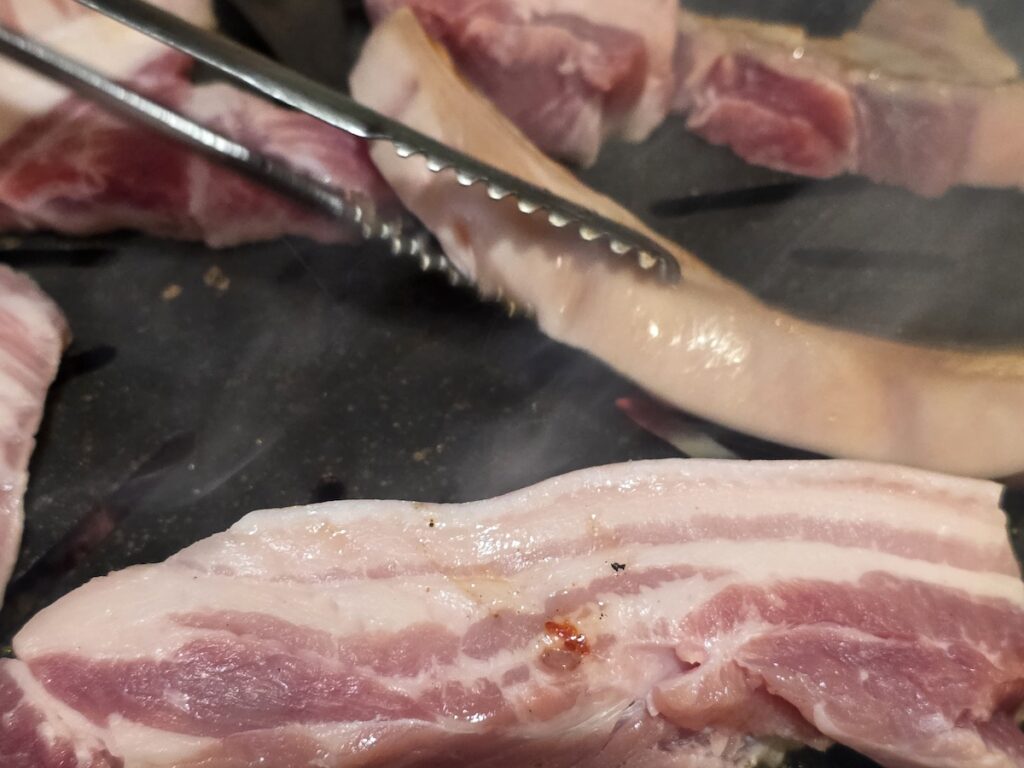
This is the most visible and respected role at the table. In every group of locals, one person almost immediately seizes the jipge (tongs) and gawi (scissors). This is the “Grill Master.”
The Unlikely Tools: Scissors and Tongs
In Western dining, scissors are rarely seen at the table. In Korea, they are indispensable. The combination of tongs and heavy-duty kitchen scissors allows the Grill Master to manipulate raw or partially cooked meat precisely. If you are the Grill Master, your tools define your status. This role is often taken by the host, the senior member, or the person recognized by the group as the most skilled griller. If you are a guest, especially one junior in age or status, you should never attempt to grill unless explicitly asked; doing so can be perceived as questioning the Grill Master’s competence.
Mastering the Sizzle: Technique is Key
The Grill Master’s duty extends far beyond just flipping the meat. It involves precise heat management, timing, and aesthetics.
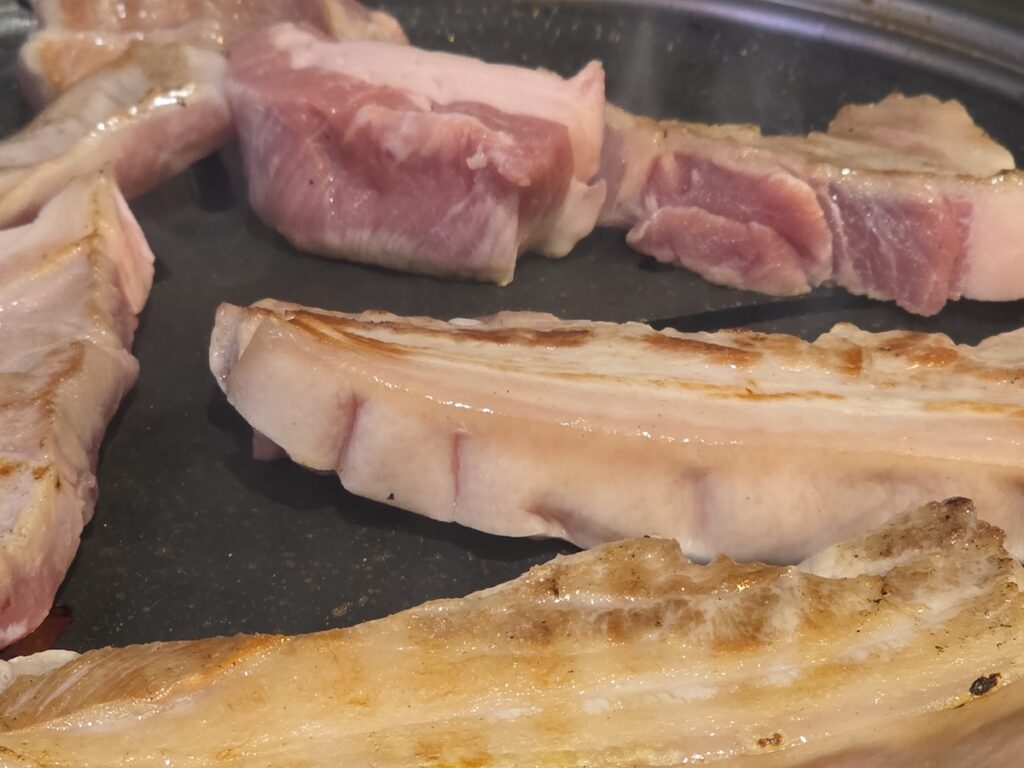
- The First Sear: When raw Samgyeopsal hits a properly heated grill, it should immediately make a loud sizzling sound. A common rookie mistake is overcrowding the grill or putting meat on a cold surface.
- The Art of the Flip: There is a cultural myth (and some culinary truth) that pork should only be flipped once. While modern techniques vary, the Grill Master strives for efficiency. You sear one side until golden brown, then flip to the other.
- The Precision Cut: This is where the scissors come into play. Once the meat is partially cooked and firmer, the Grill Master cuts the thick strips into uniform, bite-sized pieces. These pieces must be small enough to fit easily into a 쌈 (ssam) but large enough to retain juice.
- Heat Zones: The center of the grill is for searing. Once a piece is cooked, the Grill Master moves it to the cooler outer perimeter of the grill (or onto a small provided rack) so it stays warm without burning.
- The Auxiliary Grilling: The Grill Master also manages the grilling of auxiliary items like garlic cloves and, crucially, kimchi. Grilling kimchi in the pooling pork fat creates a savory contrast that is essential to the local taste.
Role 2: The Self-Service Scout (셀프서비스 정찰병)
While the Grill Master manages the centerpiece, another diner (often the junior member or the one seated closest to the ‘Self Corner’) must become the “Self-Service Scout.”
The Rise of the “Self Corner”
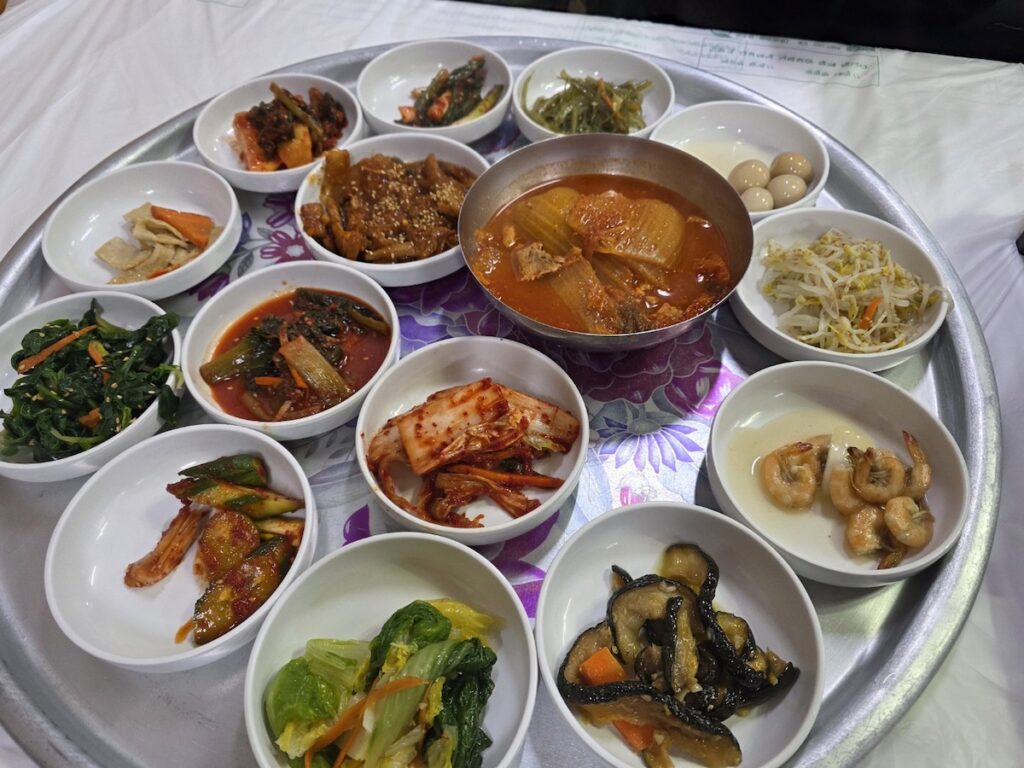
Modern Korean restaurants, particularly busy Samgyeopsal spots, have largely moved to a “Self-Service” (셀프) model for side dishes (반찬) and supplies. While your initial table is set for you, refills are your responsibility. A foreigner waiting for a waiter to bring more lettuce will be waiting forever.
Inventory Management
The Self-Service Scout is the logistics manager of the table. Their duties include monitoring and replenishing the essential supplies:
- Lettuce and Perilla Leaves (상추 and 깻잎): The primary wrapping vehicles. The perilla leaf, with its slightly minty, herbaceous flavor, is essential for a true local ssam.
- Garlic and Ssamjang (마늘 and 쌈장): Raw or grilled garlic and the thick, fermented soybean and chili paste are the core flavor enhancers.
- Kimchi and Pa-jeori (김치 and 파절이): Green onion salad (파절이) provides a sharp, spicy contrast to the fatty pork.
- Dips: Replenishing the individual 기름장 (sesame oil and salt dip).
Auxiliary Duties: Hierarchy and Ecology
The Scout also handles minor but crucial tasks:
- Setting Utensils: It is a mark of polite dining to set out chopsticks and spoons for the entire table. A common local practice is to place these on a single paper napkin/tissue to keep them clean.
- エコ (Eco) Consciousness: A major Korean cultural norm is avoiding food waste. If you use the self-service bar, bring only what you will eat. Leaving significant amounts of food in the banchan bowls is seen as environmentally irresponsible and culturally insensitive (some restaurants even post signs about small fines for excessive waste).
- Hierarchy: In hierarchical social or business dining, the youngest or lowest-status member automatically becomes the Self-Service Scout as a sign of respect and service to the group. If you are an expat diner among Korean friends or colleagues, volunteering for this role is an excellent way to show you understand and respect K-Pet culture.
The Shared Art: Crafting the Perfect “Ssam”
Once the Grill Master has distributed the perfectly cooked meat and the Self-Service Scout has ensured the supplies are stocked, the final step is a shared experience: building the 쌈 (ssam).
This is not a chaotic process; there is a local preference for layering. A standard local ssam looks something like this:
- Base: Start with a large lettuce leaf.
- Herb Layer: Place a perilla leaf (깻잎) on top.
- Flavor Base: Add a dab of 쌈장 (ssamjang) and 기름장 (sesame oil and salt).
- Flavor Contrast: Add a piece of 파절이 (green onion salad) and/or grilled kimchi.
- Pork: Place the perfect piece of pork (freshly off the grill).
- The Kick: Add a clove of (often grilled) garlic.
The Mandatory Rule: The One-Bite Ssam
This is perhaps the most unique aspect of Korean BBQ etiquette. Once you have built your masterpiece, you must consume it in one single bite.
Biting into a ssam—letting juices spill and structure fail—is considered sloppy and bad manners. You might feel awkward stuffing your mouth, but Koreans view the “one-bite ssam” as the correct way to experience all the flavors and textures simultaneously. This action is also playfully linked to the concept of swallowing good fortune.
The “Finishers”: K-Dessert (k-후식)
A mistake foreigners make is finishing the meat and then paying the bill. A Samgyeopsal meal is not over until the “K-Dessert” is served. These are additional savory dishes ordered after the meat to provide a refreshing or filling finale.
볶음밥 (Fried Rice) – The Mandatory Finale
If you have used a flat-top grill, ordering fried rice (볶음밥) is not optional. The server will come to the table and use the remaining fat, meat bits, and grilled kimchi to create a crispy, savory masterpiece right in front of you. It is the ultimate shared finale.
냉면 (Cold Noodles) – The Contrast
If the grill was charcoal-based or you prefer a refreshing finish, Cold Noodles (냉면) are the choice. The ice-cold, chewy buckwheat noodles in a tangy broth provide a perfect temperature and texture contrast to the hot, fatty pork. Many locals will save a last piece of pork specifically to wrap around the cold noodles for the final bite.
Practical Tactics for the Urban Diner
To make your urban Samgyeopsal experience effortless, remember these pro-tips:
- No Tipping: South Korea is a non-tipping culture. The service is included in the price, and your participation in the ritual is expected.
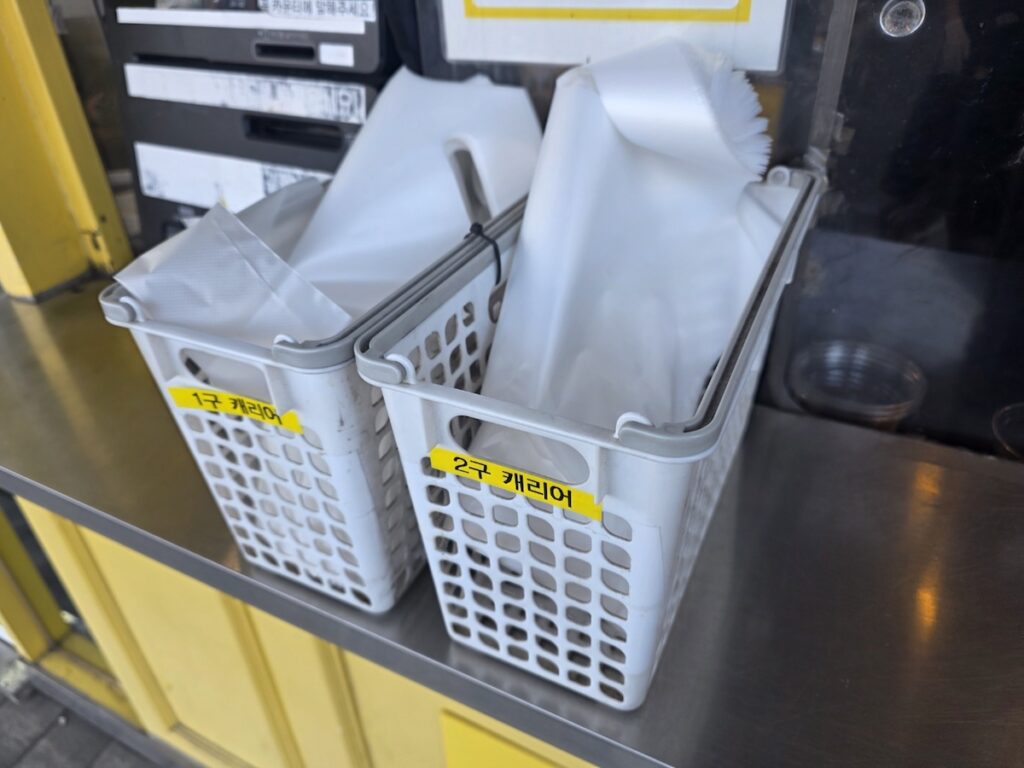
- Managing the Smell: All that charcoal and sizzling pork belly creates a potent aroma. Most busy restaurants will provide large plastic bags (often located under your seat or hanging near the entrance) to store your coat and bags so they don’t smell like BBQ for days.
- Hierarchical Awareness: If you are dining with Korean friends, colleagues, or clients, remain aware of hierarchy. If you are the oldest, you might be the host (and expected to grill); if you are the youngest, you must be the Self-Service Scout.
Conclusion: Embracing the Collective Feast
Understanding the division of labor in Korean BBQ etiquette is not just about avoiding social gaffes; it is about accessing the heart of Seoul’s urban dining culture. When you pick up the scissors as the Grill Master or scout the banchan bar for perilla leaves, you are not just a customer—you are participating in a collective ritual of shared happiness. The effort you put into the meal makes the savory pork belly, the tangy kimchi, and the refreshing cold noodles taste even better.
A Samgyeopsal feast is a testament to the local belief that a shared journey makes the destination more rewarding. By embracing your role in this underground maze of sizzle and flavor, you cease to be a tourist and become, for a few hours, a true global citizen participating in the authentic heartbeat of Seoul. Welcome to the feast; the first flip is yours.