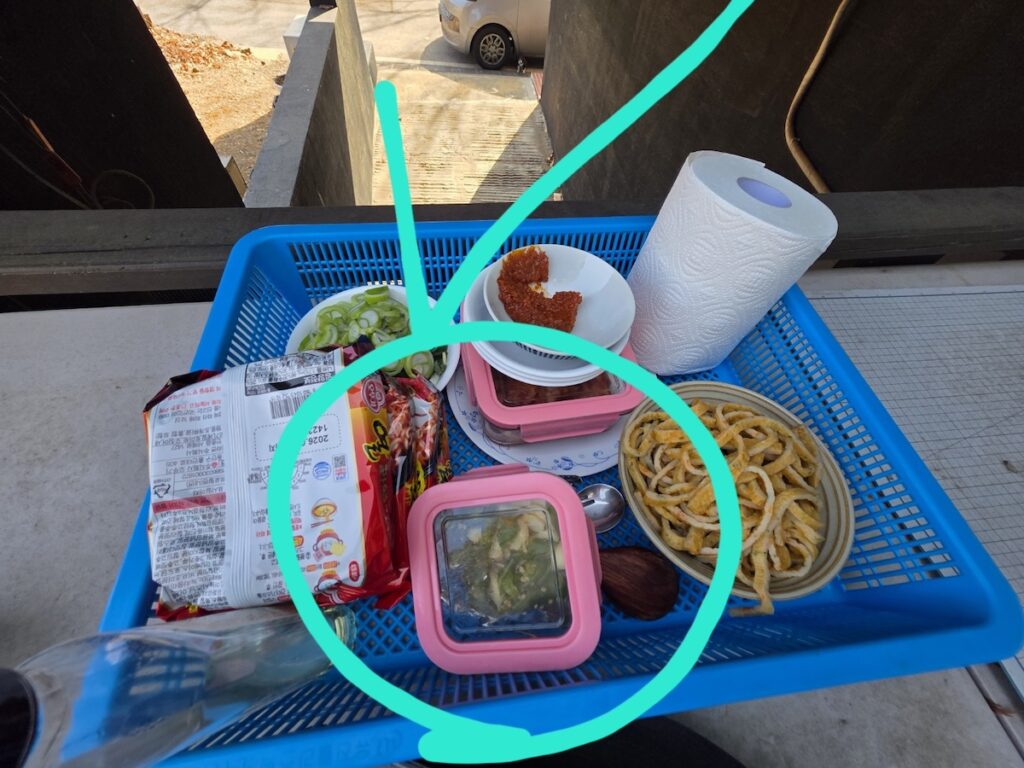
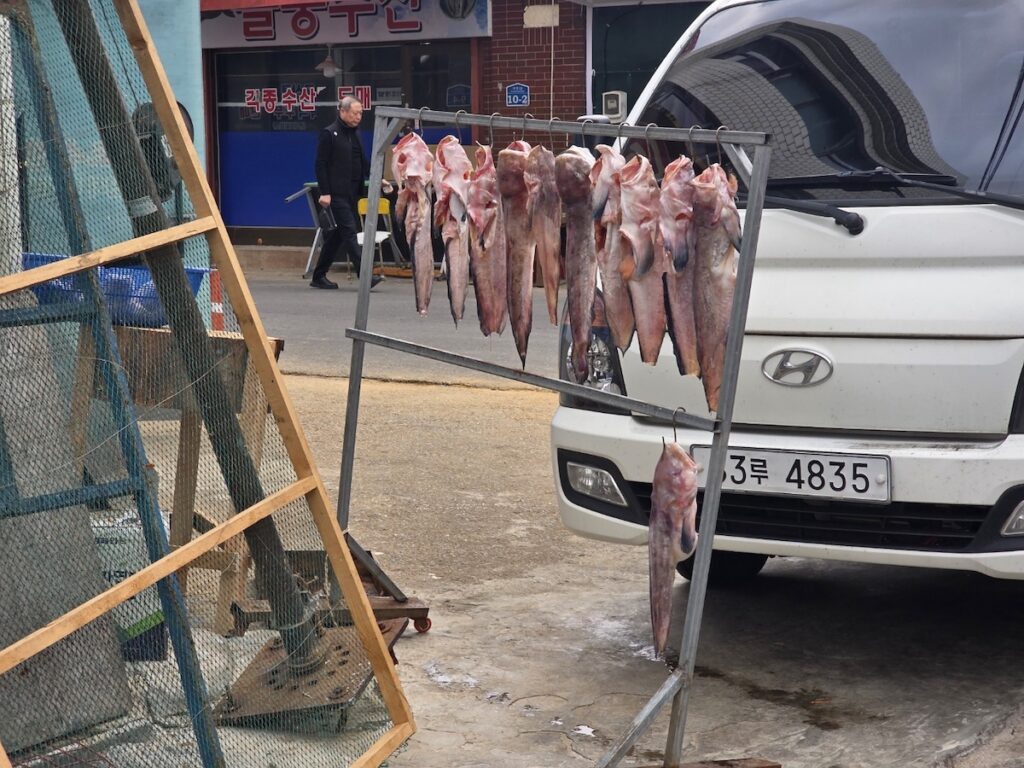
What to eat in Hongdae was the question I kept asking myself the first night I ended up there without a plan.
It wasn’t even a food trip. I had just gone to walk around after dinner, expecting music, street performances, maybe a drink. But somehow, like it often does in Seoul, the night turned into another meal.
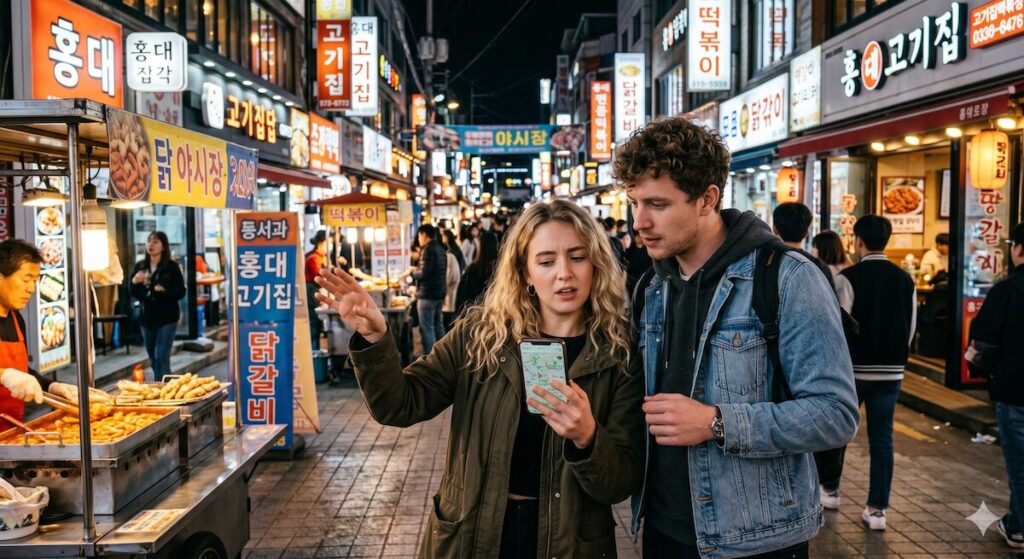
Hongdae at night feels less like a destination and more like a current you get pulled into. People are moving constantly. Some are heading somewhere specific. Others are just drifting, like I was, deciding what to eat based on what they see, smell, or hear from the street.
And that’s where it gets tricky.
Because in Hongdae, food isn’t organized. It’s scattered, layered, and sometimes misleading.
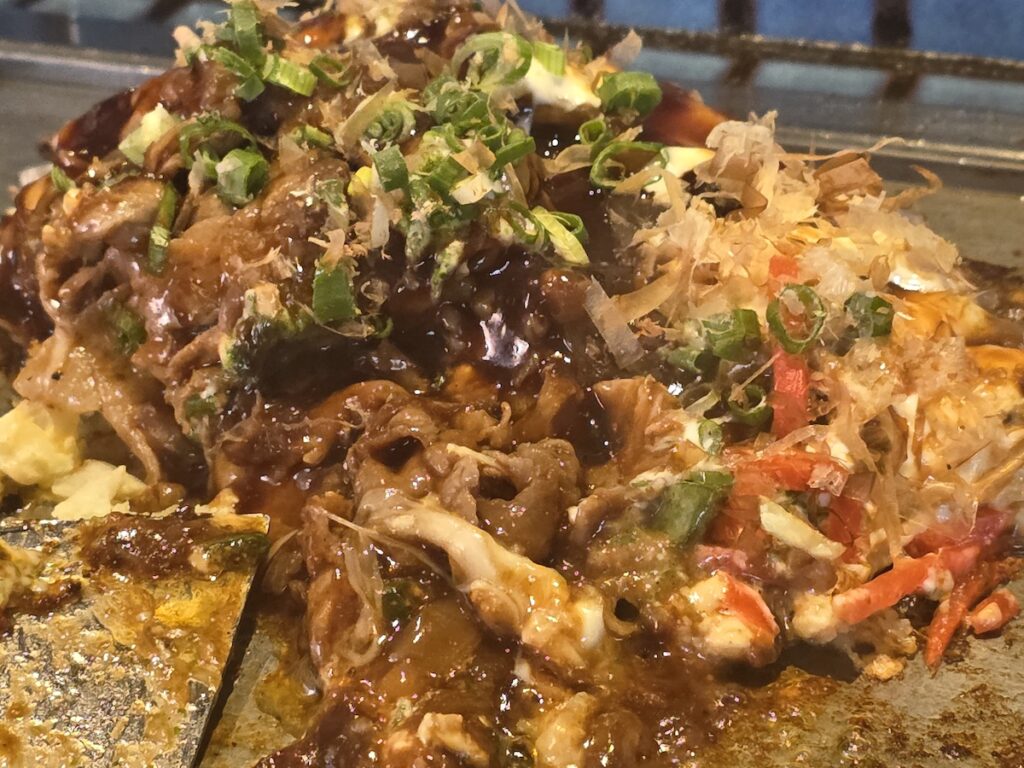
Quick Answer: What Should You Actually Eat in Hongdae?
If you’re wondering what to eat in Hongdae, the simplest answer is this: avoid the most obvious places and look for where people are actually staying, not just passing through. Small Korean restaurants slightly away from the main streets usually offer better value and a more relaxed experience. Expect to spend around $7–12 for casual meals and $15–25 for Korean BBQ. Street food exists, but it’s not as concentrated as in tourist-heavy areas like Myeongdong. The best approach is to walk, observe, and choose based on the crowd—not the sign.
The First Mistake Most People Make in Hongdae
Following the lights instead of the people
The main streets in Hongdae are loud, bright, and packed with options. It’s easy to assume that the busiest-looking places must be good.
That’s exactly what I thought at first.
Big menus in English. Photos of food. Staff calling people in.
But after standing outside one of those places for a few minutes, something felt off. People were going in—but they were mostly tourists, looking just as unsure as I was.
So I kept walking.
And within a few minutes, things started to look different.
One street makes a difference
Just one street away from the main flow, the atmosphere changes.
The noise drops slightly. The lights feel less aggressive. And the restaurants look… simpler.
No giant menus. No one trying to pull you in.
But inside, people are actually eating.
That’s usually a better sign.
What to Eat in Hongdae (That Actually Works)
Korean BBQ, but not where you expect
You’ll see Korean BBQ everywhere in Hongdae. Some places look modern and polished, others more traditional.
The instinct is to choose the most visible one.
But the better experience often comes from places that are slightly hidden—basement levels, second floors, or side streets.
The setup is the same:
- Grill at the table
- Lettuce wraps
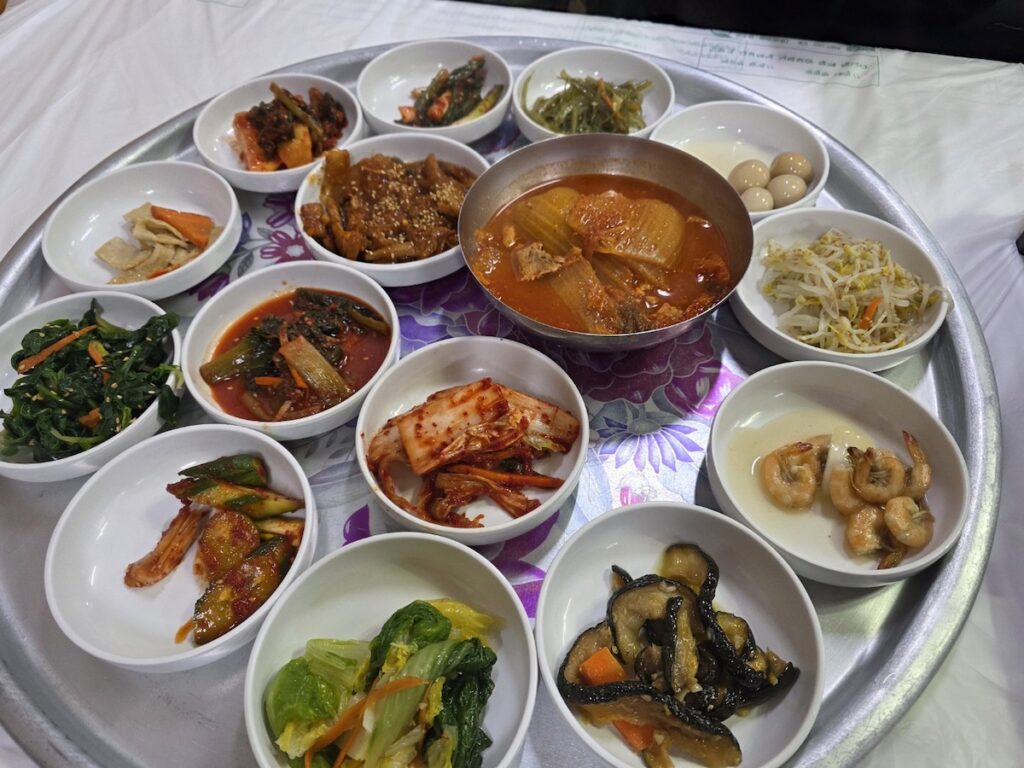
- Side dishes you don’t have to think too much about
What changes is the atmosphere.
In quieter places, people take their time. Conversations last longer. The meal feels less rushed.
Casual meals that don’t try too hard
Some of the most reliable meals in Hongdae are the simplest ones.
Small restaurants serving:
- Rice with a few side dishes
- Stews that come out still boiling
- Noodles you don’t need to overthink
These places don’t advertise themselves as “must-visit.”
They just exist.
And that’s often enough.
Street food that comes and goes
Unlike areas built around food stalls, Hongdae’s street food feels temporary.
You’ll find it—but not always where you expect.
A few stands near busy corners. A vendor selling something fried or sweet. Maybe a line forming around one specific item.
But it’s not the kind of place where you build a full meal from street food alone.
It’s more like something you add between places.
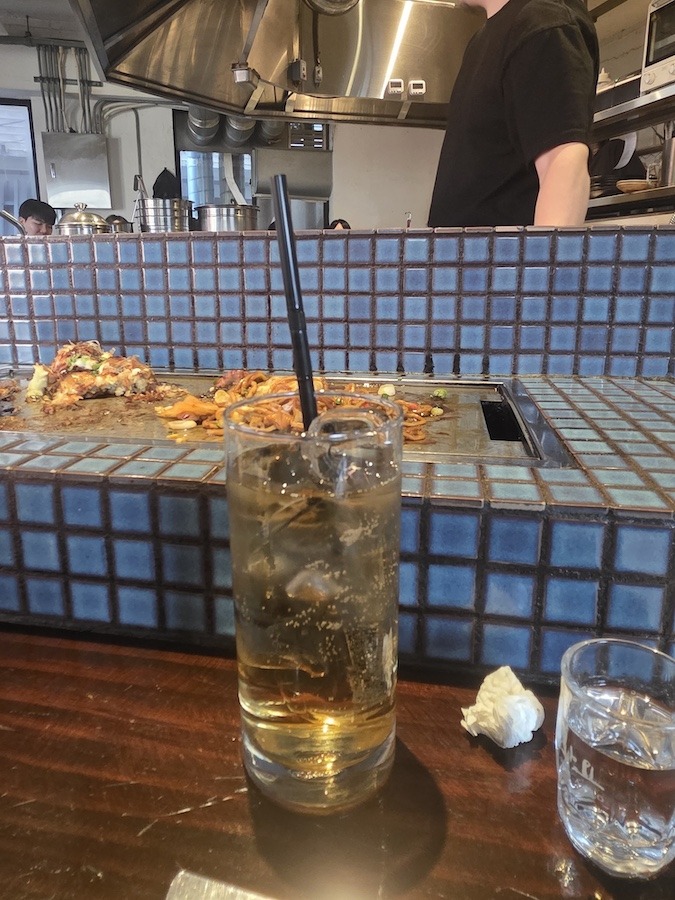
What Tourists Expect vs What Actually Happens
| Expectation | Reality in Hongdae |
|---|---|
| Food is easy to choose | Too many options, hard to decide |
| Busy places mean good food | Busy often means tourist-heavy |
| Street food everywhere | Scattered and inconsistent |
| One meal per location | People move between places |
| Clear “best spots” | Experience depends on timing and location |
This gap between expectation and reality is what makes Hongdae interesting—but also confusing at first.
Timing Changes Everything
Late night is not a problem
In many cities, food options shrink late at night.
In Hongdae, they don’t.
Even past 10 or 11 PM, restaurants stay open. People are still sitting down for full meals, not just snacks.
This changes how you plan your evening.
You don’t need to rush dinner. You can walk first, eat later.
The crowd shifts over time
Early evening feels different from late night.
At first, you’ll see students and small groups eating dinner.
Later, the energy shifts. More people, louder streets, more movement.
Food becomes part of the night rather than the focus.
How to Read a Restaurant Without a Menu
Look inside, not outside
Menus don’t always tell you much—especially if you’re not familiar with Korean dishes.
What helps more is looking at:
- How long people stay
- Whether tables are turning quickly
- The mix of locals and visitors
If people are sitting comfortably and not rushing, that’s usually a good sign.
Silence is sometimes better
Places without loud music or aggressive marketing often feel more stable.
They’re not trying to catch attention.
They don’t need to.
A Small Detail That Changes the Experience
One thing I didn’t expect in Hongdae was how often people don’t commit to just one place.
They eat something small, leave, walk, and then eat again somewhere else.
It’s not structured like a traditional dinner.
It’s more flexible.
And once you notice that, it changes how you approach food.
You don’t need to get it right the first time.
Why Hongdae Feels Different from Other Areas
Compared to places like Myeongdong, Hongdae doesn’t feel built for food.
It feels built for people—and food follows that.
That means:
- Less predictable options
- More variation in quality
- More room for small discoveries
It’s not always efficient.
But it’s more real.
Final Thoughts: How Should You Approach Food in Hongdae?
What to eat in Hongdae isn’t really about finding a single perfect place.
It’s about understanding how the area works.
Walk a little longer than you think you need to. Don’t choose the first option. Pay attention to where people actually stay, not just where they stop.
And most importantly, don’t feel like you have to get it right immediately.
In Hongdae, the experience builds as you move.
And sometimes, the second or third choice ends up being the one you remember.