“Have you ever seen someone eating a thorny tree branch for lunch? In Korea, this is the ultimate Unique Korean Food Challenge.
Every spring, Korean office lunchrooms are filled with a mysterious green shoot that looks like it belongs in a garden, not on a plate. But if you have it in your lunch box, you’re the star of the office! It’s actually Korean Fatsia Aralia. Why are people so obsessed with this Korea Food? Let’s find out.”
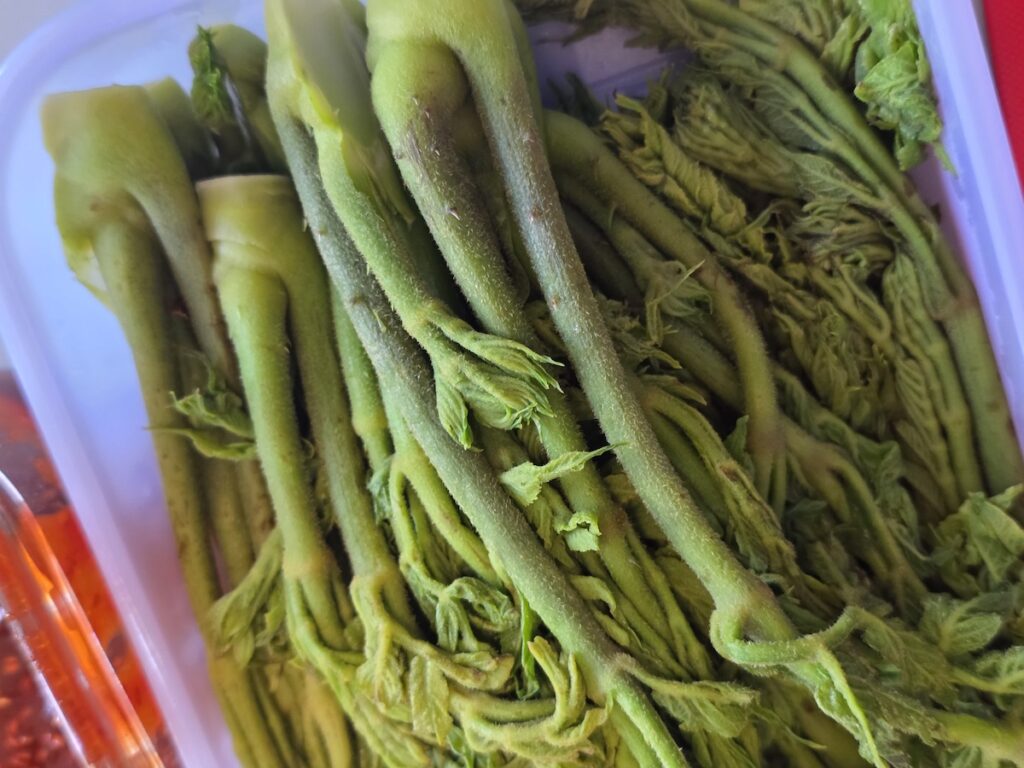
0. Unique Korean Food Challenge: Eating a Thorny Tree (Fatsia Aralia)
If you are walking through a Korean market in spring and see a bundle of thick, green shoots with tiny, soft thorns at the bottom, you’ve found Dureup.
In the West, this plant family is often purely ornamental, but in Korea, it is the most anticipated gourmet green of the year. It isn’t a leaf or a root; it’s the young, tender shoot that grows from the tip of a woody shrub. Think of it as the “Wild Asparagus of the Forest,” but with a much deeper, woodsy aroma and a sophisticated bitterness.
🌍 What Do They Call It in Your Country?
Because “Dureup” is a Korean name, you might know it by its scientific or regional names. Knowing these will help you identify it wherever you are:
| Language/Region | Common Name | Why It’s Called That |
| English (Global) | Fatsia Aralia / Angelic Tree | Named for its elegant, spreading leaves that look like “angel wings.” |
| English (US/UK) | Devil’s Walking Stick | A nickname given because of the sharp thorns on its mature woody stems. |
| Scientific Name | Aralia elata | The official botanical name used by foragers and scientists. |
| Japanese | Tara-no-ki (タラノキ) | Celebrated as a premium ingredient for spring tempura. |
| Chinese | Song-mu (楤木) | Long used in traditional herbology for its medicinal properties. |
🌿 Why Koreans Are Obsessed with It
For Koreans, Dureup is the symbol of “Bom-namul” (Spring Herbs). It represents the moment when the mountain wakes up from the frozen winter. Its flavor profile is a complex mix of earthy, nutty, and slightly bitter notes—a taste that “cleanses” the palate and the body after a long winter of eating heavy, preserved foods.
1. Why is Everyone in the Office Obsessed with this Korea Food?
Dureup (Fatsia Aralia) is more than just a seasonal vegetable; it is a medicinal tonic.
- Diabetes & Blood Sugar: It is highly recommended for those managing diabetes. The saponins in Dureup help stabilize blood sugar levels and improve lipid profiles.
- Energy Boost (Saponin): Much like the world-famous Korean Ginseng, Dureup is packed with Saponins. It is the perfect natural remedy for “Spring Fever”—that midday fatigue and lethargy that hits when the seasons change.
- Weight-Loss & Detox: It is incredibly low in calories but rich in high-quality fiber. It keeps you full while supporting a lean, clean diet.
📊 Nutritional Breakdown: Why Dureup is a “Superfood”
| Nutrient | Benefit for Your Body | Why It Matters |
| Saponin | Immunity & Energy Boost | The same active compound in Ginseng; fights fatigue. |
| Fiber | Gut Health & Satiety | Prevents constipation and keeps you full for longer. |
| Potassium | Sodium Detox | Helps flush out excess salt and reduces bloating. |
| Vitamin C | Skin Vitality | Powerful antioxidant for bright, healthy skin. |
| Calcium | Bone Strength | Essential mineral for maintaining bone density. |
🎯 Who Should Eat Dureup? (Recommended For)
- Individuals with Diabetes: The saponins and specific glycosides in Dureup are excellent for stabilizing blood sugar levels and improving insulin sensitivity.
- The Tired Office Worker: If you suffer from “Spring Fever” (lethargy and midday sleepiness), the energy-boosting properties of Dureup act as a natural caffeine-free tonic.
- Dedicated Vegans: For those looking for a “meaty” and sophisticated texture without animal products, Dureup offers a savory, complex flavor profile that elevates a plant-based diet.
- Weight-Loss Seekers: With its extremely low calorie count and high fiber content, it is the perfect “volume-eating” food that supports metabolic health.
- Those with High Blood Pressure: Its high potassium content helps balance electrolytes and supports cardiovascular health by managing sodium levels.
2. Food Challenge Secrets: How to Cook Fatsia Aralia in 2 Minutes
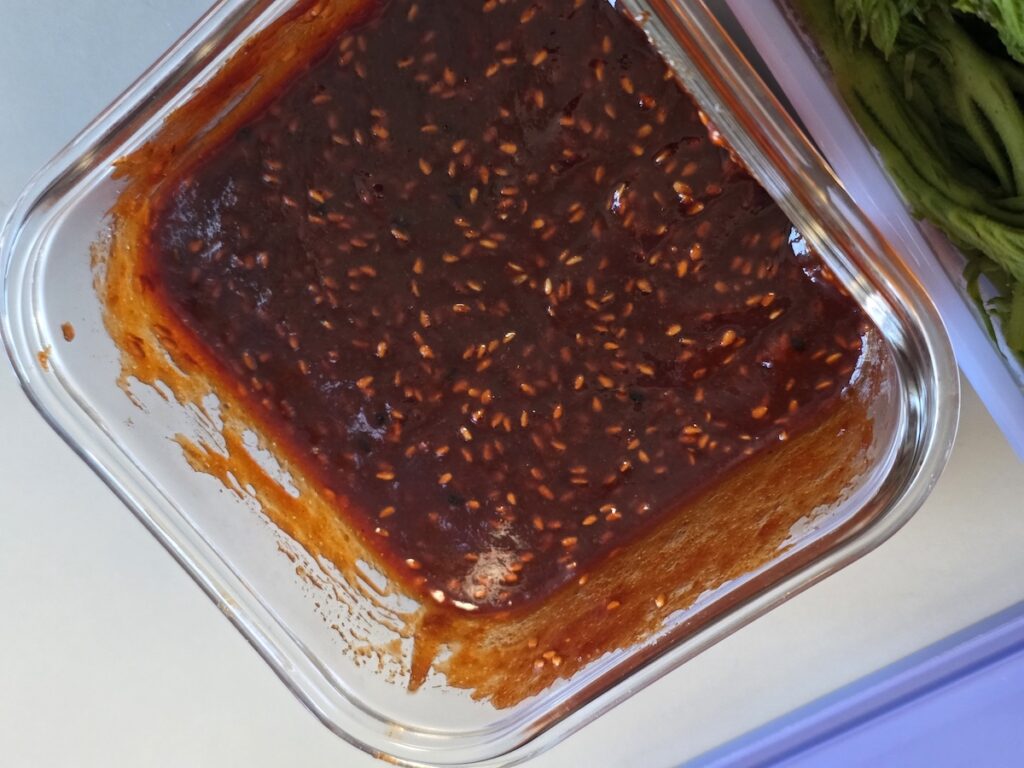
One of the best things about Dureup is how simple it is to prepare. You don’t need complex recipes to enjoy this gourmet green.
- Why You Must Blanch It: You should never eat Dureup completely raw. A quick 1 to 2-minute blanch in boiling water is essential. This process softens the tiny thorns and neutralizes mild toxins while locking in that beautiful, appetising green color.
- The Science of Chojang: Dureup is almost always paired with Chojang (sweet and sour chili paste). The sharp tanginess of the vinegar and the spicy kick of the red pepper paste perfectly cut through the slightly bitter, woodsy flavor of the herb.
- Where to Buy the Sauce: You don’t need to make it from scratch. Look for the bright red squeeze bottles in the sauce aisle of any Korean mart (E-mart, Lotte Mart, or local grocers).
📊 Understanding Chojang: The Perfect Dip for Dureup
| Component | Ingredients & Base | Role in Flavor |
| Gochujang | Fermented Red Chili Paste | Provides the spicy base and deep umami. |
| Vinegar | Rice or Apple Vinegar | Adds the sharp tanginess that opens the appetite. |
| Sugar/Syrup | Sugar, Honey, or Olidang | Balances the spice and acidity with sweetness. |
| Garlic/Sesame | Minced Garlic & Sesame Seeds | Adds aromatic depth and a nutty finish. |
✅ Pros and Cons of Chojang
The Advantages (Pros):
- Probiotic Synergy: Since it’s based on fermented Gochujang, it supports gut health.
- Metabolism Boost: The capsaicin from the chili and the acetic acid from the vinegar can help stimulate metabolism.
- Flavor Elevation: It makes even the most “bitter” medicinal herbs taste delicious, making it easier to consume large amounts of healthy greens.
The Considerations (Cons):
- Sodium Content: Like most fermented sauces, it is high in salt. Those with hypertension should use it in moderation.
- Hidden Sugars: Commercial versions often contain corn syrup. If you are on a strict weight-loss diet, it’s best to dip lightly rather than drench the vegetable.
3. When and Where to Find the “King”
- A Limited Edition Gift: Dureup is only available from late March to early May. If you miss this window, you have to wait an entire year to taste it fresh again.
- Traditional Market Magic: While big supermarkets carry them, the most flavorful, “wild-grown” Dureup is usually found at traditional markets (Sijang). Look for the local vendors selling small, fresh bundles.
📊 Where Does Dureup Grow? (Regional Guide)
| Region | Varieties & Characteristics | Growing Environment |
| South Korea | Cham-dureup & Ttang-dureup. Found nationwide, especially in Gangwon and Jeonnam provinces. | Sunny mountain slopes and well-drained forest edges. |
| Japan | Known as Taranoki. Widely enjoyed in Tempura (Deep-fried) style. | Similar to Korea, mainly in temperate mountain regions. |
| China | Grows in various northern and central provinces. Often used in traditional medicine. | Diverse terrains ranging from hills to deep mountain forests. |
| Eastern North America | Known as Devil’s Walking Stick (Aralia spinosa). Mostly used for landscaping. | Found from Pennsylvania down to Florida and Texas. |
| Eastern Russia | Found in the Sakhalin and Primorsky regions. | Cool, moist forest environments in the Far East. |
🌍 Global Perspective: From Garden Tree to Table
While Dureup is native to East Asia, its cousin, the Aralia spinosa, grows wild across the Eastern United States. In the West, it is rarely eaten and is instead appreciated for its unique, exotic appearance in gardens. However, for a savvy vegan traveler or a foraging enthusiast, knowing that this “mystery plant” is a culinary treasure in Korea changes everything. Whether it’s the wild mountains of Korea or a garden in the U.S., the Dureup family thrives in temperate climates with rich, forest-like soil.
4. The Health Benefits of this Unique Korean Food (Fatsia Aralia)
For vegans living in or visiting Korea, Dureup offers a “sophisticated” bitterness and a meaty, satisfying texture that standard salad greens simply cannot provide. It’s a guilt-free way to enjoy a premium, seasonal delicacy that supports liver health, clear skin, and overall well-being.
📊 Dureup Quick Summary
| Factor | Detail |
| Peak Season | April (Very Limited) |
| Cooking Method | Blanch for 1-2 mins in boiling water |
| Best Pairing | Chojang (Spicy & Sour Vinegar Paste) |
| Health Focus | Fatigue Recovery, Diabetes, Vegan Weight-loss |
5. Final Thoughts: Why You Must Try the Korea Food Challenge This Spring
Dureup is more than just a seasonal vegetable; it is a cultural phenomenon that encapsulates the Korean wisdom of “eating with the seasons.” For a few short weeks each year, this thorny plant reminds us to slow down, detox our bodies, and appreciate the intense vitality that nature offers.
Whether you are a vegan searching for a new gourmet experience, someone managing diabetes looking for a natural tonic, or a traveler wanting to eat like a local, Dureup is your ultimate spring companion. Its unique combination of woodsy aroma and the spicy-sweet kick of Chojang is a flavor you will never forget.
Next time you visit a Korean market in April, don’t just walk past those strange, thorny branches. Grab a bundle, blanch them for two minutes, and join the millions of Koreans celebrating the return of energy and health. Your body—and your palate—will thank you.