For many travelers, the climax of a Korean culinary trip is a table full of sizzling pork belly (Samgyeopsal) or marinated beef (Galbi). You eat until you are physically full, put down your chopsticks, and prepare to leave. However, this is exactly when your Korean host will ask the most confusing question: “What would you like for your meal?” In Korea, a meal after Korean BBQ is not just an option—it is a mandatory final ritual that completes the dining experience. To a Korean, meat is the “main event,” but it is not considered a “full meal” (Siksa) until grains or noodles have been served.
The Cultural Philosophy: Meat is for the Tongue, Rice is for the Stomach
The logic behind ordering a meal after Korean BBQ lies in the psychological satisfaction of “fullness.” While the protein and fats of the meat provide flavor and joy, Koreans believe that only carbohydrates (carbs) can truly ground the stomach and provide lasting energy. This is why you will see people who have just finished a kilogram of meat happily ordering a tin-box Dosirak or a bowl of steaming Nurungji. It is the “Grand Finale” that balances the greasiness of the meat with the comforting neutrality of grain.
The Retro Fun: The Shaken Nickel-Silver Lunchbox (Dosirak)
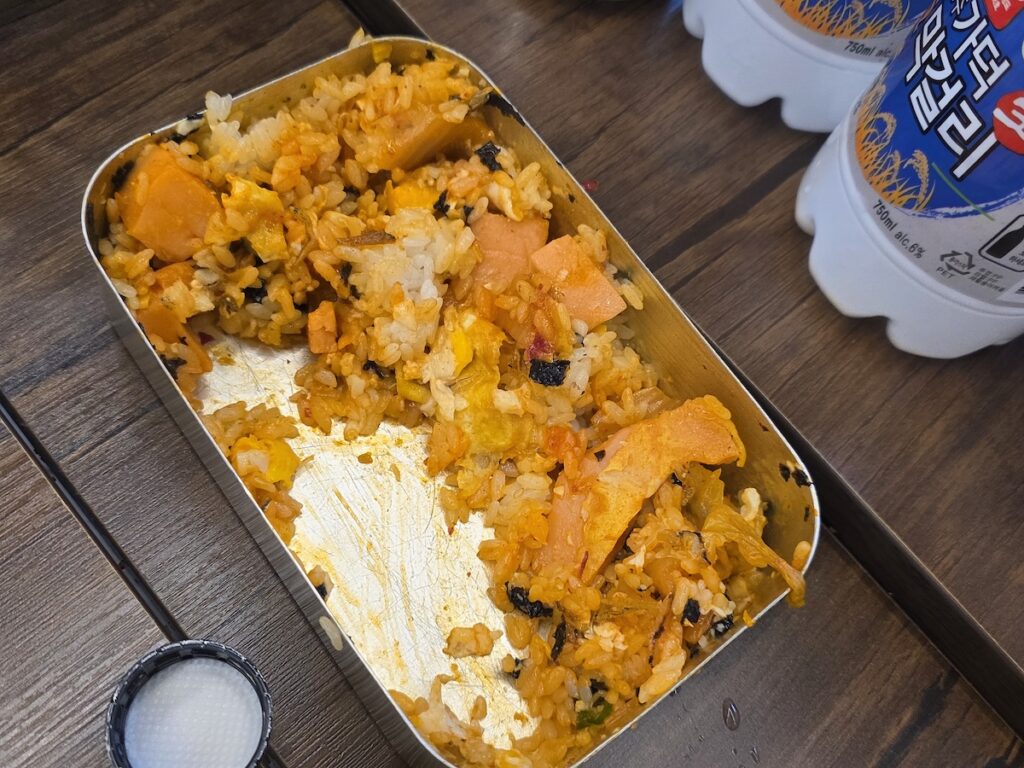
One of the most popular choices for a meal after Korean BBQ is the “Old-fashioned Dosirak.” These yellow nickel-silver (Yang-eun) boxes take Koreans back to the 1970s and 80s, an era when this was the standard lunch for students. Inside, you’ll find a nostalgic combination of simple yet flavorful ingredients: a bed of steamed white rice topped with stir-fried anchovies (Myeolchi-jorim), gochujang (red chili paste), and the iconic vintage pink sausage fried in egg batter. A fried egg usually crowns the mixture.
The magic, however, lies in the eating method. Instead of using a spoon to mix it gently, you must close the lid tightly and shake it violently (the legendary “Shake-it, Shake-it” ritual). Shaking the tin box perfectly emulsifies the gochujang with the rice and breaks down the egg and sausage into bite-sized pieces. This high-energy performance is a beloved K-BBQ tradition that turns a simple meal into a burst of spicy, salty, and savory flavors, providing a perfect contrast to the savory grilled meat.
🍱 The Ingredients of a Classic 70s-80s Korean Dosirak
| Ingredient | Role & Flavor Profile | Why it’s in the Box |
| Steamed White Rice | The neutral base that absorbs all flavors. | The essential energy source for Koreans. |
| Pink Sausage (Bunhong Soseiji) | Soft, nostalgic, and fried in egg batter. | A prized “luxury” side dish from the 70s and 80s. |
| Myeolchi-jorim (Anchovies) | Salty, sweet, and provides a crunchy texture. | Adds deep umami and essential calcium. |
| Stir-fried Kimchi | Sour and spicy; the soul of the lunchbox. | Balances the greasiness of the sausage and meat. |
| Gochujang (Chili Paste) | The spicy “glue” that binds everything. | Essential for creating a uniform, bold flavor when shaken. |
| Fried Egg | Rich and creamy texture. | Usually placed on top to be broken down during the “Shake.” |
| Gim (Dried Seaweed) | Savory and salty flakes. | Adds a final touch of ocean-inspired saltiness. |
The Digestive Hug: Nurungji and Sungnyung
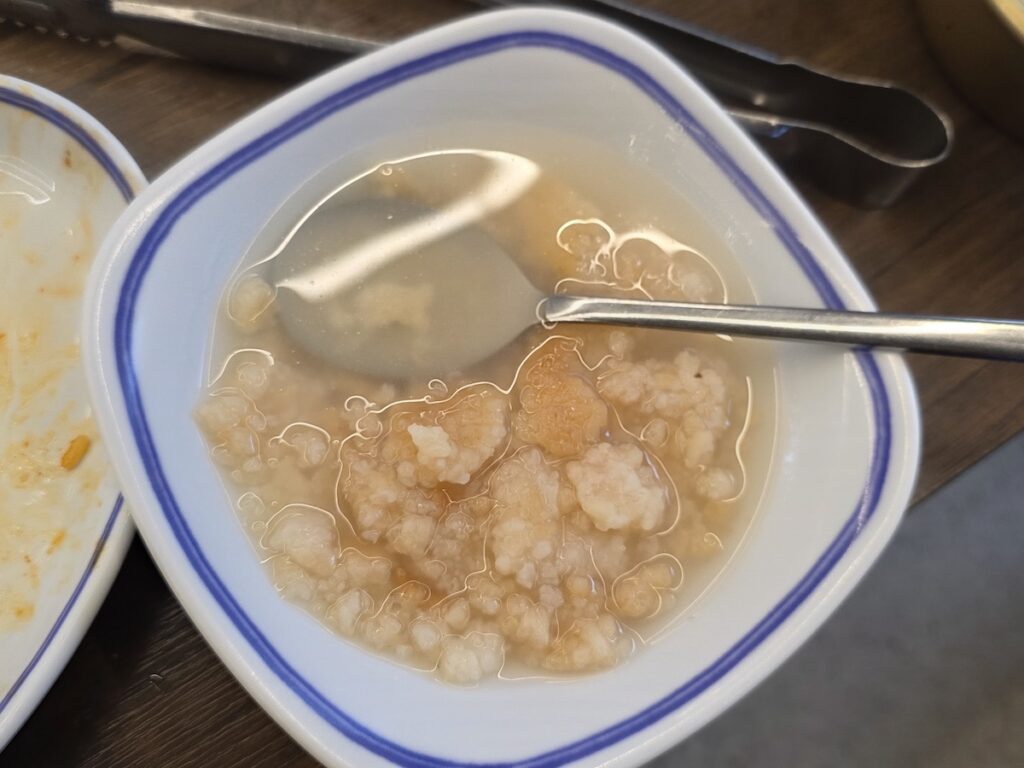
If you prefer a more soothing end to your meal, Nurungji (Scorched Rice) is the ultimate choice. After the intensity of the grill, a bowl of Nurungji—often served in its boiling water as Sungnyung—acts as a “digestive hug.” The warm, toasted rice water cleanses the palate and settles the stomach. For many Koreans, no matter how much meat they’ve eaten, the gentle, earthy taste of scorched rice is the only way to officially declare the dinner “finished.”
Navigating the Choices: What Should You Order?
When you are faced with the “Post-meat” menu, you generally have four legendary paths:
- The Classic: Doenjang-jjigae (Soybean Paste Stew) with a bowl of white rice.
- The Refresher: Naengmyeon (Cold Noodles) to chill the heat from the grill.
- The Retro: Shaken Dosirak for a nostalgic flavor explosion.
- The Healer: Warm Nurungji to soothe your digestive system.
Understanding the meal after Korean BBQ ritual is the key to dining like a true local. Next time you are at a K-BBQ spot, don’t say you’re full after the last piece of meat. Save a little room for the carbs—it’s the only way to truly experience the “Heart of Korea.”
The Anthropology of “Rice Power”: Why Koreans Are Obsessed with Carbs
To understand the meal after Korean BBQ, one must look beyond the palate and into Korean history. For centuries, Korea was an agrarian society where “Rice” was synonymous with “Life” and “Wealth.” Historically, meat was a rare luxury, and a bowl of rice was the only reliable source of energy for hard physical labor. Even during the rapid economic development following the Korean War, the memory of food scarcity remained in the collective psyche. This has created a psychological “Rice Obsession”—a belief that no matter how much expensive meat you consume, your body hasn’t truly been “nourished” until it receives the comforting energy of grain.
The Science of the “Second Stomach”: Survival Instincts
There is also a fascinating psychological and physiological aspect to this habit. Anthropologists often point out that for a nation that grew out of poverty into one of the world’s richest economies in just a few decades, the “Fullness” from rice provides a sense of security. Scientifically, the glucose spike from carbs triggers a release of serotonin, the “happiness hormone.” After the intense, salty, and savory stimulation of grilled meat, this carb-induced serotonin boost acts as a signal to the brain that the “hunting and gathering” (the meal) is officially and safely over. In Korea, finishing with rice isn’t just a choice; it’s an ancestral survival instinct evolved into a modern culinary ritual.
- Special Services: “Enjoy personalized lettering services and Polaroid photo memories—perfect for anniversaries!”
- Language Support: “Fluent English, Japanese, and Chinese speaking staff will guide you through the entire dining journey.”
- Live Performance: “Watch the full culinary process live at the chef’s counter with premium 1++ No.9 Hanwoo.”
Conclusion: How to Master the K-BBQ Finale
To truly enjoy a meal after Korean BBQ, you need a bit of strategy. First, don’t wait until you are completely stuffed to think about your carbs. If you love the combination of hot and cold, order your Naengmyeon (Cold Noodles) while you still have a few pieces of meat left on the grill—wrapping a hot slice of pork around cold noodles is a pro move. Alternatively, if you want to enjoy the Dosirak or Nurungji, remember to save about 20% of your stomach capacity.
The best part? These “after-meat meals” are surprisingly affordable. Since they are designed to be a finishing touch rather than a full standalone dinner, the portions are slightly smaller and the prices are much lower than regular menu items. You can often enjoy these nostalgic flavors for just a fraction of the price of the main meat courses. It is the most cost-effective way to turn a simple dinner into a legendary Korean feast.
📝 Summary of the K-BBQ Ritual
- The Philosophy: A meal isn’t finished until you’ve had your “Rice Power” (Carbs).
- The History: This habit is rooted in Korea’s agrarian past and the survival instincts of a developing nation.
- The Fun: The 1970s-style Dosirak must be shaken to be enjoyed properly.
- The Comfort: Nurungji acts as a warm, digestive hug to settle your stomach.
- The Value: These meals are smaller, cheaper, and designed specifically to complement the meat you’ve already eaten.