Post-BBQ Meal Ritual in Korea is a cultural paradox that leaves many first-time visitors bewildered. You have just finished a mountain of grilled proteins, your stomach is ostensibly full, and yet, the table is cleared only to make room for more. In the West, a meal ends with a check or a sweet cake; in Korea, the true finale is a steaming bowl of grains and broth. This is the ritual of the “second meal,” a psychological and physical transition that marks the difference between a simple dinner and a true Korean feast.
01. The Paradox of the “Dessert Menu”
In a Korean BBQ house, the menu is split into two distinct sections. There is the primary meat menu, and then there is the “Sik-sa” (meal) or “Post-BBQ” section. To a local, calling a spicy soybean paste stew or a cold bowl of noodles “dessert” is not a joke—it is a functional reality. We do not seek sugar to end a meal; we seek the grounding saltiness of the earth to balance the richness of the fat we have just consumed.
02. The Psychological Relief: The “Rice Comfort”
There is a phrase in Korea: “Koreans live on the strength of rice.” Last night, during a company dinner (Hwae-sik), after devouring plates of marinated galbi, the inevitable question arose: “Should we order the meal now?” Even though everyone was full, there was a collective sigh of relief when the stew arrived. For a Korean, a meal without rice feels unfinished, almost precarious. Eating rice at the end provides a sense of security—a “guilt-free” closure that settles the stomach and the mind after an evening of indulgence and alcohol.
03. The Price of the Ritual: Regular vs. Post-Meal Stew
One secret most tourists miss is the price difference. A Post-BBQ Meal Ritual in Korea involves a “Hu-sik” (post-meal) version of stews like Doenjang-jjigae.
- The Regular Version: A full-sized meal meant for lunch, priced higher.
- The Post-Meal Version: A smaller, more concentrated portion designed to be shared, often priced significantly lower as a courtesy to those who have already ordered meat.
04. The Doenjang-bab Ritual: Alchemy on the Grill
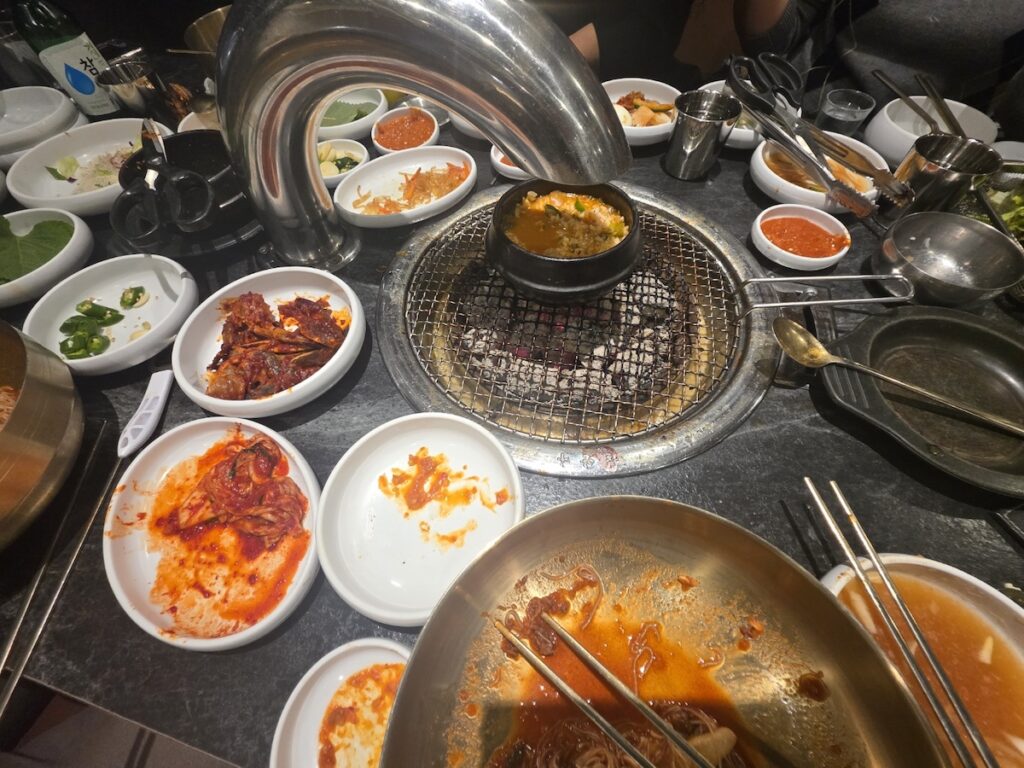
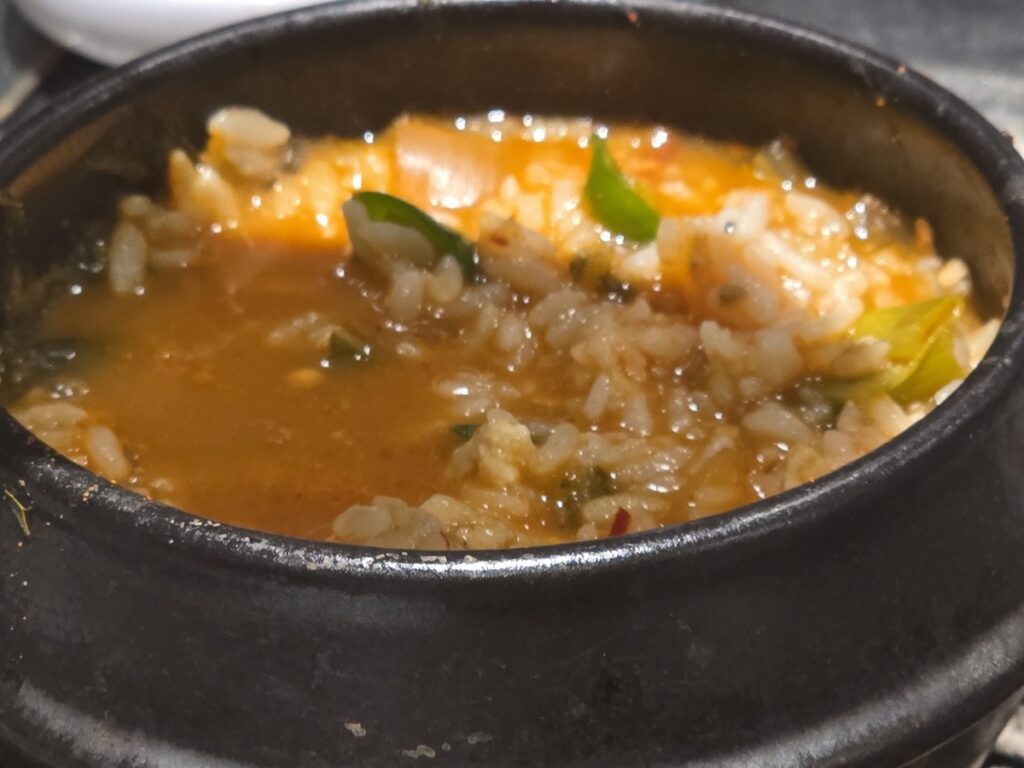
The peak of this ritual is a dish called Doenjang-bab (Soybean Paste Rice). Last night, we didn’t just eat the stew on the side. We placed the stone pot directly onto the still-glowing charcoal grill. We took a bowl of white rice and submerged it into the bubbling broth. As the fire intensified, the rice absorbed the savory liquid, transforming into a thick, porridge-like consistency. This is not just food; it is a warm embrace in a bowl.
05. The Anju Logic: A Buffer for the Morning After
Why do we do this? Especially when alcohol is involved, the Post-BBQ Meal Ritual in Korea serves as a vital “Anju” (food for alcohol). The thick starch of the Doenjang-bab coats the stomach, absorbing the alcohol and providing the body with the complex carbohydrates it needs to process the night’s festivities. It is an act of self-preservation disguised as a culinary habit.
Related Guides: Deepen Your Korean BBQ Journey
- Why Korean Beef Tastes Different: Discovering the Hanwoo Experience
- Description: If you think wagyu is the peak of beef, you haven’t experienced Hanwoo. Learn about the rare, high-quality Korean cattle that defines the luxury side of the grill.
- The Secret Above Every Korean BBQ Table: How Korea’s Smoke-Suction Pipes Make Samgyeopsal Smokeless and Brilliant
- Description: Ever wondered how Korean restaurants stay so clean despite the intense grilling? Discover the engineering marvel of the adjustable smoke pipes that keep your clothes fresh.
- Gochujang, Doenjang & Ssamjang: A Beginner’s Guide to Korea’s Essential Sauces
- Description: Before you dip your meat, master the “Big Three” of Korean sauces. This guide explains the fermented depth of each paste and how to mix the perfect Ssam.
06. The Shared Spoon: A Communal Finale
Unlike the individual plates of the West, the post-meal stew is often a shared affair. Multiple spoons dive into the same pot, swirling the rice and broth together. It is the final communal act of the evening—a shared “heartiness” that signifies the bond created over the shared grill.
07. The Cultural Misconception: “Are You Still Hungry?”
The most common mistake foreigners make is asking, “Are you still hungry?” if a local orders rice after 500g of meat. The answer is rarely about physical hunger. It is about a culinary equilibrium. The grease of the meat must be washed away by the acidity of Kimchi-jjigae or the earthy depth of Doenjang, and the stomach must be “filled” with rice to signal to the brain that the day is truly done.
| Feature | Regular Doenjang-jjigae | Post-Meal Doenjang-bab |
| Portion Size | Large (Individual) | Small to Medium (Shared) |
| Consistency | Liquid Soup | Thick Porridge (Starch-heavy) |
| Price Point | 8,000 – 10,000 KRW | 3,000 – 5,000 KRW |
| Ritual Purpose | Primary Fuel | Psychological Comfort / Sobriety |
08. The Science of Fermentation: A Nutritional Shield
Beyond the comforting warmth, Post-BBQ Meal Ritual in Korea with Doenjang-jjigae offers a profound nutritional strategy. Unlike sugary Western desserts that spike insulin, this fermented soybean paste is a functional food that aids the body’s recovery after a heavy meal.
- Proteolytic Enzymes: The fermentation process of Doenjang creates powerful enzymes that help break down the dense proteins found in grilled meats. This is why many Koreans feel less “bloated” after finishing their BBQ with a bowl of stew; it’s literally assisting your digestion in real-time.
- Probiotic Powerhouse: As a live fermented product, Doenjang is rich in beneficial bacteria that support gut health. While the high heat of boiling diminishes some live cultures, the bioactive peptides remains, offering anti-inflammatory benefits that counteract the oxidative stress caused by charred meat.
- Isoflavones and Detoxification: Soybeans are packed with isoflavones, which are known for their antioxidant properties. In the context of a BBQ feast, these compounds work to neutralize potential carcinogens often found in grilled fats, making the Post-BBQ Meal Ritual in Korea a strategic choice for long-term wellness.
- The Satiety Signal: The complex carbohydrates in the rice combined with the high protein content of the soybean paste trigger a stable satiety signal to the brain, preventing the “sugar crash” often associated with traditional desserts.
Real Experience: The Glow of the Embers
As the pig galbi bones were piled high and the soju bottles were empty, our table fell into a comfortable silence. The only sound was the bubbling of the stew on the grill. We watched the white rice disappear into the brown, earthy broth, turning into that magical Doenjang-bab. As I took the first spoonful, the heat radiated through my chest, and the guilt of the heavy meat vanished. My colleague looked at me and said, “Now, finally, I feel like I’ve actually eaten.” That is the essence of the Post-BBQ Meal Ritual in Korea.
09. The Vegan Sanctuary in a Meat House: Doenjang-jjigae as a Plant-Based Hero
For Vegan travelers, being invited to a Post-BBQ Meal Ritual in Korea can feel like an impossible situation. However, the local BBQ house is surprisingly one of the most accommodating places for plant-based dining if you know where to look. While your companions enjoy the grill, the humble Doenjang-jjigae stands as a nutritional powerhouse and a sanctuary for the vegan palate.
- The Tofu Protein Punch: Most authentic Doenjang-jjigae is packed with thick cubes of soft tofu. These are not just fillers; they provide a high-quality, plant-based protein source that rivals the meat being cooked on the grill. It ensures that a Vegan guest leaves the table feeling just as satisfied and “full” as the meat-eaters.
- The Umami Depth without the Meat: The earthy, fermented depth of the soybean paste provides the intense “Umami” flavor that many vegans miss in Western plant-based dishes. It offers a savory complexity that satisfies the tongue without a single drop of animal fat.
- A Garden in a Bowl: Beyond tofu, the stew is a treasure trove of zucchini, onions, scallions, and often various mushrooms. It is a concentrated vegetable feast that aligns perfectly with a clean, plant-based lifestyle.
- The Crucial Tip for Vegans: While traditional Doenjang-jjigae often uses a dried anchovy (Myeolchi) or brisket base for depth, many modern and traditional spots can accommodate a “Chae-sik” (vegetarian) request. Simply asking for the stew to be made with water or vegetable stock—or focusing on the tofu and vegetables—allows you to participate in the most iconic Post-BBQ Meal Ritual in Korea without compromising your values.
Related Guides
- 10 Authentic Korean Scissor Rituals for the Ultimate Dining Etiquette: Master the tool that makes every BBQ feast possible.
- 8 Vegan Banchan Secrets for a Stress-Free Korean Food Trip: How to balance your meal with plant-based wisdom.
- 7 Vegan Nurungji Breakfast Rituals: The morning-after cure for a night of BBQ and Doenjang-bab.
Action Plan
- Check the Menu: Look for the “Hu-sik” (후식) or “Sik-sa” (식사) section after the meat list.
- Order the Rice: Even if you feel full, order one bowl of rice for every two people to share.
- Use the Grill: Ask the server if you can place the stew on the grill to keep it boiling.
- Make the Mash: Submerge the rice into the stew and wait 2 minutes for the “Doenjang-bab” transformation.