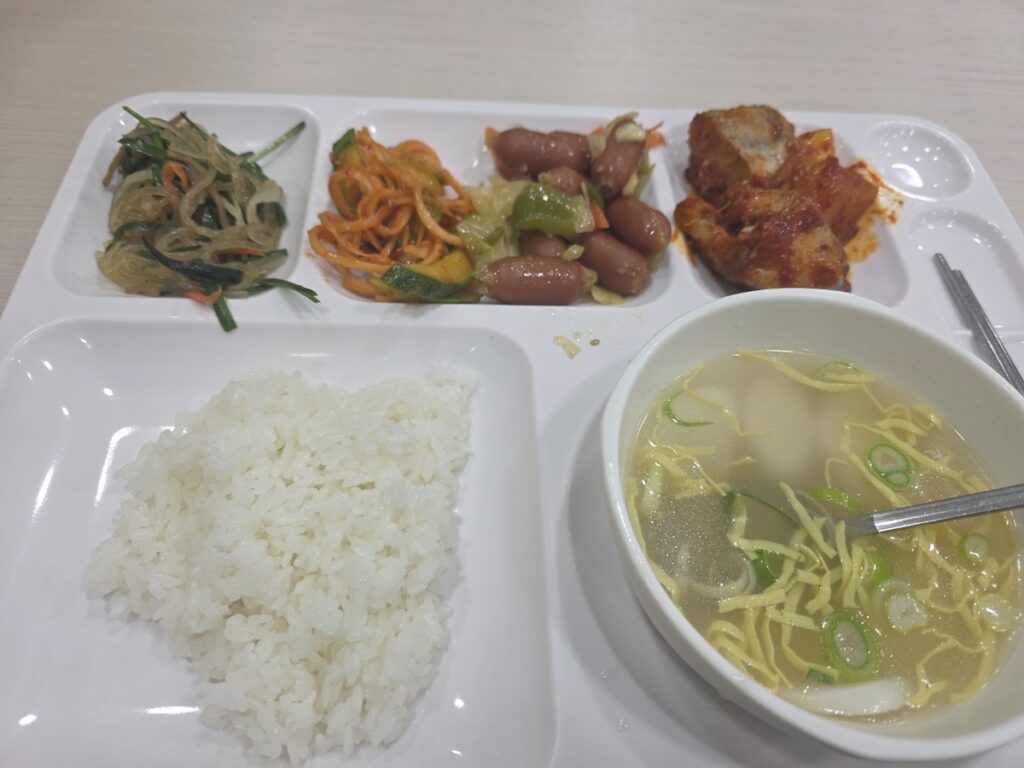
In the bustling streets of Seoul and beyond, Korean Knife-cut Noodles (Kalguksu) are more than just a quick meal; they are a lens through which we view Korean society. Depending on which bowl you choose, you are stepping into a different world—from the high-speed survival of the youth to the slow, nostalgic embrace of tradition.
1. Survival of the Fastest: Ramen and the Convenience Store Chaos
Walk into any local convenience store around 4:00 PM, and you will witness a specific kind of “war zone.” Groups of elementary students, exhausted from school and rushing to their next private academies (Hagwon), occupy the small tables with steaming cups of instant Ramen.
It is a scene of frantic efficiency. The store clerks often wear a hardened expression, knowing that after these young “customers” leave, the tables will be a battlefield of spilled soup and torn lids. For the younger generation, Ramen is not about gourmet quality; it is the fuel of survival in Korea’s relentless educational race. It is fast, salty, and temporary.
2. The White Canvas of Memory: Why Middle-aged Women Crave Korean Knife-cut Noodles (Kalguksu)
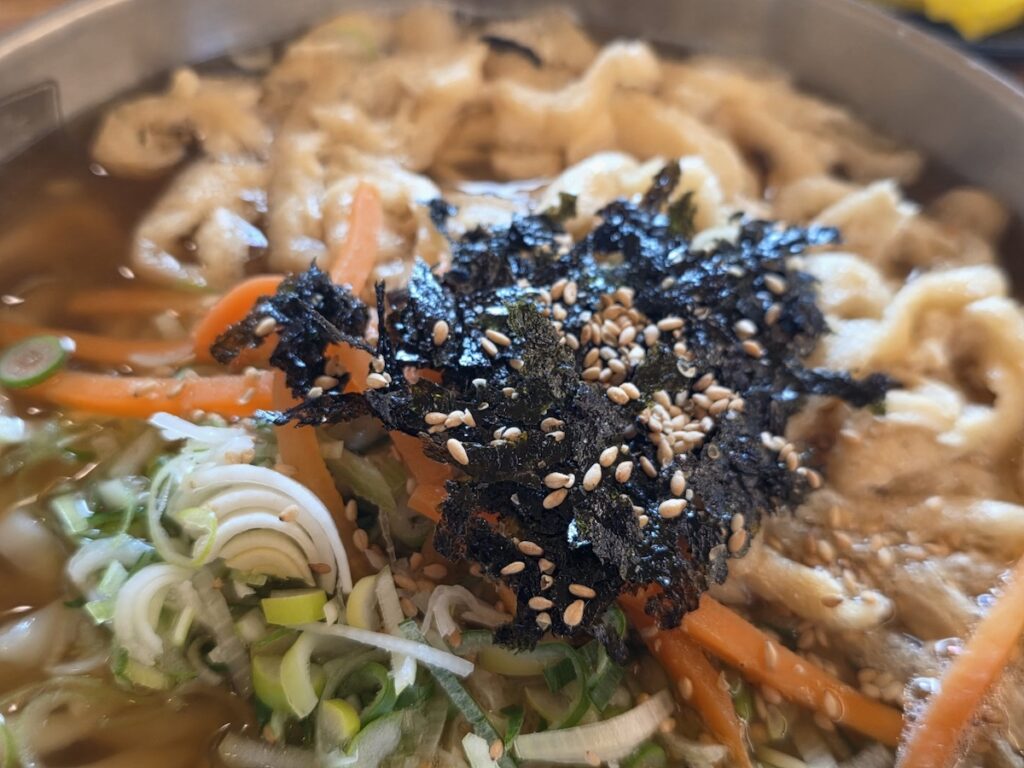
Contrast that chaos with the serene atmosphere of a restaurant serving Korean Knife-cut Noodles (Kalguksu). Here, you will find groups of middle-aged women enjoying a slow, peaceful lunch. For them, Korean Knife-cut Noodles (Kalguksu) are a “White Canvas” of memory.
They remember a time when their mothers would hand-roll the dough with a heavy wooden pin and cut the noodles by hand—hence the name “Knife-cut.” Each thick, chewy strand of Korean Knife-cut Noodles (Kalguksu) is a reminder of the care and effort that went into a handmade meal. Unlike the frantic Ramen in convenience stores, this artisanal dish is a sophisticated retreat into the past, a “Slow Food” that offers a warm embrace and demands the perfect Red Kimchi pairing to complete its soulful flavor.
3. The Spectrum of Sophistication: From Instant to Artisan Udon
Recently, the Korean palate has shifted toward a deep appreciation for Japanese-style Udon. The market has split into a fascinating spectrum of sophistication. You can find “Instant Udon” at highway rest stops for a few dollars, or you can wait in line at premium artisan shops in Heyri for a bowl that costs ten times more.
Udon has become a symbol of “Taste and Lifestyle.” Whether it is the thick, bouncy texture of the noodles or the deep, soy-based dashi broth, choosing Udon is often a conscious decision to enjoy a refined, international flavor profile that balances the rustic nature of traditional Korean noodles.
4. The Anatomy of the Bowl: Ingredients and Nutritional Profiles
To understand why Koreans choose one noodle over another, we must look under the surface. While all three are flour-based, their nutritional souls are worlds apart.
1. Ramen: The High-Energy Survival Fuel
- Base: Deep-fried wheat noodles (Instant) or alkaline wheat noodles (Fresh).
- Nutritional Profile: High in sodium and saturated fats due to the frying process of the noodles and the concentrated soup base.
- The “Survival” Factor: It provides an immediate spike in energy (carbohydrates) and salt, which explains why exhausted students crave it. However, it lacks fiber and essential vitamins unless topped with fresh sprouts or eggs.
2. Kalguksu: The Wholesome Slow-Carb Comfort
- Base: Raw wheat flour dough, hand-cut and boiled directly in the broth.
- Nutritional Profile: Unlike Ramen, these noodles are not fried, making them significantly lower in fat. The broth is typically a rich “Sea-to-Land” infusion made from dried anchovies, kelp, or clams.
- The “Health” Factor: It is a high-protein, mineral-rich soup. The starch from the raw noodles thickens the broth, creating a “filling” sensation that lasts longer. When paired with Fresh Kimchi, it becomes a probiotic powerhouse, aiding digestion that flour-heavy meals often struggle with.
3. Udon: The Clean, Low-Fat Refinement
- Base: Thick, aged wheat flour with high water content.
- Nutritional Profile: Udon noodles are usually pre-boiled or steamed, containing the least amount of oil among the three. The broth is a clean Dashi (Soy and Kelp), focusing on ‘Umami’ rather than heavy fats.
- The “Refinement” Factor: It is the gentlest on the stomach. While high in glycemic index (GI), its simple ingredient list—flour, water, and salt—makes it a “clean” carbohydrate source for those seeking a sophisticated, bloat-free meal.
The Art of the Pairing: Why the Side Dish is the Soul of the Noodle
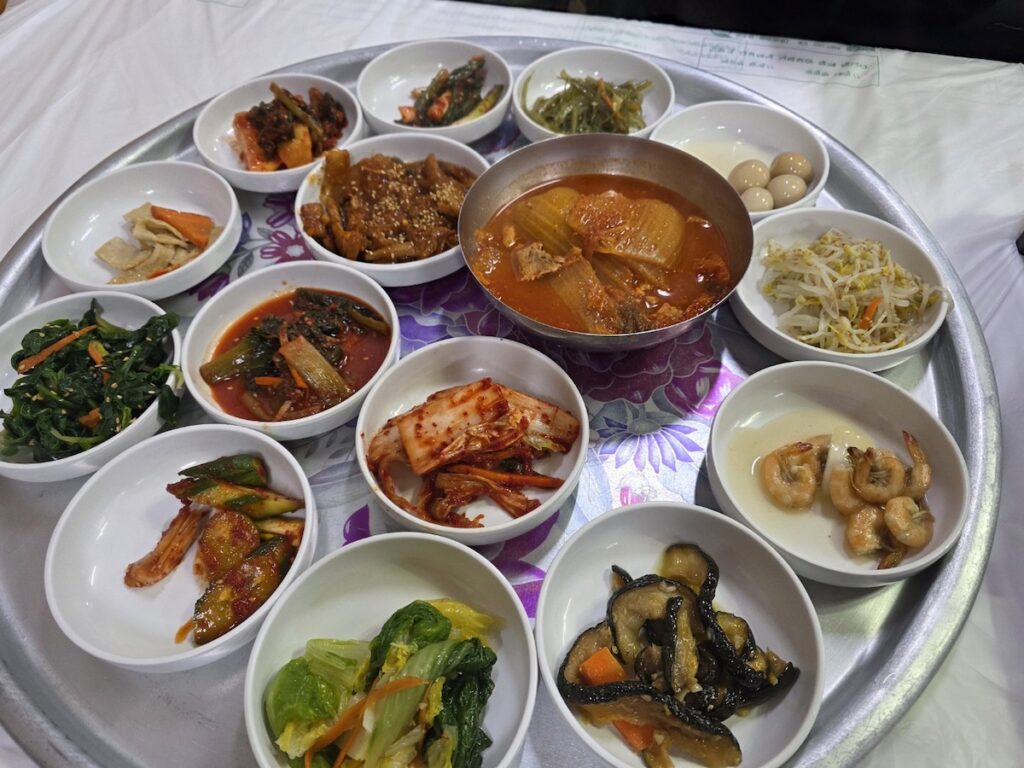
The most brilliant part of the Korean noodle ritual is the Pairing. We believe that a noodle bowl is incomplete without its “Fated Partner” on the side. This is where the aesthetic balance of color and taste comes alive.
The Color Theory of Banchan (Side Dishes)
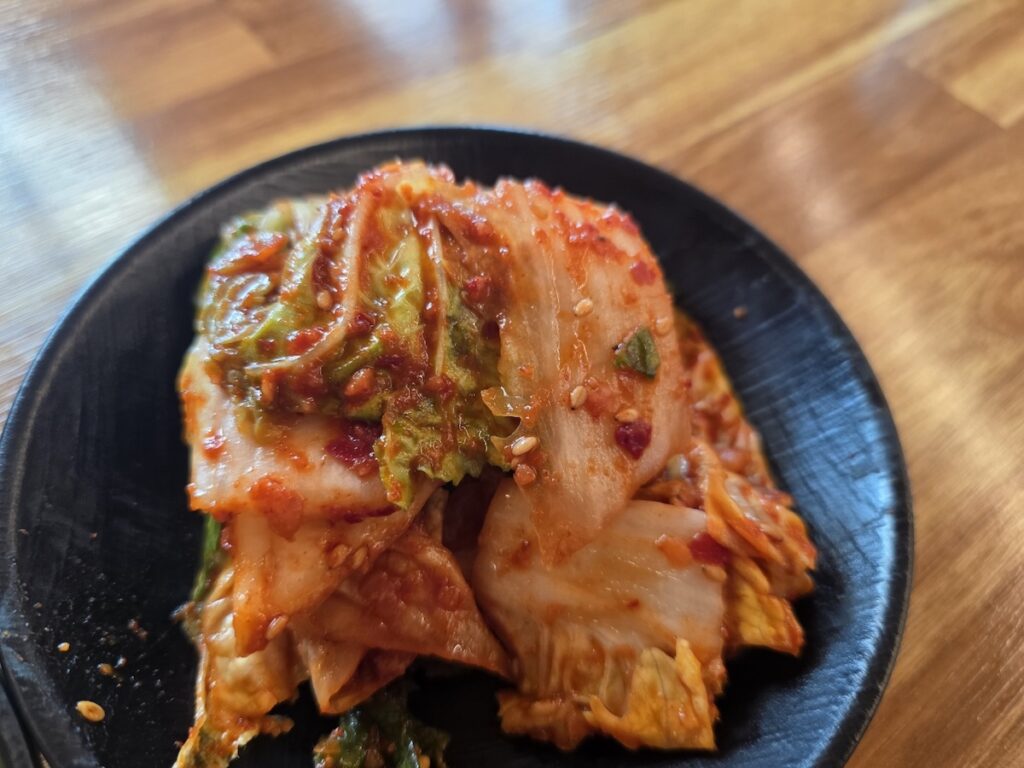
- Red Kimchi (The Fire for the White Canvas): If you order a bowl of pale, savory Korean Knife-cut Noodles (Kalguksu), the fresh Red Kimchi (Geotjeori) is mandatory. The vibrant red spice provides the “seasoning” that the mild noodles lack. It is a visual and flavorful explosion.
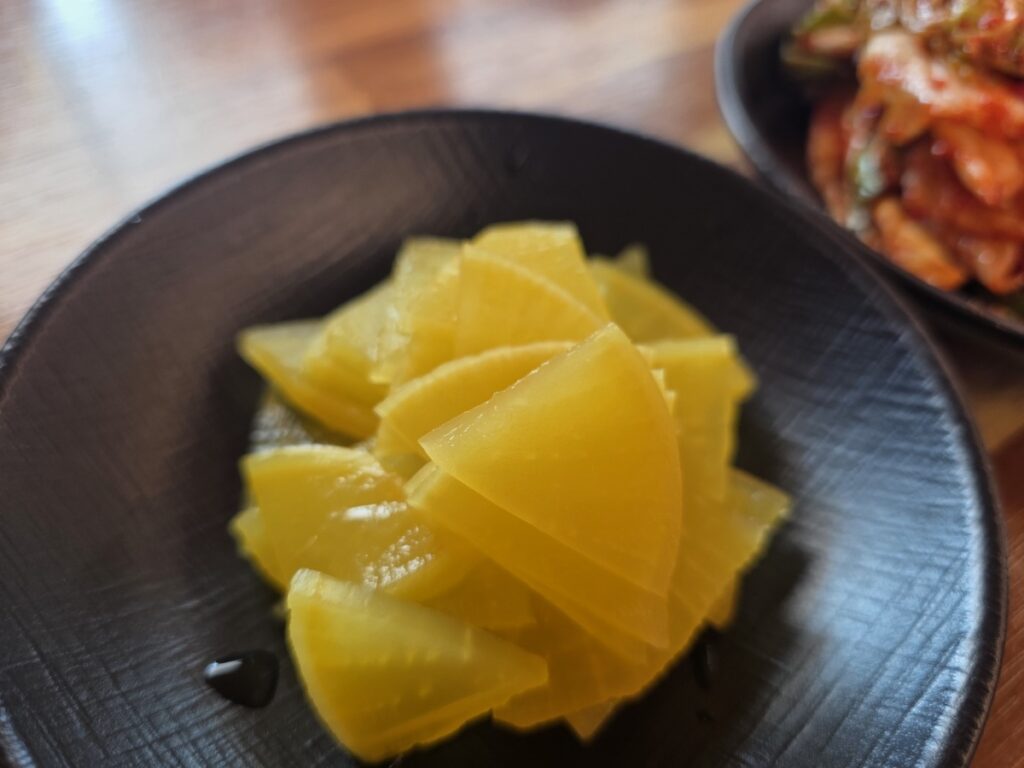
- Yellow Danmuji (The Sweetness for the Dark Broth): For the salty, dark-colored broth of Udon, the bright Yellow Pickled Radish (Danmuji) is the perfect match. The sweet-and-sour crunch cleanses the palate between sips of the rich soup.
- White Kimchi (The Extinguisher for the Heat): When dealing with spicy cold noodles or high-heat Ramen, the cool, refreshing White Kimchi acts as a metabolic fire extinguisher, balancing the intensity with a clean finish.
Recommended Guides for Your Noodle Journey
To truly master the soul of the Korean table, you must explore the world of artisanal side dishes. Each noodle bowl demands a specific partner to complete its flavor profile.
1. The Ultimate Vegan Side Dish
If you are a sophisticated traveler looking for a plant-based explosion of flavor, discover why Green Onion Kimchi is the essential companion for any handmade noodle dish:
2. The Ritual of Seasonal Awakening
For those seeking the fresh, crunchy touch of spring, learn how a mother’s love transforms simple cabbage into a ritual of seasonal energy:
Bomdong Geotjeori 2026: 7 Steps to Awakening Spring with a Mother’s Love
Conclusion: Embodying the Art of Korean Knife-cut Noodles (Kalguksu)
The experience of eating Korean Knife-cut Noodles (Kalguksu) is a profound lesson in Korean priorities. We value the “Knife-cut” process because it represents a heart of overwhelming handmade sincerity, yet we trade the dining knife for the spoon and tongs because we value communal efficiency and the perfect flavor pairing.
1. The Nutritious Paradox of Korean Knife-cut Noodles (Kalguksu)
Unlike the deep-fried, high-sodium Ramen found in convenience stores, Korean Knife-cut Noodles (Kalguksu) offer a “Clean Carb” profile. The noodles are boiled directly in a mineral-rich broth made from anchovies or shellfish, providing a slow-release energy that sustains you longer than any instant meal. When combined with the probiotic power of Red Kimchi, this dish transforms from a simple flour meal into a sophisticated, health-conscious ritual.
2. Finding Your Noodle Identity
Whether you are navigating the chaotic “Ramen survival” of the youth or seeking the nostalgic comfort of Korean Knife-cut Noodles (Kalguksu), understand that each bowl dictates its own rules. You don’t need a knife to appreciate the “Knife-cut” mastery—you only need an open palate to experience the contrast between the white, chewy strands and the fiery red side dishes.
[Action Plan]
- Respect the Pairing: Never eat Korean Knife-cut Noodles (Kalguksu) without fresh Red Kimchi. It is the unwritten law of the Korean table to balance the “White Canvas” with “Red Fire.”
- Master the Tools: Put down the knife. Use your spoon for the deep, umami-rich broth and your tongs to manage the mandatory side dishes like Kimchi and Mandu.
- Seek the Handmade: Look for signs advertising “Son-Kalguksu” (Hand-cut) to experience the true artisanal texture that defines the best comfort food in Korea.