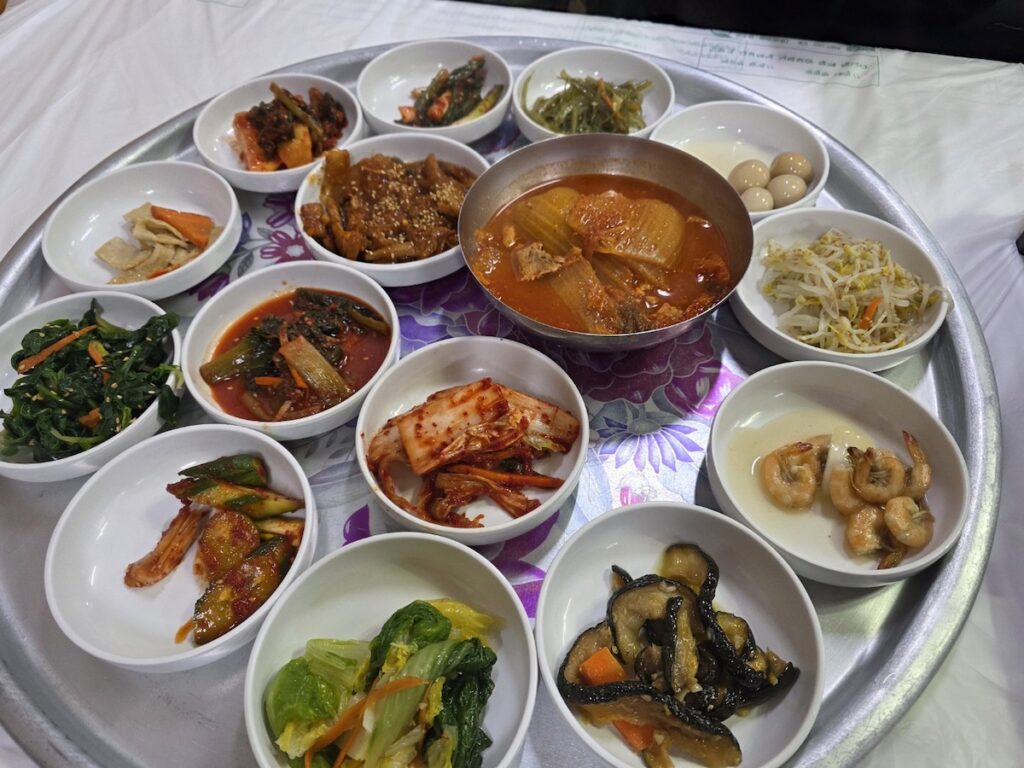
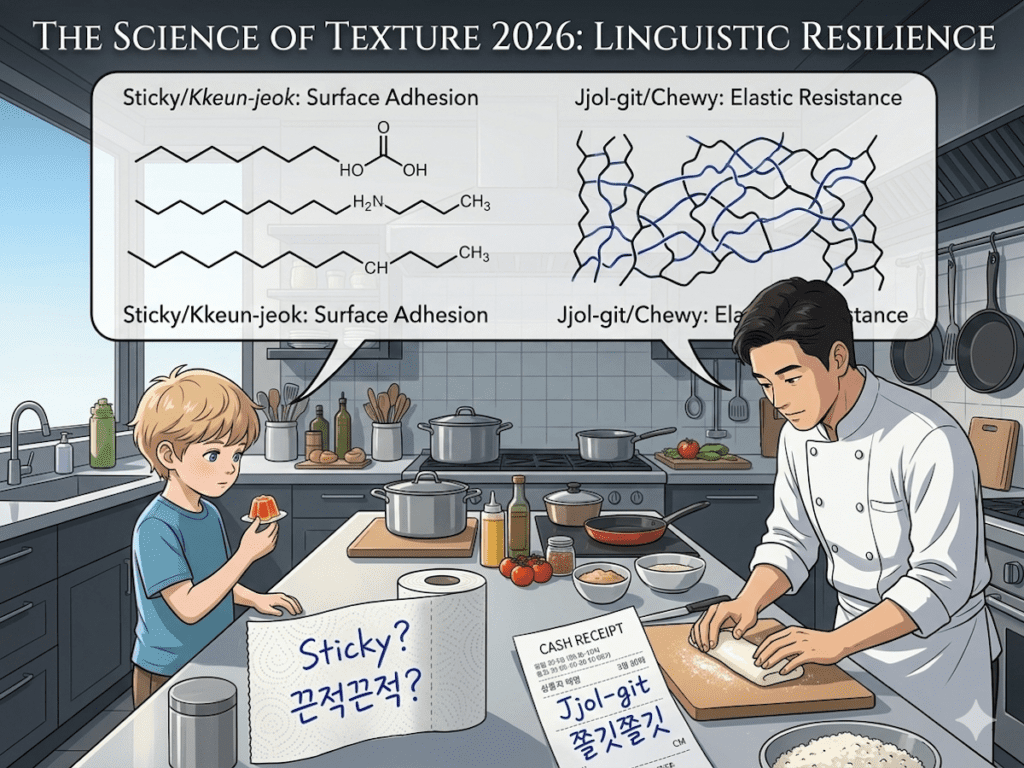
Korean Food Texture Science 2026 begins not in a professional laboratory, but in the innocent curiosity of a child at a kitchen table. Recently, while analyzing the intricate mouthfeel of various K-culinary delights, my seven-year-old nephew looked up from a chewy jelly snack and asked a question that struck at the very heart of my research: “Uncle, this is so sticky. How do you say this in Korean?”
I paused, realizing the immense linguistic and scientific gap between our cultures. Was it Jjol-git-jjol-git (쫄깃쫄깃)—the highly coveted, bouncy elasticity of a premium rice cake? Or was it Kkeun-jeok-kkeun-jeok (끈적끈적)—the somewhat unpleasant, viscous adhesion of melted syrup? This seemingly simple dilemma unveils the profound core of Korean Food Texture Science 2026: in the Korean culinary world, a generic English word like “sticky” is a blunt instrument attempting to perform surgery on a symphony of high-precision sensations.
The Paradox of “Si-won-ha-da” in Korean Food Texture Science 2026
Perhaps the most baffling element for any traveler exploring The Science of Texture 2026 is the “Thermal Paradox.” Picture a Korean elder sitting before a steaming bowl of Kongnamul-guk (bean sprout soup). As he takes a searingly hot spoonful, he exhales a long, satisfied, “Ahn, Si-won-ha-da (Ah, that’s cool).”
To the Western ear, this is a lie. The soup is 90°C. However, in the realm of The Science of Texture 2026, Si-won-ha-da transcends temperature.
- The Biological Relief: It describes the sensation of one’s internal organs relaxing, the feeling of congestion being washed away.
- The Subjective Shift: It is a professional transition from the physical temperature of the object (objective) to the emotional liberation of the subject (subjective).
Lost in Translation: Netflix and the Battle of Subtitles
In 2026, the global obsession with K-Content has brought Korean textures to the forefront of pop culture. However, the nuances of The Science of Texture 2026 often face a “Subtitling Crisis” where complex sensory experiences are flattened for global audiences.
🎬 Iconic Translation Gaps in K-Media
| Work (Netflix/Media) | Original Korean Term | English Subtitle | The Real “Science” Behind it |
| Squid Game | Kkan-bu (깐부) | Partner/Ally | Not just an ally, but a “shared ritual of trust and nostalgia.” |
| The Glory | Ossak-hada (오싹하다) | Chilly/Creepy | The tactile sensation of skin crawling from fear, a “skin-level texture.” |
| Let’s Eat (K-Drama) | Ttang-geul-hada (탱글하다) | Bouncy/Elastic | The high-tension resistance of a shrimp or a fresh noodle before it snaps. |
| Parasite (Film) | Jjapaguri (짜파구리) | Ram-don | A portmanteau of textures: the slippery noodle vs. the chewy steak. |
When a character says a noodle is Kko-deul-kko-deul (꼬들꼬들), it’s not just “firm.” It is the precise scientific state where the starch has gelatinized on the outside but remains resilient at the core.
Decoding the NIKL Data within Korean Food Texture Science 2026
In the pursuit of The Science of Texture 2026, one must eventually consult the ultimate authority: the National Institute of Korean Language (NIKL). While a standard dictionary provides definitions, the NIKL serves as a scientific observatory that maps the vast cosmos of Korean sensory vocabulary. For a global gourmet, the NIKL’s database is not just a linguistic tool; it is a GPS for the human palate.
1. The Taxonomy of “Crunch”
The NIKL categorizes “textural onomatopoeia” with surgical precision. To the untrained ear, everything is “crispy.” To the NIKL, and subsequently to a professional diner, the sound of a bite reveals the internal structure of the food.
- Basak-basak (바삭바삭): Describes a thin, dry crunch—think of the delicate skin of a well-fried Mandu (dumpling).
- Asak-asak (아삭아삭): Reserved for the cellular explosion of fresh vegetables like water-rich Kimchi or a Korean pear.
- Odok-odok (오독오독): A rhythmic, harder crunch specifically associated with cartilage or firm nuts.
2. The NIKL’s “Sensory Map” for Foreigners
The National Institute provides a dedicated “Korean Language Learners’ Dictionary” that is particularly valuable for the The Science of Texture 2026. This resource goes beyond text, offering visual and contextual guides to differentiate between “Sticky” (Kkeun-jeok) and “Chewy” (Jjol-git).
- The Professional Distinction: According to NIKL research, Jjol-git-hada is a positive “resistance-based elasticity,” whereas Kkeun-jeok-hada focuses on “surface-level adhesion.” This distinction is what I tried to explain to my nephew: one is a textural triumph, the other is a messy inconvenience.
3. Leveraging the “Standard Korean Dictionary” Ritual
For those who wish to master the The Science of Texture 2026, the NIKL’s online archives offer a “Semantic Search” ritual. By searching for a base sensation, travelers can find dozens of derivative adverbs that describe the speed, intensity, and aftertaste of a texture.
🗺️ The NIKL Texture Matrix: A Scientific Breakdown
| Textural Category | NIKL Standard Term | Sensory Definition | Target Food Example |
| Elasticity | Taeng-geul-hada | High-tension, bouncy snap | Fresh shrimp / Octopus |
| Porosity | Beo-seok-geo-ri-da | Dry, crumbly disintegration | Overbaked cookies / Old bread |
| Viscosity | Kkeun-jeok-geo-ri-da | Persistent surface adhesion | Melted sugar / Syrup |
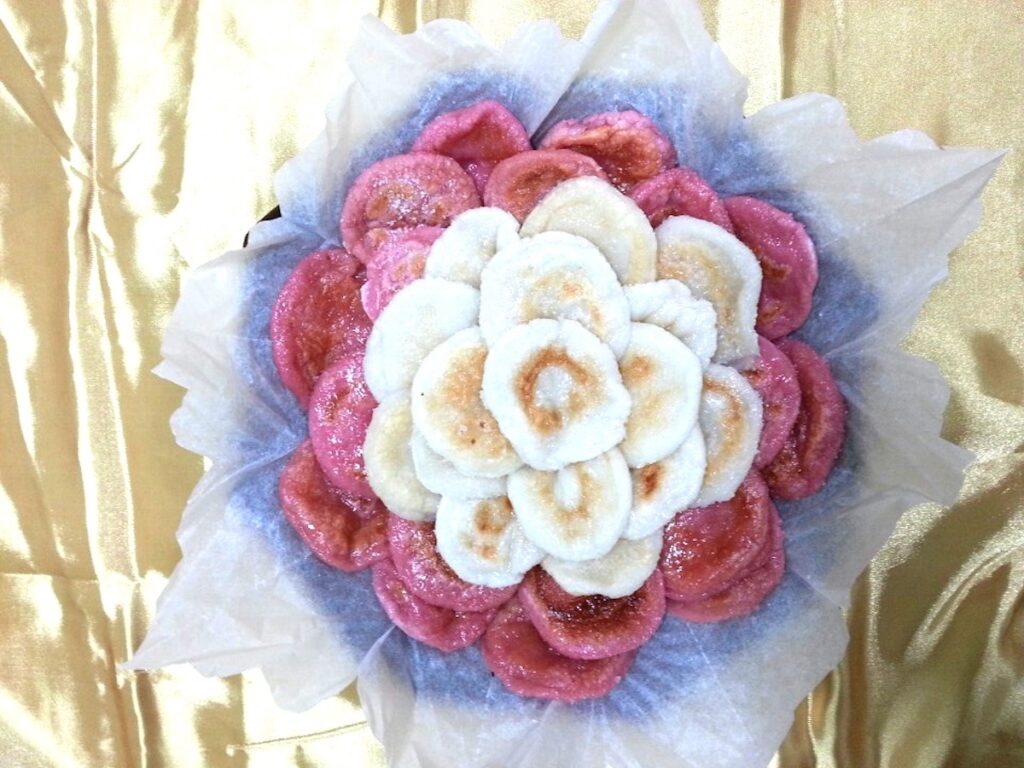
| Optimal Chew | Jjol-git-hada | Desirable, resilient bounce | Tteok (Rice cake) |
💡 Pro-Tip: Beyond the Dictionary (External Resources)
If you want to delve deeper into the The Science of Texture 2026, the NIKL often collaborates with culinary researchers to study “Phonaesthemes”—sounds that carry specific sensory meanings.
- Action Plan: Use the NIKL’s “Korean Language Resource Center” to find papers on how Korean sensory words affect a diner’s psychological satisfaction. This is where the “Scent of Romance” in the kitchen meets the cold, hard data of linguistics.
The Grammar of the Palate: Subject vs. Object
To master The Science of Texture 2026, one must understand that Korean adjectives change based on who is the “Master of the Sensation.”
- Object-Oriented (The Food’s State): When we describe a cake as Beo-seok-geo-ri-da (crumbly/dry), we are analyzing the object’s moisture content scientifically.
- Subject-Oriented (The Eater’s Experience): When we say Kkal-kkeum-ha-da (clean/refreshing), we are describing the chemical reaction of the palate being reset after a heavy meal.
This differentiation is the Social Contract of the Korean table. It allows us to communicate not just what the food is, but what the food does to our soul.
Action Plan: How to Order Like a Professional in 2026
If you wish to truly engage with The Science of Texture 2026 during your next visit, move beyond the word “Good.”
- Step 1: Replace “Chewy” with “Jjol-git.” Use it for Tteokbokki. It signals your appreciation for the perfect starch-to-moisture ratio.
- Step 2: Experience “Si-won-ha-da.” Go to a traditional soup house after a long flight. Drink the hot broth and look for that internal release.
- Step 3: Listen to the “Texture Onomatopoeia.” Korean food is audible. From the A-sak of kimchi to the Heul-jeok of noodles, the sound is the science.
Related Guides
- 5 Unique Rituals of Mega Coffee: Beyond the K-Pop Idol Diet – After mastering the complex textures of Korean food, discover the liquid rituals that define modern Seoul. Explore how “Mega-sized” caffeine culture supports the high-energy lifestyle of the city and its impact on the daily routines of your favorite idols.
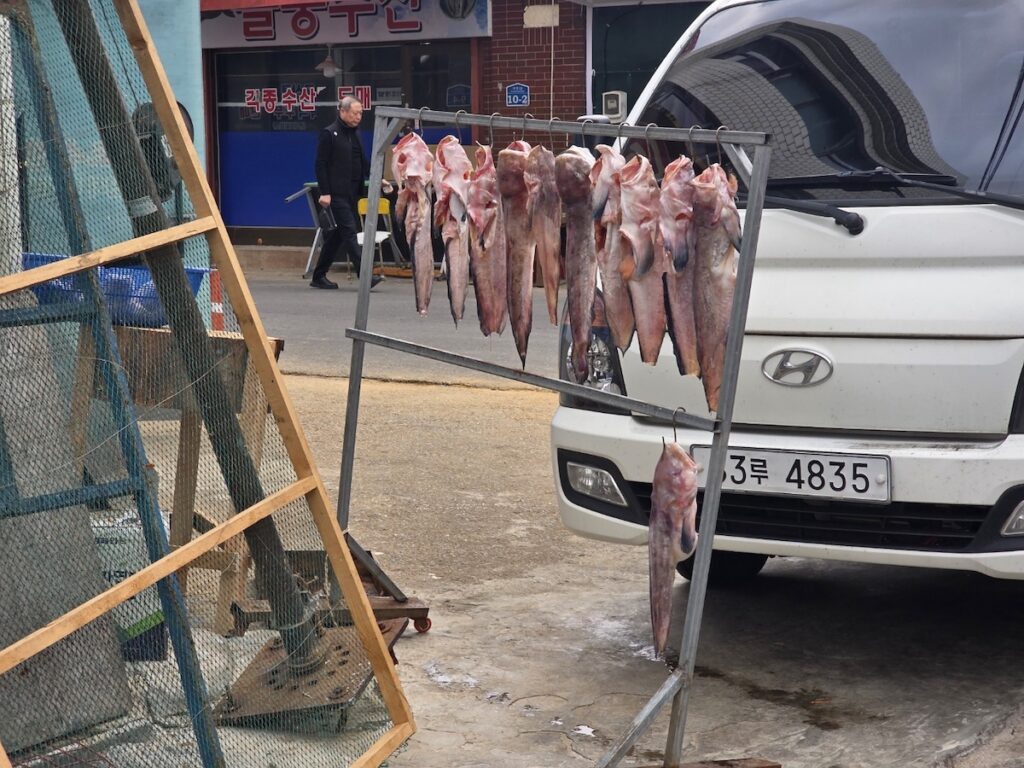
- 3 Best Korean Semi-Dried Fish Rituals & K-Pop Idol Diet Secrets – If the contrast between Jjol-git and Sticky fascinated you, delve into the world of semi-dried fish. This guide explores the scientific “Chewiness” (Kko-deuk-ha-da) of partially dried seafood, a texture prized for its concentrated umami and lean protein profile.
- 10 Authentic Korean Dining Etiquette with Scissors: Beyond the Knife – Texture science isn’t just about eating; it’s about the tools we use to achieve the perfect bite. Learn why the scissor is the ultimate professional instrument for maintaining the structural integrity of noodles and grilled meats.
- Cake Culture in Korea: From Tteok-Cake to Luxury Hotel Bakeries – Witness the evolution of Korean sweetness. From the ancient, resilient textures of steamed rice cakes (Tteok) to the airy, sophisticated layers of modern luxury hotel desserts, see how Korea’s obsession with mouthfeel continues to innovate.
Conclusion: The Final Verdict on Korean Food Texture Science 2026
The exploration of Korean Food Texture Science 2026 reveals that the Korean table is not merely a place for nourishment, but a laboratory of sophisticated sensory dialogue. What began as a simple, innocent question from my seven-year-old nephew—grappling with the ambiguity of the word “sticky”—ultimately leads us to a profound linguistic and physiological realization. In Korea, texture is not a byproduct of cooking; it is the objective.
Through the rigorous taxonomy of the National Institute of Korean Language (NIKL), we see that the Korean palate possesses a surgical precision, capable of distinguishing between thousands of micro-sensations that global “globalized” English often overlooks. From the thermal liberation of a “Si-won-ha-da” broth to the high-tension snap of a Jjol-git rice cake, every bite is a coded message of resilience and history.
In 2026, as Korean culture continues to permeate global media, understanding Korean Food Texture Science 2026 becomes the ultimate “Social Contract” for any serious gourmet. It is the difference between merely eating and truly communicating with the soul of the cuisine. I invite you to move beyond the limitations of your native vocabulary. Don’t just taste the food; listen to its rhythm, grip its resistance, and embrace the scientific beauty of its texture. This is where the true Scent of Romance in Korean gastronomy is found—not in the ingredients themselves, but in the precise moment they meet your senses.