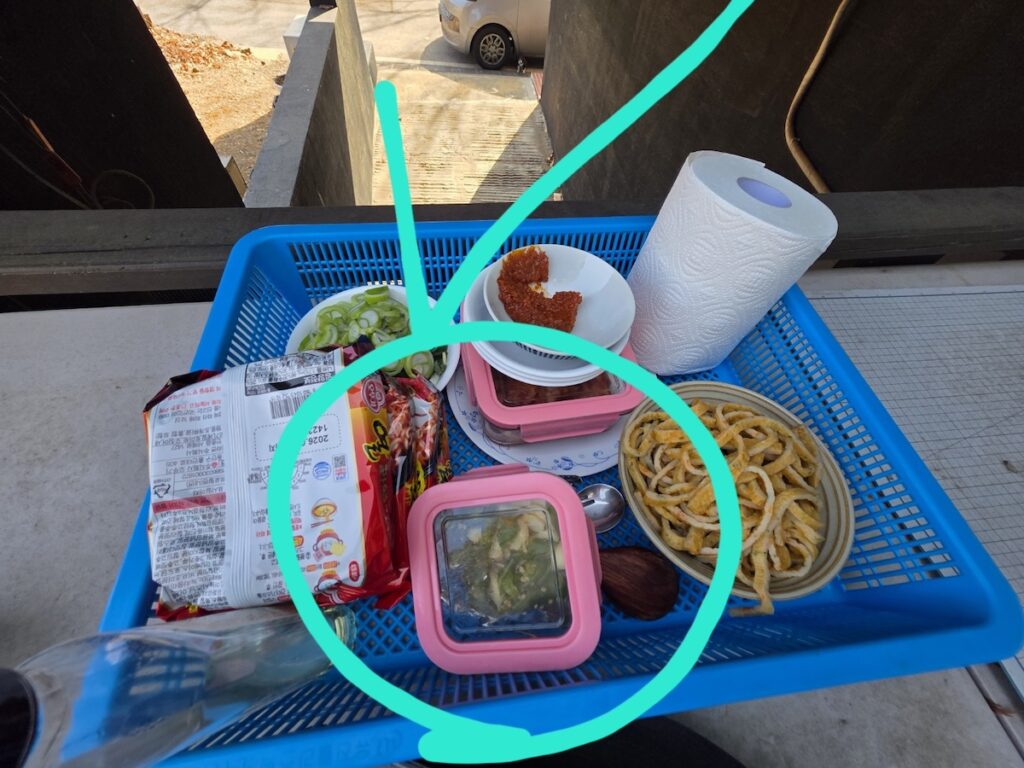
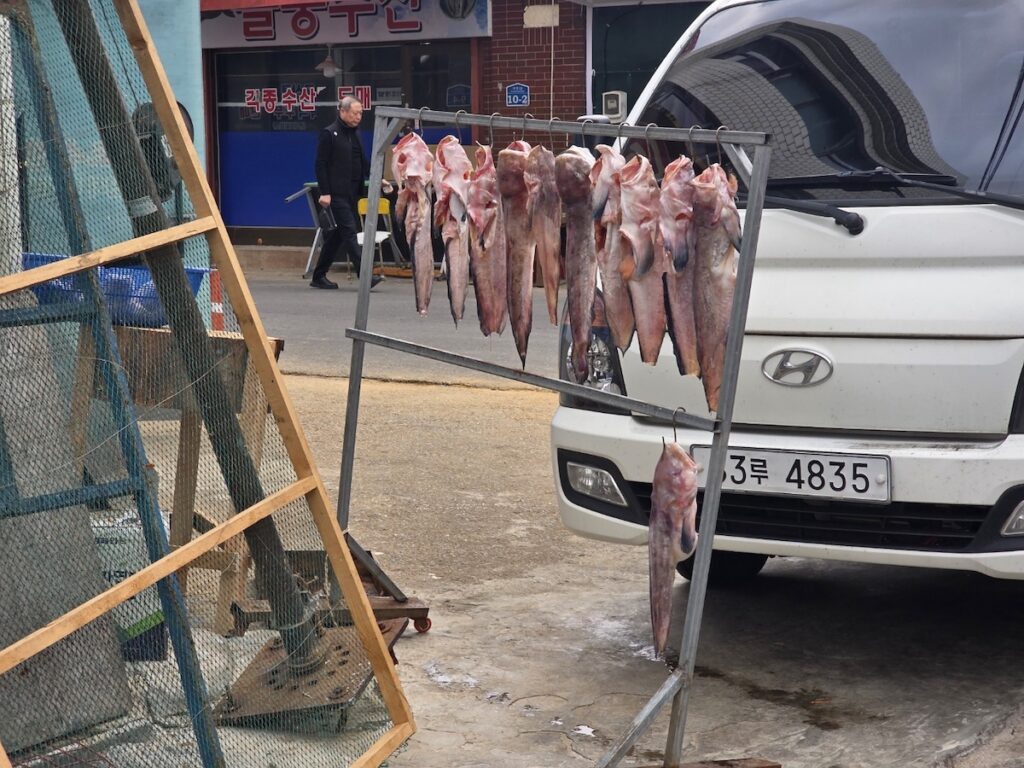
Korean Food Rituals 2026 often manifests in the most mundane settings, such as a neon-lit convenience store at midnight. Recently, while grabbing a quick meal with a friend, I offered to pay for our cup ramen. To my surprise, my friend hesitated, staring at the shelf. “I can’t eat ramen without Kimchi,” he declared with the solemnity of a vow. I suggested we just enjoy the noodles as they are, but halfway through, he stopped, unable to find satisfaction in the “lonely” taste of plain starch. Eventually, he went back to the counter to buy a small pouch of Kimchi.
We laughed it off, acknowledging our different culinary boundaries, yet this moment perfectly encapsulates the essence of Korean Food Rituals 2026. It is a world where certain pairings are not just preferences, but fundamental laws of existence. Whether it is the unwavering necessity of Kimchi with ramen, the collective Sunday craving for black bean noodles, or the generational obsession with hot soup, these rituals define our identity. To understand these seemingly stubborn habits is to understand the history, the media-driven nostalgia, and the profound “Scent of Romance” that lingers on the Korean table.
The Sunday Synchronicity: Chapagetti and the Architecture of Rest
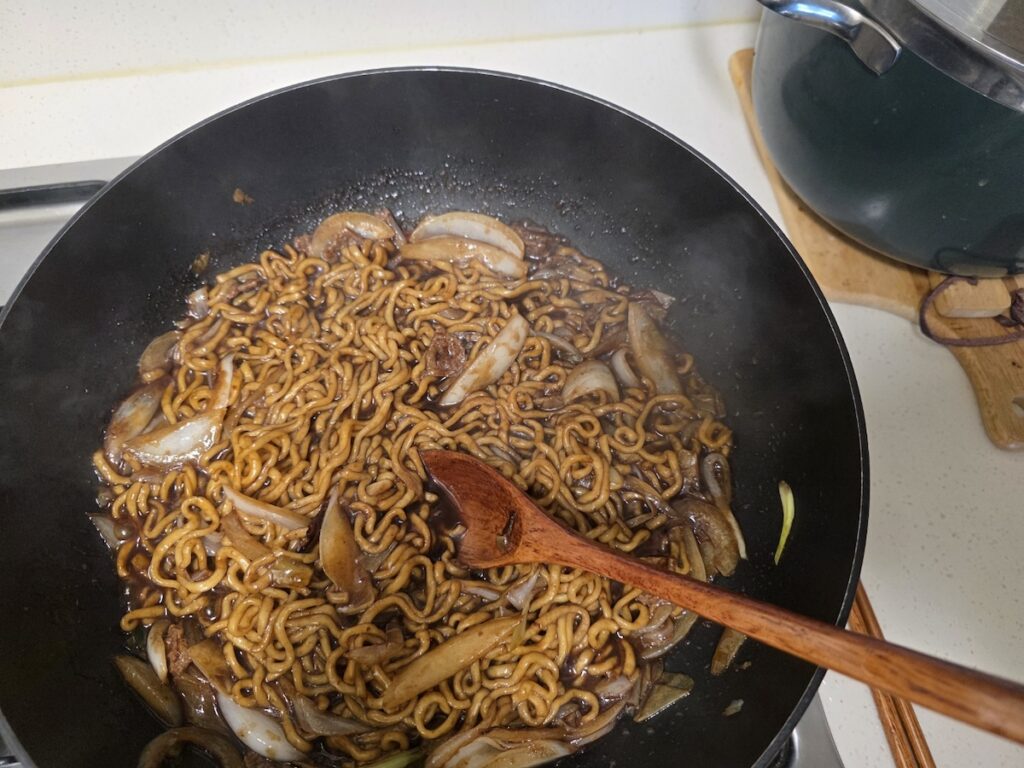
In the world of Korean Food Rituals 2026, Sunday has a specific flavor: Chapagetti. For over four decades, a single advertising jingle—“On Sundays, I am the Chapagetti Chef”—has dictated the lunch menu of millions. But why did this stick?
- The Historical Context: After the Korean War, flour was a luxury provided by aid. Jajangmyeon (black bean noodles) became the ultimate “special day” food. As Korea industrialized, the “Sunday Chef” ritual emerged as a way for overworked fathers to participate in domestic life without the complexity of traditional cooking.
- The Parasite Effect: This ritual gained global academic status through Bong Joon-ho’s “Parasite.” The “Jjapaguri” (Chapagetti + Neoguri) scene wasn’t just about a delicious meal; it was a socio-economic statement. The chewy, humble instant noodles clashing with expensive Hanwoo beef visualized the class disparity that defines modern society.
The Guk-mul Philosophy: Why “Soup-less” is “Soul-less”
For the older generation in Korea, a meal without Guk (soup) is considered incomplete, or even “dry” in a spiritual sense. This is a cornerstone of Korean Food Rituals 2026.
- The Agrarian Resilience: Historically, soup was a way to stretch limited resources. A small piece of meat could feed an entire family if boiled into a large pot of Guk. This “Boiling Culture” created a genetic preference for warmth and hydration during meals.
- The “Si-won-ha-da” Paradox: As explored in our previous archive, the relief found in a steaming bowl of Kongnamul-guk (bean sprout soup) is the ultimate recovery ritual. In Netflix’s “Midnight Diner: Tokyo Series” (Korean episodes) or “Let’s Eat,” the camera lingers on the steam rising from the bowl. This is because, in Korea, the soup is the “anchor” of the table. Without it, the meal has no gravity.
The Great Meat Debate: To Grill or to Drown?
A fascinating schism exists within Korean Food Rituals 2026: the divide between those who worship the “Grilled Maillard Reaction” and those who refuse “Meat in Water.”
- The Grill (The Celebration): Grilled meat (Gui) represents the success of modern Korea—the sound of sizzling fat on a hot plate. It is the ritual of the Hoesik (company dinner), popularized in almost every K-Drama from “Itaewon Class” to “Crash Landing on You.”
- The Water (The Tradition): Conversely, some avoid boiled meat in soups like Seolleongtang because it lacks the intense textural contrast of a grill. However, the “Water-based” ritual is a masterclass in patience. The long hours required to extract collagen from bones represent the Korean virtue of Jeong (deep affection and sincerity).
The Generational Gift: Why Koreans Eat Seaweed Soup on Birthdays 2026
Beyond the daily convenience of ramen, there is a ritual of profound gratitude. One might wonder, Why Koreans Eat Seaweed Soup on Birthdays 2026? The answer lies in the symbolic connection to motherhood. Seaweed, rich in iodine and calcium, is the primary recovery food for mothers after childbirth. By eating Miyeok-guk on our birthdays, we are not just celebrating our birth; we are performing a ritual of remembering the physical sacrifice our mothers made. It is the most selfless of all Korean Food Rituals 2026.
The Fluid Bond: The Social Meaning of Drinking Soup in Korea 2026
When we look at the Social Meaning of Drinking Soup in Korea 2026, we find the concept of Jeong (deep connection). Sharing a Jjigae from the same pot is a communal contract—a sign of intimacy that defies the hygiene-obsessed individualism of the West. Drinking the same broth means sharing the same energy. As the NIKL hierarchy shows, whether it is a shared Jjigae or an individual Guk, the presence of liquid on the table acts as a social lubricant, softening the rigid boundaries of hierarchy through the shared experience of warmth.
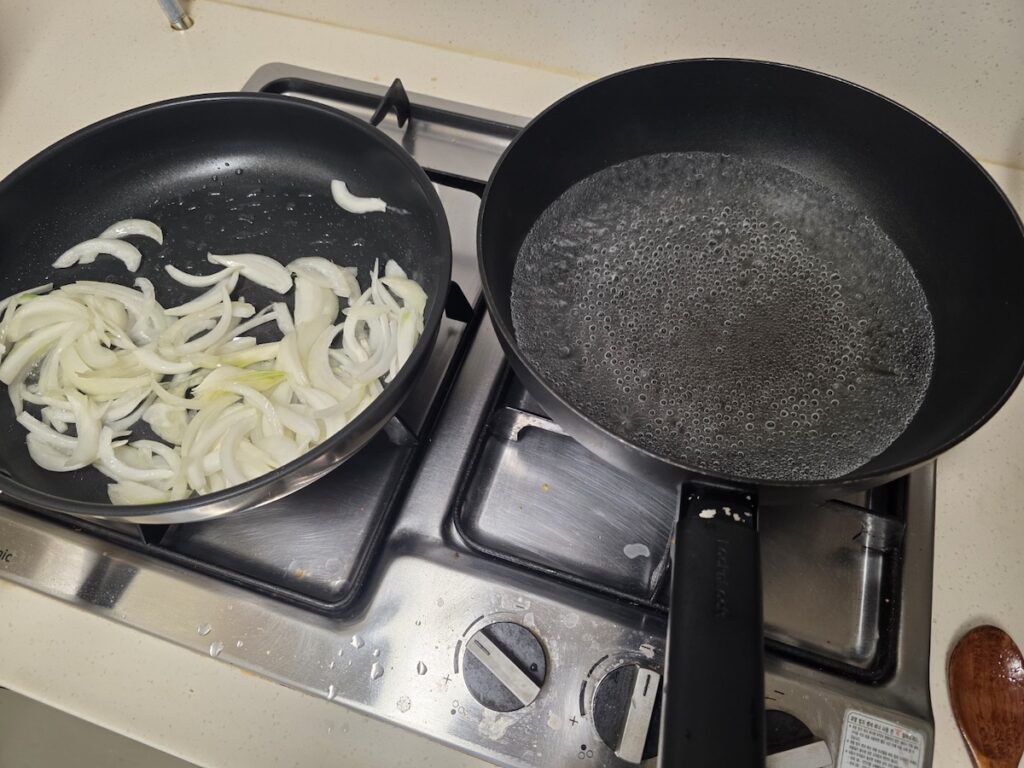
The NIKL Perspective: Defining the “Guk” Hierarchy within Korean Food Rituals 2026
To the uninitiated, everything served in a bowl with liquid might be labeled as “soup.” However, within the framework of Korean Food Rituals 2026, this is a linguistic sacrilege. The National Institute of Korean Language (NIKL) maintains a rigorous taxonomy that differentiates liquid dishes based on the ratio of solid ingredients, the intensity of the boil, and the social function of the dish.
1. The Geometry of Liquid: Guk (국) vs. Jjigae (찌개)
The most fundamental divide in Korean Food Rituals 2026 is the water-to-solid ratio.
- Guk (국): Defined by the NIKL as a dish where the liquid is the primary carrier of flavor. It is a solo performance, served in an individual bowl to each diner.
- Jjigae (찌개): This is a shared ritual. With a lower liquid content and higher concentration of salt (often via Doenjang or Gochujang), it sits at the center of the table, demanding a collective “communion” of spoons.
2. The Intensity of Time: Tang (탕) vs. Jeongol (전골)
- Tang (탕): This term often carries a more formal or medicinal weight. While Guk is a daily routine, Tang implies a professional extraction of essence—such as boiling beef bones for 24 hours to create the milky opacity of Seolleongtang.
- Jeongol (전골): This is the “Architecture of the Table.” Ingredients are arranged raw and cooked in front of the diners. It is the most interactive form of Korean Food Rituals 2026, where the “Scent of Romance” is created in real-time.
📊 The Scientific Taxonomy of Korean Liquid Dishes
| Category | NIKL Definition | Primary Focus | Social Ritual | Examples |
| Guk (국) | High liquid ratio; light seasoning. | Hydration & Digestion | Individual / Daily | Miyeok-guk, Kongnamul-guk |
| Tang (탕) | Long-term extraction of bone/meat essence. | Deep Umami & Nutrition | Health / Speciality | Galbi-tang, Seolleongtang |
| Jjigae (찌개) | Concentrated solids; heavy seasoning. | Flavor Intensity | Shared / Communal | Kimchi-jjigae, Doenjang-jjigae |
| Jeongol (전골) | Table-side boiling; arranged raw ingredients. | Visual & Textural Harmony | Interactive / Social | Dubu-jeongol, Mushroom-jeongol |
| Gukbap (국밥) | Rice submerged in boiling broth. | Speed & Thermal Unity | Efficiency / Comfort | Sundae-gukbap, Dwaeji-gukbap |
3. The “Submersion” Protocol: The Science of Gukbap
In the context of Korean Food Rituals 2026, the term Gukbap represents a unique physical state where the rice’s starch begins to thicken the broth, creating a “Thermal Unity.” The NIKL defines this as a specific culinary genre. For the older generation, the act of Mal-da (submerging rice into soup) is a ritual of efficiency and warmth, ensuring that not a single grain of rice—or a drop of nutrient-rich broth—is wasted.
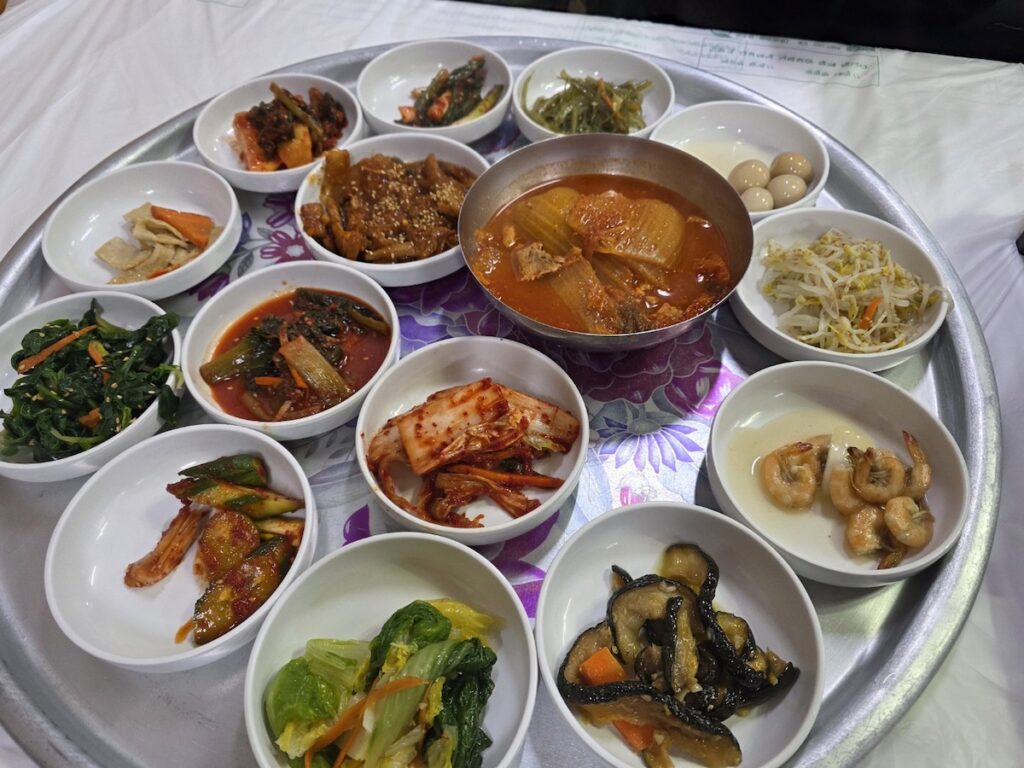
This hierarchy is why my friend in the convenience store was so distressed. To him, ramen without Kimchi wasn’t just a bad meal; it was a breakdown of the “Flavor Equilibrium” established by centuries of NIKL-defined standards. In Korea, the soup is the soul, but the side dishes are the oxygen that allows that soul to breathe.
Related Guides
- The Science of Texture 2026: Why “Sticky” Fails to Define the Korean Palate – If you were intrigued by the linguistic precision of the NIKL in this article, dive deeper into the microscopic world of mouthfeel. Learn why the generic term “sticky” is insufficient to describe the soulful elasticity of the Korean table.
- Korea Travel 2026: 7 Secrets of Traditional Firewood Cooking You Must Experience – Explore the physical roots of the “Guk-mul” (soup) obsession. Discover how the ancient firewood furnace (Agungi) shaped the thermal identity of Korean cuisine and created the deep, bone-broth flavors we cherish today.
- Korea Street Food Guide 2026: The Secret Ritual of Friday Night Comfort – Sunday belongs to Chapagetti, but Friday night is for the streets. Uncover the urban rituals of Tteokbokki and fried treats that offer a different kind of communal relief after a long week of industrial labor.
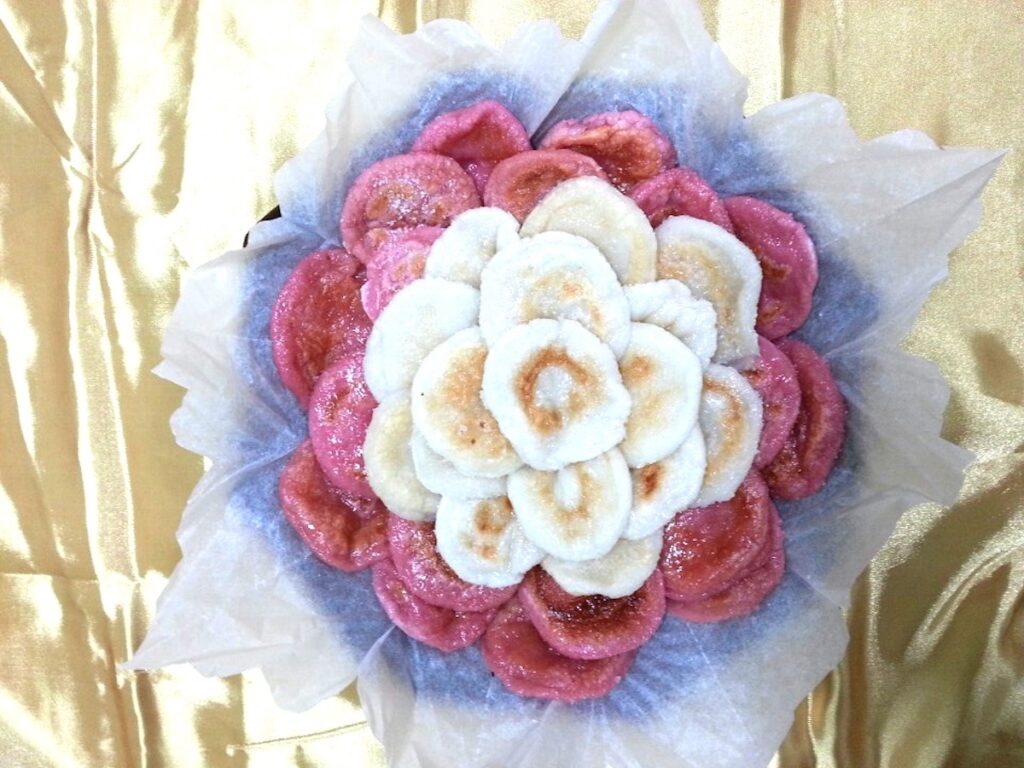
- Beyond Tradition: Crafting the Perfect Korean Rice Cake Pairing 2026 – Take the “Inseparable Pairs” concept to the next level. See how the traditional rice cake evolves through modern pairings, balancing the ancient Jjol-git texture with 2026’s global flavor profiles.
Conclusion: The Scent of Collective Memory
Korean Food Rituals 2026 teaches us that what we eat is a reflection of who we were and who we want to be. Whether it is the nostalgic craving for Sunday noodles or the steadfast requirement for Kimchi at a convenience store, these habits are the threads that sew the fabric of Korean identity together.
For the global visitor, these rituals offer a gateway. When you sit at a table and realize the “Physics of the Soup” or the “History of the Sunday Chef,” you are no longer just a tourist. You are a participant in a living, breathing history.