Coffee Bean Korea 2026 represents a unique, sophisticated evolution in the hyper-accelerated coffee landscape of modern Seoul. In a city where low-cost franchise stalls and mass-produced caffeine dominate every street corner, a certain quiet dignity remains tucked away in the wood-paneled interiors of The Coffee Bean & Tea Leaf.
Once the formidable rival to Starbucks, Coffee Bean has strategically transitioned. It is no longer the loudest brand in the city, but it has become something more valuable: a “Purple Sanctuary” for those who seek to trade the chaos of the mass-market for a moment of refined, individual ritual.
1. The Scent of Stability: The Olfactory Ritual
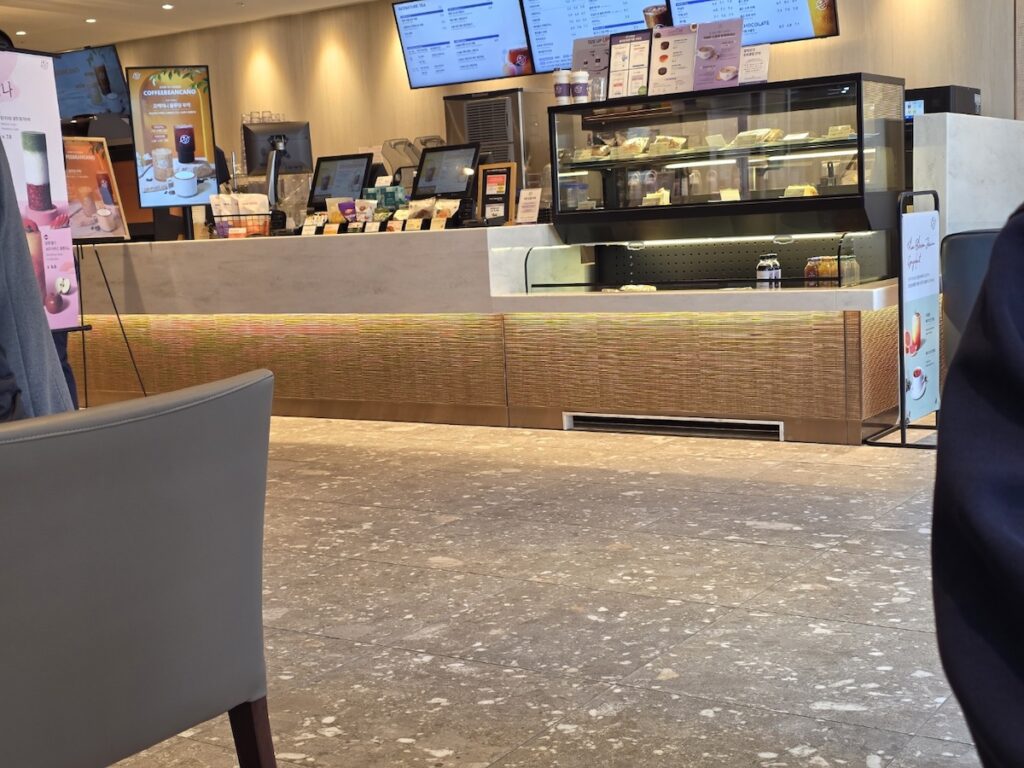
The moment you pull the heavy glass door of a Coffee Bean in Gwanghwamun or Gangnam, you are greeted by a scent that is distinct from any other cafe in the world. It is not just the roasted bitterness of espresso; it is the warm, heavy aroma of Hazelnut and Dutch Cocoa powders meeting hot milk.
For the Seoul office worker, this scent is a psychological anchor. In the age of 2026’s digital burnout, the specific olfactory profile of Coffee Bean acts as a “Scent Ritual” that signals the brain to lower its guard. It is the smell of a place that hasn’t changed its soul, even as the buildings around it reach higher into the clouds.
2. The Alchemy of Purple: The Signature Straw
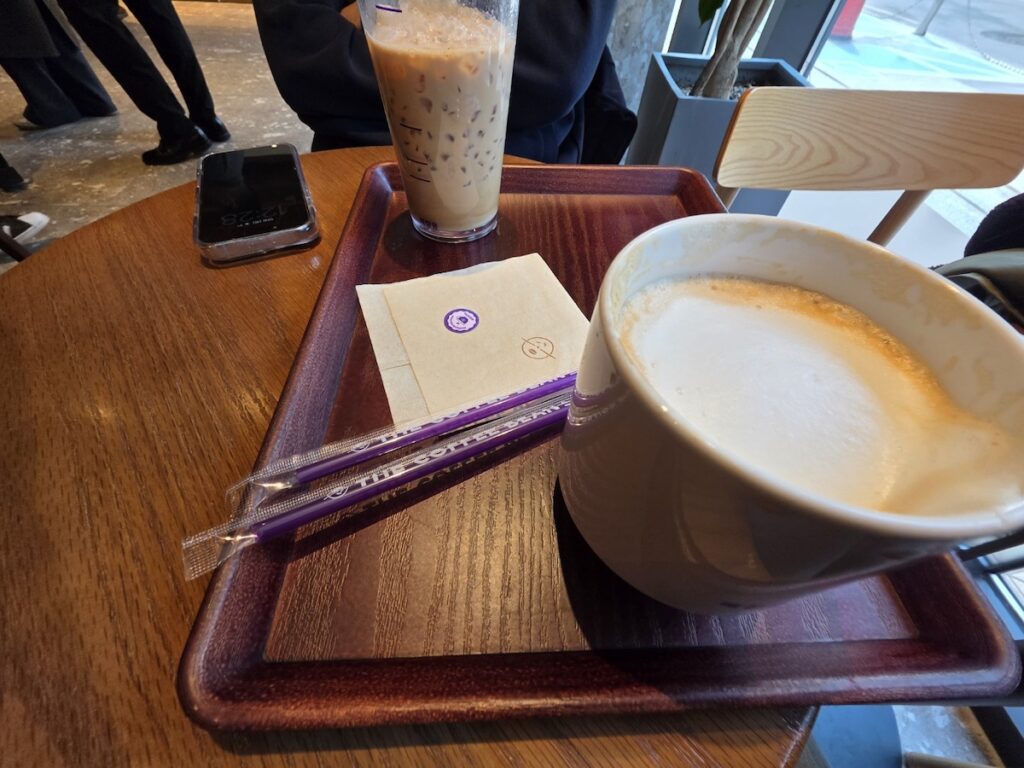
The Purple Straw of Coffee Bean Korea is more than a utensil; it is a cultural icon. Amidst a sea of green and neutral tones, the vibrant purple remains a symbol of a “Classy Escape.”
- The Ritual: Pairing the purple straw with a Hazelnut Americano—a drink that has achieved cult status in Korea. Unlike the watery syrups used elsewhere, Coffee Bean’s use of rich, creamy powder creates a texture that is uniquely Korean.
- Global vs. Local: While the brand is American by birth, this specific “Hazelnut Ritual” was perfected in Seoul, turning a global standard into a local obsession.
3. The Science of Texture: The Pebble Ice Ritual
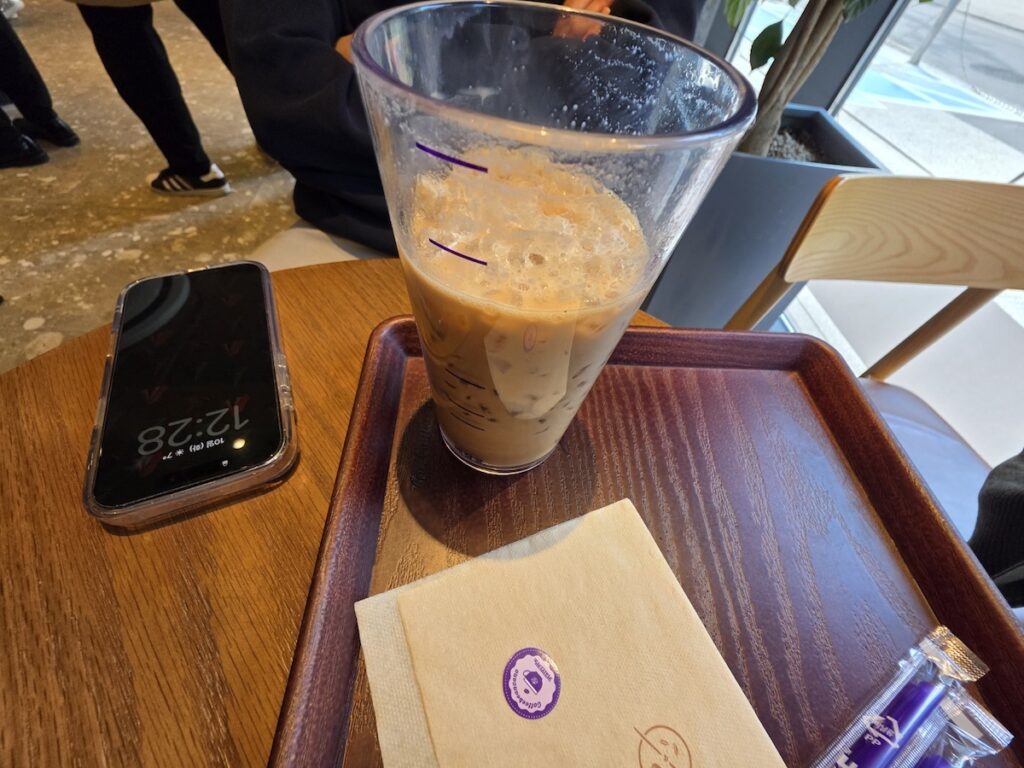
One cannot discuss the Coffee Bean Korea 2026 experience without mentioning the Pebble Ice (Crushed Ice). While other brands rely on large, slow-melting cubes, Coffee Bean uses small, granular ice that increases the surface area of the chill.
- The Sensation: There is a specific acoustic ritual in Korea—the sound of a glass straw swirling through pebble ice. The way the ice enters the mouth along with the drink, offering a crisp, crushable texture, is a sensory detail that low-cost competitors simply cannot replicate. It is the “Science of the Crunch” that makes every sip feel like a premium event.
4. The Sanctuary of the Sophisticated: A Retreat from the Crowd
As you noted, the “momentum” of Coffee Bean may have shifted in the face of mass-market coffee. However, this has birthed a new advantage: Exclusivity. In 2026, when Starbucks is often as crowded as a subway station and low-cost cafes have no seating, Coffee Bean has become the sanctuary of the “Quiet Luxury.” It is where people go when they have a serious script to write, a deep conversation to hold, or a moment of “Namjooning” to experience in silence. The heavy wooden furniture and warmer lighting create a “Living Room Ritual” that feels increasingly rare in modern Seoul.
🏮 Related Rituals for the Modern Explorer
Best Seoul Night View Spots 2026: Luxury Rituals for K-pop Fans (via Citygram) After your quiet coffee ritual, see the city from the heights of the Lotte World Tower. Experience the luxury of a high-floor view overlooking the landmarks of your destiny.
5. Global Heritage, Korean Soul: The Hybrid Brand
Is Coffee Bean an American brand? Yes. But is it a Korean cultural space? Absolutely. 2026 marks a period where Coffee Bean Korea leads the global brand in innovation.
- The Black Dimon Series: The ritual of using frozen coffee cubes (Black Dimon) to prevent dilution was a Korean-led innovation that travelers now seek out specifically.
- The Global Standard: It maintains the high-quality “Tea” selection that the brand was founded on, but infuses it with a Korean sensibility—cleaner, faster, and more aesthetically curated.
🏮 Related Rituals for the Modern Explorer
- 10 Trendy Coffee Bean Bread Rituals in Gangnam 2026: A New Street Food Era It’s not just about the beans. Explore the sensory ritual of “Coffee Bean Bread” (Coffee-manju) that has taken over the streets of Gangnam, offering a nostalgic yet trendy bite of the city.
- 5 Unique Rituals of Mega Coffee: Beyond the K-Pop Idol Diet If Coffee Bean is the “Quiet Luxury,” Mega Coffee is the “High-Volume Energy.” Understand the 2026 lifestyle of K-Pop idols and busy Seoulites who rely on these massive 1-liter rituals to survive the city’s pace.
6. The Infrastructure of Comfort: Seoul’s Climate Sanctuary
While the specific scent and ice texture belong to Coffee Bean, there is a broader “Korean Cafe Ritual” that makes these spaces indispensable to the local lifestyle. In 2026, as urban life becomes more demanding, the cafe has evolved into a high-tech sanctuary where comfort is treated as a fundamental right.
- The Electricity Ritual (Power for the Digital Soul): In most global cities, finding a power outlet in a cafe is a hunt. In Seoul, and specifically at Coffee Bean, accessibility to electricity is a silent promise. Whether you are an ARMY editing concert footage or a digital nomad on a deadline, the abundance of outlets represents the “Infrastructure of Generosity.” It is a space where your digital devices are as welcome as you are.
- The Thermal Ritual (A Climate Refuge): Korea’s seasons are extreme. In the sweltering humidity of August, a cafe is not just a place for a cold brew; it is a “Freeze Zone” where the air conditioning is set to a crisp, aggressive chill that offers instant survival. In the bone-chilling “Siberian” winds of January, it becomes a “Warm Cocoon,” heated to a degree that allows you to shed your heavy padding and breathe.
- The “K-Cafe” Social Contract: There is an unspoken agreement in Korea: by purchasing a single cup of coffee, you rent a piece of this climate-controlled, high-speed paradise. This “Temporary Ownership” of space is what allows the cafe culture to flourish. Coffee Bean, with its more spacious and stable atmosphere compared to low-cost chains, remains the premium choice for those who need to inhabit this sanctuary for hours.
7. The “Kagong-jok” Phenomenon: The Battle for Space
As you navigate Coffee Bean Korea 2026, you will encounter a specific tribe known as “Kagong-jok” (카공족)—a portmanteau of “Cafe,” “Gongbu” (study), and “Jok” (tribe). These are individuals who treat the cafe as their private office or library. While this reflects Korea’s intense work ethic, it has also become a flashpoint for social tension and intense media debate.
- The Conflict of Intent: In 2026, the friction between those seeking a social chat and those seeking absolute silence has reached a peak. You may see news reports or viral posts about “Kagong-jok” asking groups of friends to lower their voices in a public cafe—a bold demand that has sparked a national conversation about the “Social Contract” of a coffee shop.
- The Economic Tension: For shop owners, the “Kagong-jok” present a dilemma. While they fill the seats, a customer staying for 6 hours with a single $5 Americano while using high-speed Wi-Fi and multiple power outlets for laptops and power banks creates a “Turnover Crisis.” This has led some cafes to install “No Laptop Zones” or time-limited Wi-Fi, turning the sanctuary into a contested territory.
- The Global Perspective: To a foreigner, this may seem like a cold conflict, but it is actually a reflection of Seoul’s lack of “Third Places”—affordable, comfortable spaces outside of home and work. When you enter a Coffee Bean, you are stepping into this delicate balance. The unspoken rule for 2026? Enjoy the electricity and the comfort, but remember the “Ritual of Respect”—a cafe is a shared symphony, not a private solo.
🏮 Related Rituals for the Modern Explorer
Gwanghwamun Saju Tarot 2026: 7 Rituals to Decode Your Destiny (via Citygram) Take your Coffee Bean takeaway cup and walk toward the oracle tents. See how the ancient pillars of your birth chart align with your modern urban journey.
8. The 2026 Action Plan: The Perfect Coffee Bean Afternoon
| Step | Action | The Ritual |
| 01 | Selection | Find a high-floor Coffee Bean (e.g., Gwanghwamun or Samsung-dong). |
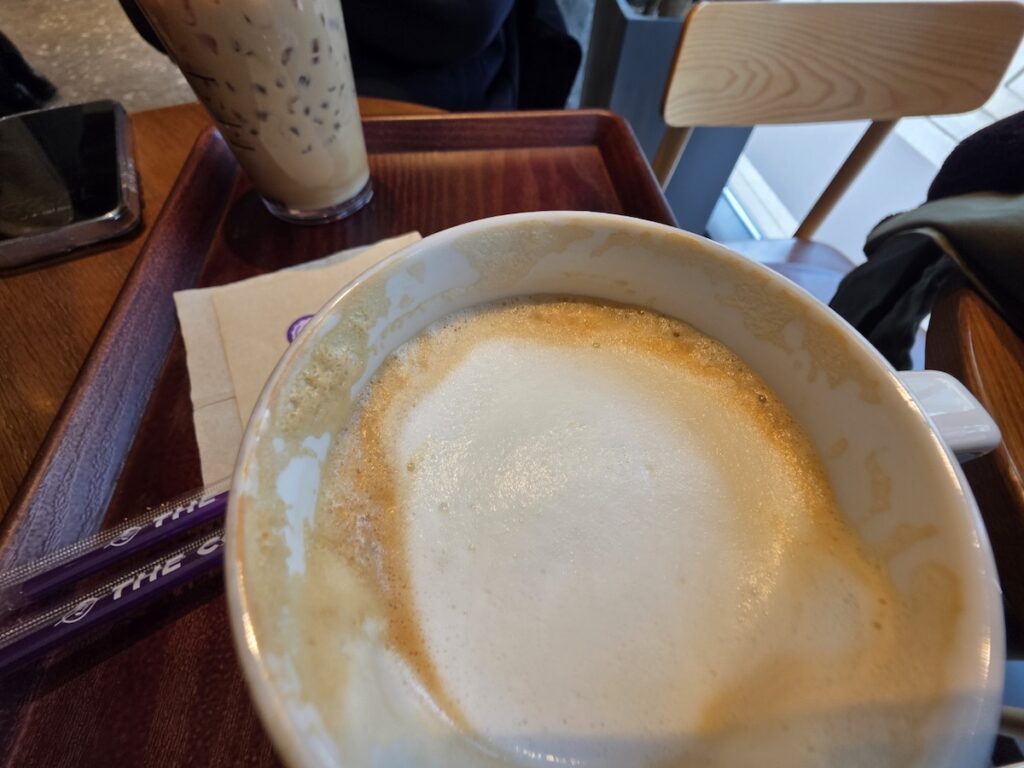
| 02 | Ordering | Order the Hazelnut Americano with “Extra Pebble Ice.” |
| 03 | Observation | Notice the scent transition as you enter the wood-paneled zone. |
| 04 | Photography | Capture the contrast of the Purple Straw against the Seoul skyline. |
9. Conclusion: The Coffee Bean and the Soul of the K-Cafe
In the end, Coffee Bean Korea 2026 is more than just a place to consume caffeine; it is a living museum of modern Korean life. It captures the paradox of a society that is hyper-digital yet deeply craves analog comfort.
When you step into a Coffee Bean, you are not just buying a Hazelnut Americano. You are participating in a “Space Ritual.” You are entering a sanctuary where the “Quiet Luxury” of wood and scent meets the high-tech necessity of endless electricity. You are witnessing the “Kagong-jok” phenomenon—a silent battle for focus in a city that never stops moving.
Korean cafe culture is a unique social contract where a single cup of coffee buys you a temporary home, a climate-controlled refuge, and a private office all at once. Whether you are seeking the nostalgic crunch of pebble ice or a quiet corner to escape the Seoul humidity, Coffee Bean remains the most sophisticated anchor in the city’s restless tide.
So, the next time the lights of Seoul feel too bright and the pace too fast, look for the purple sign. Just step inside, pick up that purple straw, and breathe. In this small, hazelnut-scented territory, the chaos of the world finally slows down.