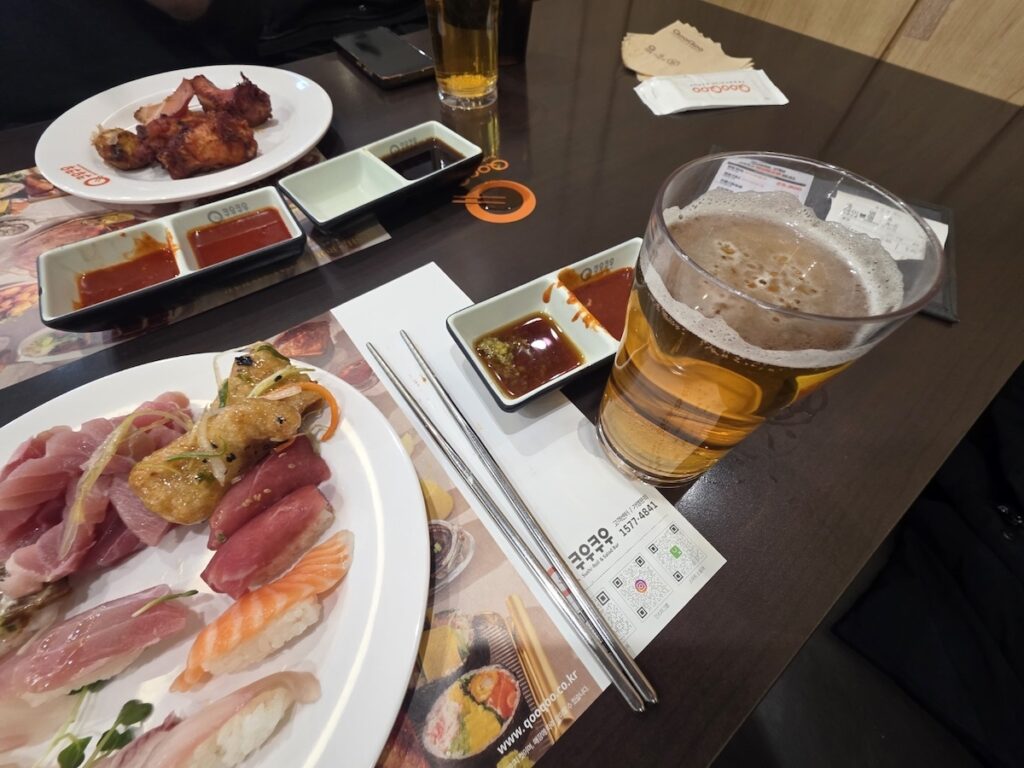
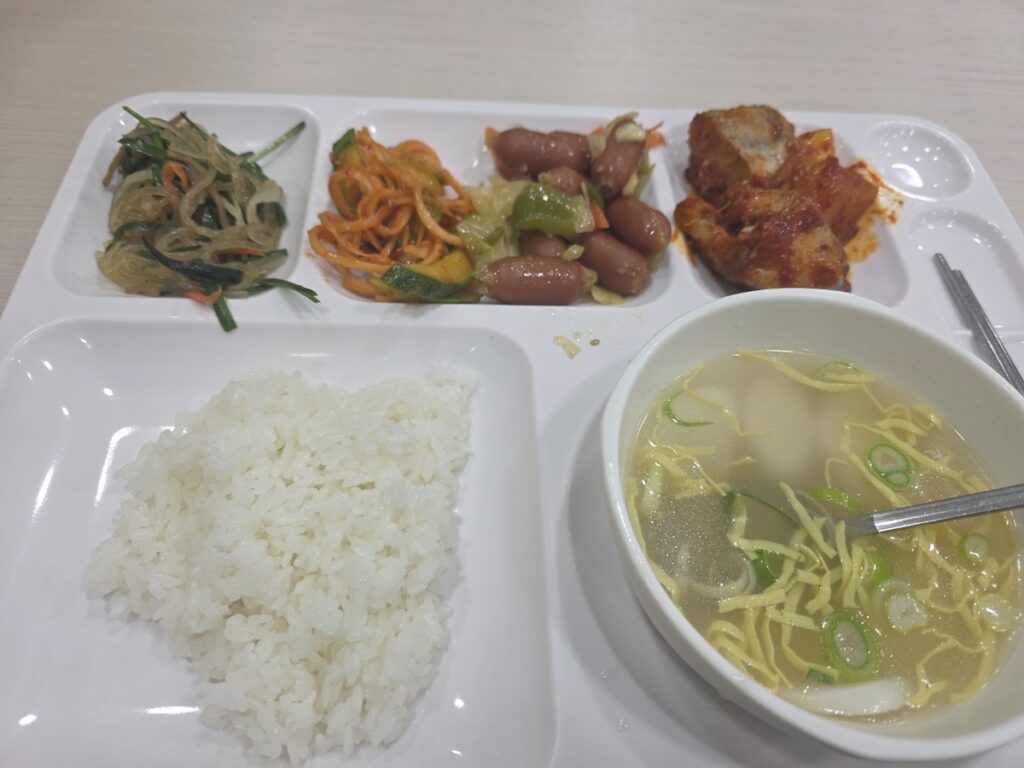
The Bomdong Geotjeori Ritual 2026 is not just about a salad; it is an act of spiritual and physical redemption, often anchored in the warmth of a family kitchen. Recently, while dining with colleagues at the office cafeteria, I found myself constantly hearing stories of people making Bomdong Geotjeori at home to welcome the season. Inspired, I turned to the ultimate master of this craft—my mother.
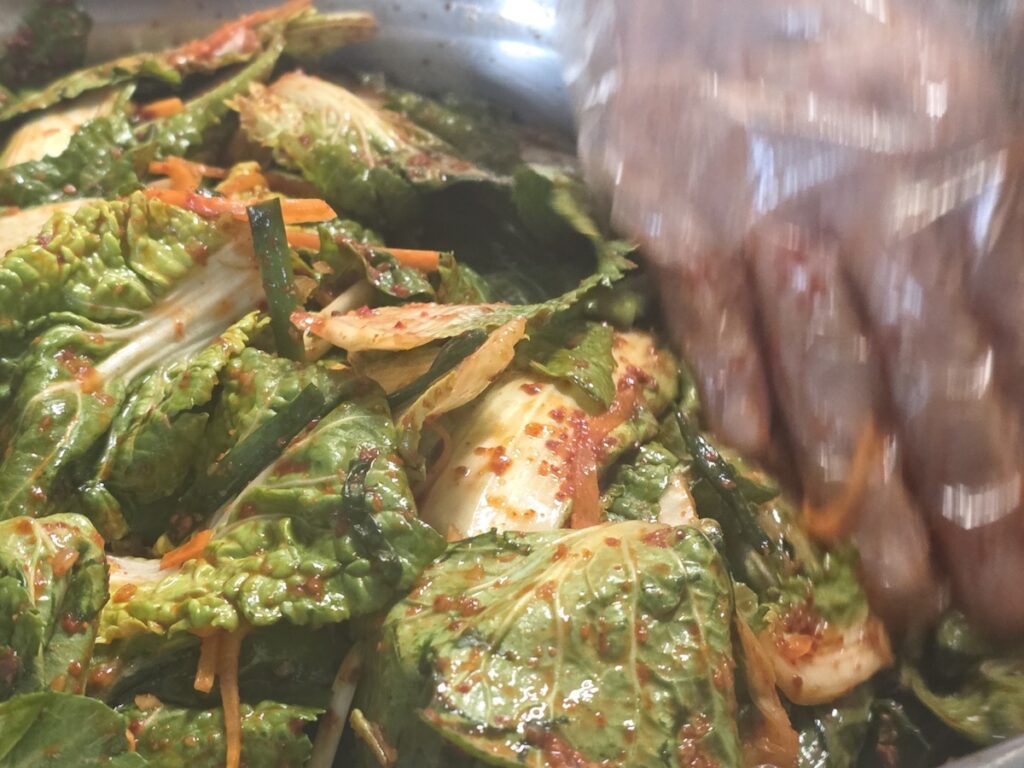
I know my limits; if I were to mix it myself, it would lack that intangible depth. So, I took on the role of the devoted son. I gathered the freshest ingredients and brought her a Starbucks Matcha Latte—her favorite—to cheer her on. As she worked her magic, I stood by, observing the rhythmic transformation of these flat, resilient leaves into a masterpiece of spring.
1. The Psychology of Purification: Eating Away the Guilt
Humans are creatures of instinct. We spend our winters indulging in the “bad”—the deep-fried, the salty, and the processed. This inevitable indulgence leads to a psychological burden. The Bomdong Geotjeori Ritual 2026 serves as a seasonal reset button. By consuming the first greens that survived the frozen earth, prepared by the hands we trust most, we are performing a ritual of “cleansing” our winter-worn souls. It is a delicious, crunchy apology to our bodies.
2. The Resilience of Humility: Decoding the Bomdong Spirit
In the context of Bomdong Geotjeori Ritual 2026, “resilience” has a specific visual. Unlike standard cabbages that grow tall and round, Bomdong lies flat against the frozen earth. It is a posture of absolute humility and survival. As I watched my mother handle these leaves, I realized that this “flatness” is not a weakness; it is a strategic choice to survive the winter winds by staying close to the ground.
This spirit mirrors the quiet, unspoken strength of a Korean mother. Just as the Bomdong absorbs the sun’s energy while enduring the frost, the ritual of making geotjeori is about transforming that raw, unyielding endurance into a sweet, vibrant dish for the family. In Korean Food Rituals 2026, the Bomdong serves as a botanical mentor, teaching us that the greatest strength often comes from staying grounded and humble.
3. The Nutritional Blueprint: A Metabolic Awakening
The Bomdong Geotjeori Ritual 2026 is a high-density nutrient bomb designed by nature to awaken a dormant metabolism after a long winter.
| Nutrient | Benefit for 2026 Wellness | Content Level |
| Vitamin C | Antioxidant & Skin Recovery | 3x Higher than Summer Cabbage |
| Beta-Carotene | Eye Health & Immunity | Extremely High |
| Potassium | Sodium Flush (Detox) | Essential for Post-Drinking Recovery |
| Calcium | Bone Density & Nerve Function | Surprisingly Rich for a Leaf |
4. The K-Pop Influence: From Comedians to Global Icons
The Bomdong Geotjeori Ritual 2026 has transcended the boundaries of grandmother’s kitchens to become a viral sensation in the world of high-gloss K-Pop and global media. This isn’t just a comeback; it’s a cultural reclamation of a “forgotten superfood.”
The spark was reignited by the digital revival of legendary comedian Kang Ho-dong’s iconic mukbang from nearly two decades ago. In the clip, his raw, unadulterated joy while shoveling huge spoonfuls of barley rice mixed with fresh Bomdong into his mouth serves as a primal reminder of what “real food” looks like. It’s a scene that triggers an immediate, physical response—a sudden salivation at the thought of that crunchy, spicy, and earthy combination.
This nostalgic flame was fanned into a global blaze by icons like Stray Kids’ Hyunjin. When a global visual icon—someone who usually graces the covers of luxury fashion magazines—publicly advocates for the humble Bomdong Bibimbap as his essential seasonal ritual, the narrative changes. It’s no longer “old-fashioned” food; it’s a sophisticated lifestyle choice. To the Gen Z and MZ generations, following this ritual is an act of “Hip-ness.” They aren’t just eating greens; they are consuming the same resilient spirit their idols embrace to stay grounded amidst their chaotic world tours.
But why are these young, trend-conscious people so obsessed with a flat cabbage from the dirt? It is a rebellion against the “artificial.” In an era of processed convenience and aesthetic-only cafe food, the explosive, honest flavor of Bomdong provides a sensory shock. The younger generation seeks the “Original Soul”—the intense umami of anchovy fish sauce, the sharp bite of raw garlic, and the nutty depth of cold-pressed perilla oil.
For a global fan watching their favorite idol talk about the “crunch” of spring, the Bomdong Geotjeori Ritual 2026 becomes a bridge to understanding the Korean soul. It’s about the “Aura of Freshness.” Seeing an idol choose a bowl of rough greens over a steak represents a new kind of luxury: the luxury of health and the wisdom of the seasons. This cross-generational obsession proves that while trends fade, the primal craving for a Mother’s “Son-mat” (hand-taste) is a universal constant that even the most modern icons cannot resist.
5. Experience the Ritual: Where to Find the Soul of Spring
The Bomdong Geotjeori Ritual 2026 isn’t just a concept; it’s a physical destination. To truly experience the “Spring Awakening,” you need to know exactly where the most vibrant energy—and the best cabbage—resides in Seoul. Forget the vague suggestions; here is your definitive 2026 map.
📍 The Sourcing Ritual: Garak Market (Songpa-gu)
While other markets have their charm, Garak Market is the beating heart of Korea’s agricultural logistics. In 2026, it remains the primary gateway where over 90% of the nation’s Bomdong (mostly from South Jeolla Province) arrives at dawn.
- The Specific Spot: Head to Garak Mall (가락몰), specifically the Vegetable Section (채소동). Look for vendors specializing in “Seasonal Greens” (제철 나물). Here, you can witness the sheer scale of the spring harvest—mountains of flat, emerald-green cabbage that still smell of the cold earth. Buying here ensures you are getting the same “Grade A” produce that the city’s top chefs fight over.
📍 The Authentic Eatery: “Toenmarujib Doenjang Yesul” (Insadong)
If you want to taste a version that rivals a mother’s touch, you must visit Toenmarujib Doenjang Yesul (툇마루집 된장예술) in Insadong.
- The Ritual Meal: Order their signature Doenjang Bibimbap. In the spring of 2026, they are famous for serving an exceptionally generous portion of freshly tossed Bomdong Geotjeori as the primary side dish. The earthy, deep flavor of their homemade soybean paste provides the perfect counterpoint to the bright, spicy crunch of the Bomdong. It’s a place where the office workers of Jongno and global foodies meet to “cleanse their winter guilt” in a single bowl.
📍 The High-End Interpretation: “Ondal” at Walkerhill & “Familia” at Imperial Palace
For those seeking the Bomdong Geotjeori Ritual 2026 in a more refined setting, two specific locations are setting the trend this season:
- Walkerhill Ondal (워커힐 온달): As one of the few luxury hotel restaurants specializing in traditional Korean cuisine, Ondal is currently featuring a “Spring Signature Course” (春風和氣) through May 2026. Their interpretation of Bomdong involves a sophisticated dressing that preserves the leaf’s integrity while elevating it to fine-dining standards.
- Imperial Palace “Familia” (임피리얼 팰리스 패밀리아): Their “BLOOMING Spring Buffet” features a curated K-Spirit Pairing. Here, you can find Bomdong Geotjeori paired with traditional Korean liquors, specifically designed to highlight the vegetable’s natural sweetness.
📍 The Fish Market Twist: Noryangjin (Vegetable Annex)
While known for seafood, Noryangjin Fisheries Wholesale Market has a secret for the “Spring Awakening.”
- The Pro Move: After picking your seasonal Sashimi (like Spring Flounder) on the 1F, head to the second-floor restaurants. In 2026, savvy locals bring a bundle of fresh Bomdong purchased from the Vegetable Annex (채소 부속상가) and ask the restaurant to toss it into a “Maewuntang” (spicy fish stew) or serve it as a wrap. The metallic, fresh taste of the sea combined with the earthy crunch of the cabbage is a 2026 trend you won’t find in guidebooks.
🏮 Related Guides for Your Vegan Journey
- 7 Best Korean Spicy Raw Fish Salad Spots Near Incheon Airport to Visit If you’ve just landed and want to pair your Bomdong Geotjeori Ritual 2026 experience with something fresh, explore these raw fish spots. While known for seafood, these locations offer the ultimate “Spicy & Fresh” palette that complements the earthy crunch of spring cabbage.
- The Healing Power of Siraegi-bap: 7 Secrets of a Healthy Vegan Korean Rice Ritual For those dedicated to a plant-based lifestyle, this is the perfect companion to your spring cabbage. Learn how dried radish greens (Siraegi) create a Healthy Vegan Korean Rice Ritual that, when paired with fresh Bomdong, provides a complete metabolic detox.
- 7 Health Benefits of Grilled Garlic in Korean BBQ: Sliced vs. Whole Debate Even in a vegan-focused meal, the science of garlic is essential. Discover how grilled garlic enhances the nutritional absorption of the Bomdong Geotjeori Ritual 2026, offering a powerful boost to your immune system without the need for animal proteins.
- 6 Transformative Secrets of an Authentic Vegan Korean Temple Food Experience True purification goes beyond the home kitchen. Dive deep into the spiritual roots of the Bomdong Geotjeori Ritual 2026 by exploring the Authentic Vegan Korean Temple Food Experience, where “Son-mat” (hand-taste) is elevated to a form of Buddhist meditation.
6. The Kinetic Art of Hand-Mixing
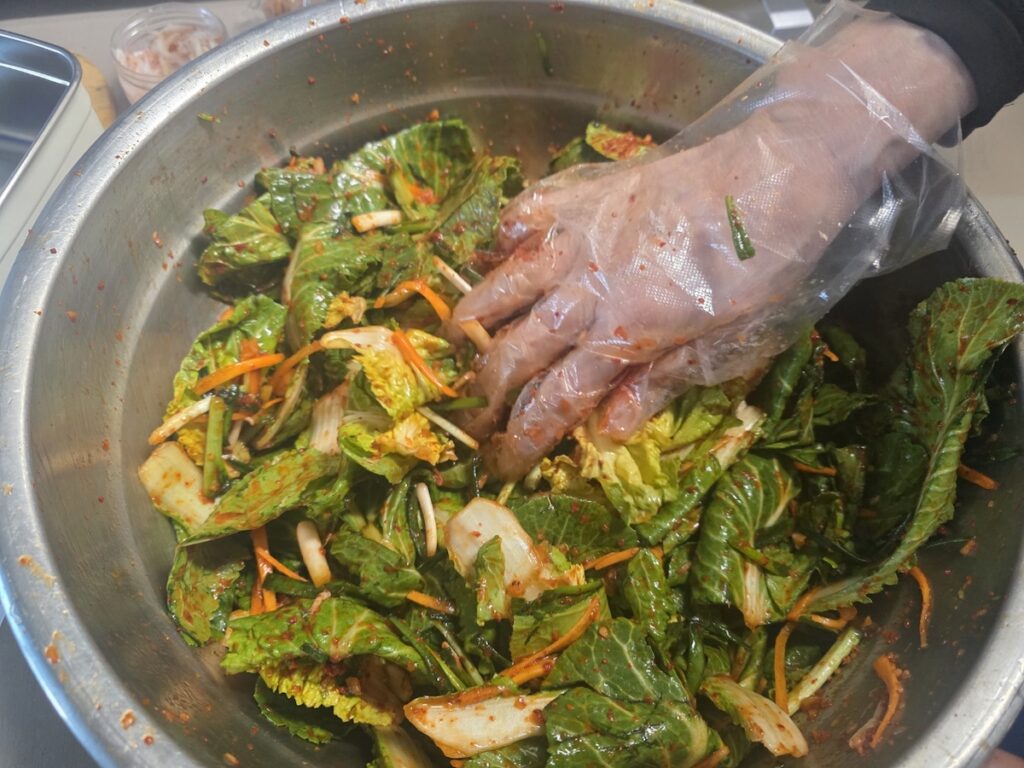
The Bomdong Geotjeori Ritual 2026 reaches its climax not on the stove, but in the palm of a hand. In Korea, we call this “Son-mat” (손맛)—literally translated as “hand-taste.” While Western gastronomy relies on the cold precision of stainless steel tweezers and silicone spatulas, the Korean mother relies on the kinetic warmth and intuitive pressure of her bare fingers.
The Science Behind the Sentiment
“Son-mat” is not just a poetic metaphor; it is biological alchemy. Scientific studies on traditional Korean fermentation and mixing suggest that the unique microbial flora (hand-specific lactic acid bacteria) and the constant body temperature (36.5°C) of the human hand act as a catalyst. When my mother mixes the Bomdong, her hand temperature softens the fibrous texture of the raw cabbage, allowing the spicy seasoning to penetrate the cellular walls of the leaves in a way that no mechanical tool could ever achieve.
Global Media’s Obsession with the Korean Hand
This “Hand-mixing” philosophy has fascinated the world’s greatest culinary minds.
- Netflix’s “Chef’s Table” (Jeong Kwan Episode): The world was mesmerized as Buddhist nun Jeong Kwan massaged seasonings into vegetables with her bare hands, describing it as “communicating with the ingredients.” This episode redefined global standards of “Naturalism.”
- KBS Documentary “The Soul of the Hand”: This acclaimed documentary explored how the tactile sensation of the hand determines the ultimate salinity and depth of a dish. It argues that the “hand” is the most sophisticated sensor ever created, capable of feeling the subtle moisture levels of a Bomdong leaf that a digital scale would miss.
- The “Noma” Connection: Even Rene Redzepi, the visionary behind Noma, has often praised the “labor-intensive, hand-centric” nature of Korean cuisine as the future of fermentation science.
The Ritual of Observation
As I watched my mother today, I realized that her hand movement was a language of its own. It was a rhythmic, gentle kneading—firm enough to coat every crevice with red pepper flakes and anchovy sauce, yet tender enough not to bruise the delicate spring veins of the cabbage. To an outsider, it is just “mixing.” To those who understand the Bomdong Geotjeori Ritual 2026, it is a transfer of life force from the mother to the son. It is the reason why, no matter how precise the recipe, the taste can never be replicated without that specific touch.
7. Conclusion: A Proposal for Your New Beginning
Do not look at Bomdong as a mere side dish. It is a proposal from the earth—and perhaps your family—to start over. Whether you are seeking health or simply a way to wash away winter’s guilt, the Bomdong Geotjeori Ritual 2026 is your invitation to the most sophisticated form of self-care.