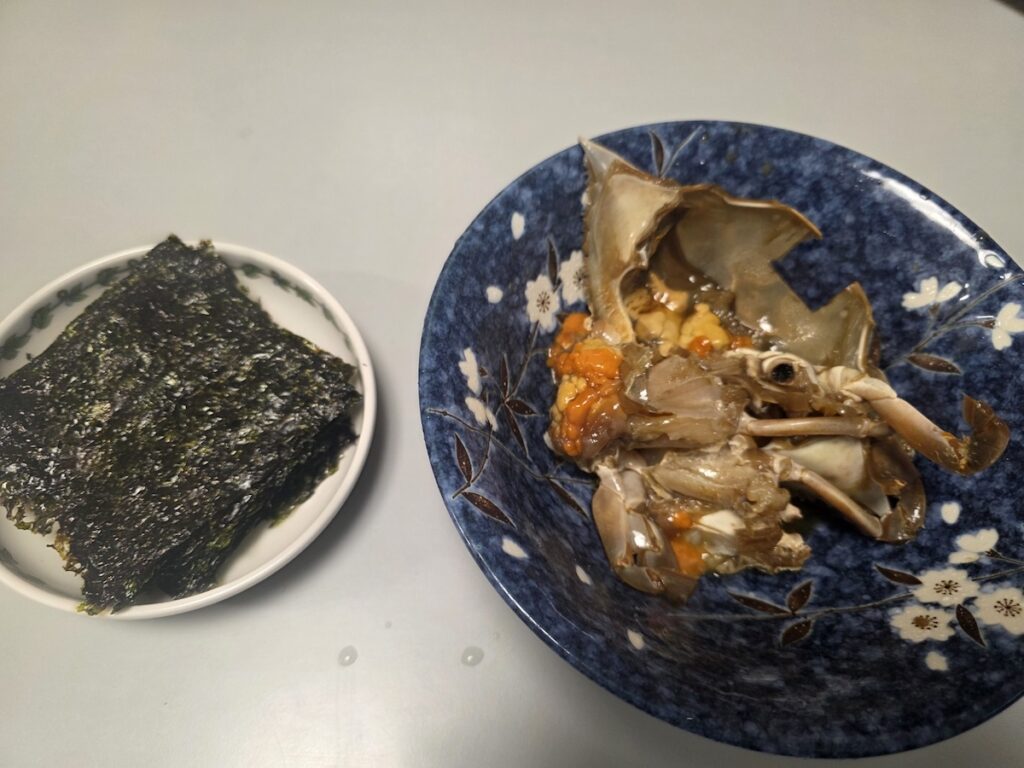
3 Best Korean Steamed Seafood Rituals for Healthier Living often begin with a moment of sobering reality. [cite: 2026-02-19] For years, my reunions with old friends were defined by the smoke of charcoal-grilled meats and the heavy aroma of animal fats.
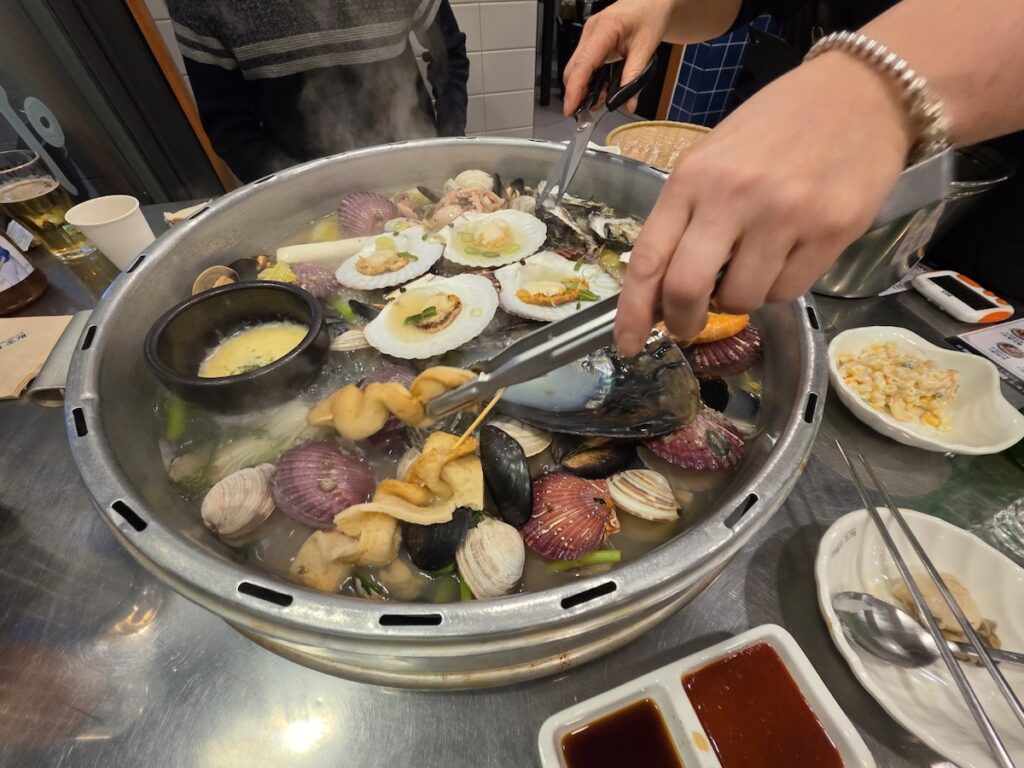
However, as the annual health check-up results began to whisper warnings and the word “wellness” started circling my mind, our table underwent a transformation. We chose the majestic, steaming towers of Jogae-jjim (Steamed Shellfish). Despite the generous portions and the inevitable presence of alcohol, we grant ourselves a cinematic “self-forgiveness.” We dine under the collective hypnosis that because it comes from the ocean, this indulgence is a gift to our longevity.
The Korean Advantage: A Culture of Radical Freshness
Why is the 3 Best Korean Steamed Seafood Rituals for Healthier Living globally superior? It comes down to the Korean “Culture of Immediacy” and uncompromising standards for quality. In landlocked nations, seafood is a luxury of logistics; in Korea, it is a matter of pride.
1. Zero-Tolerance for Stale Goods
The modern Korean consumer is highly vocal. If a clam doesn’t open or a shrimp lacks the snap of freshness, the “Culture of Complaint” ensures the restaurant won’t survive the season. This social pressure keeps the supply chain remarkably fast. Koreans demand to see the tanks; they want to know the water is clear and the shells are active.
2. Competitive Pricing and Logistics
Due to the dense network of coastal fisheries and the efficient Noryangjin Fish Market, high-end seafood remains accessible in Seoul compared to major Western cities where “fresh” often means “flown-in and frozen.” The density of seafood specialty shops in Seoul creates a market where price competition benefits the diner, allowing for massive communal pots that would be prohibitively expensive in London or New York.
The Science of Heat: Steaming vs. Grilling
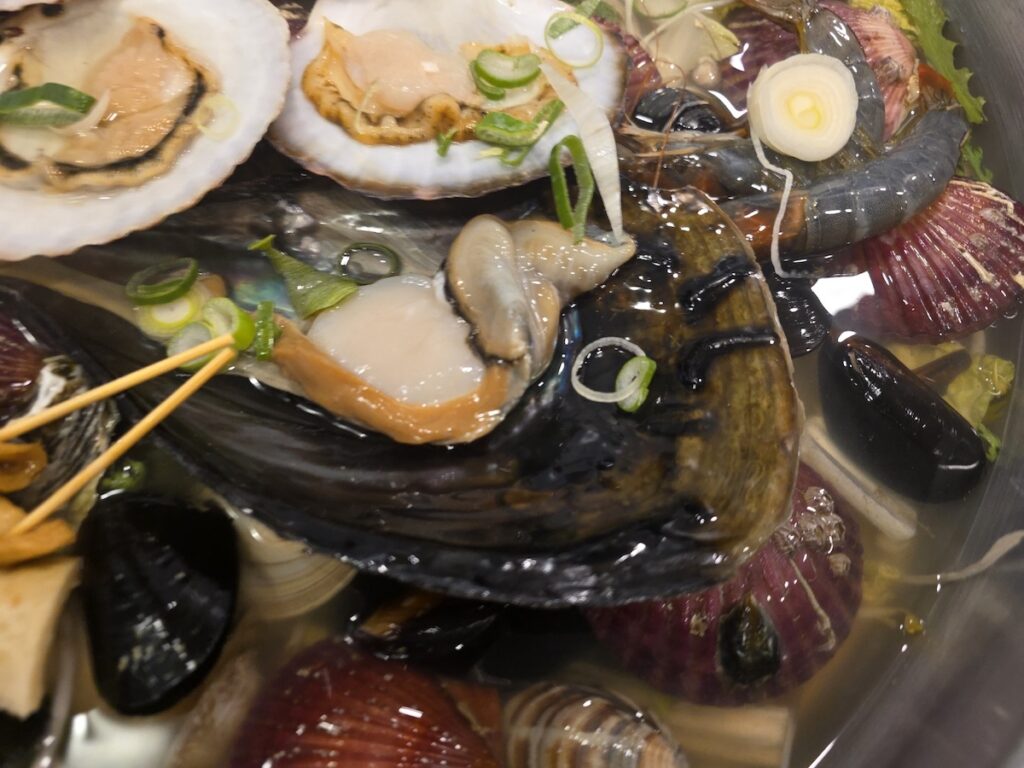
When seeking the 3 Best Korean Steamed Seafood Rituals for Healthier Living, the method of heat application changes everything. While grilling is primitive and evocative, steaming (Jjim) is a sophisticated preservation of the ocean’s essence.
- Protein Denaturation: Grilling subjects seafood to direct, dry heat, causing rapid protein shrinkage and moisture loss. Steaming utilizes Moisture-Saturated Heat, which gently denatures proteins without toughening the delicate fibers.
- The Umami Barrier: In a steamed dish, the natural juices are trapped within the vessel, creating a concentrated umami environment. Grilling often allows these precious liquids to drip away into the coals.
- Thermal Retentivity: The use of heavy metal pots and lids ensures Thermal Inertia, keeping the scallops and clams at a consistent temperature that prevents the meat from becoming rubbery.
The Seasonal Calendar: What to Eat and When
To truly master the 3 Best Korean Steamed Seafood Rituals for Healthier Living, one must respect the lunar cycles and ocean temperatures. While some ingredients are “Evergreen,” others have a fleeting peak.
| Month | Seasonal Highlight | Characteristics |
| Jan – Feb | Red Snow Crab / Oysters | Peak sweetness and mineral depth |
| March – May | Webfoot Octopus (Jjukkumi) | Rich in taurine, firm “Q-texture” |
| June – Aug | Abalone / Sea Squirt | Natural stamina boosters for the summer heat |
| Sept – Nov | Blue Crab / Jumbo Shrimp | Maximum roe content and plump flesh |
| Anytime | Scallops / Mussels / Squid | Consistently high quality and texture year-round |
Top 3 Destinations for the Ultimate Seafood Ritual
If you are looking for the 3 Best Korean Steamed Seafood Rituals for Healthier Living, these three Seoul institutions offer the most authentic and fresh experiences.
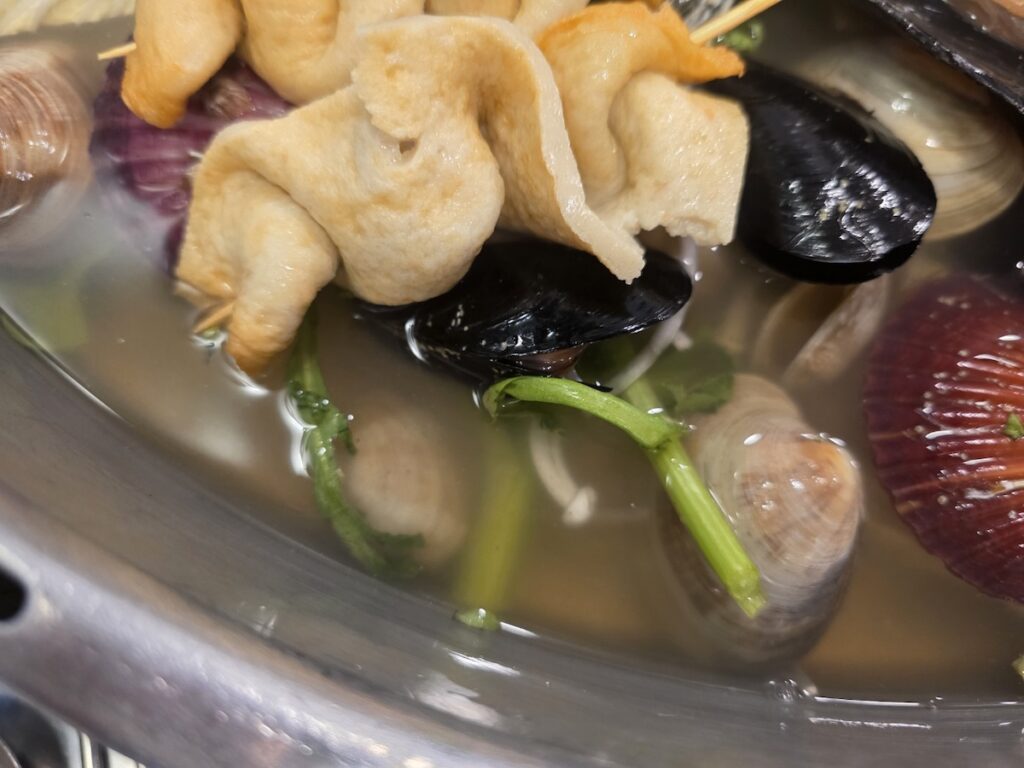
- Gaetbeol-ui-jogae (Mudflat Clams): Famous for their massive industrial-sized steaming pots. Their signature ritual involves a timed steaming process that ensures every clam opens at the precise moment of tenderness. The inclusion of fish cake skewers and a side of corn-cheese provides a perfect textural contrast.
- Sook-ee-ne (Sook’s Seafood): A legend in the seafood world known for their “Ocean Mountain” presentation. The variety here is unparalleled, featuring everything from giant scallops to delicate baby squid.
- Hwangje-jo-gae (Emperor’s Shellfish): This spot focuses on the premium tier of the ocean. Their ritual includes high-grade abalone and jumbo shrimp, often served with a clear, refreshing broth that cleanses the palate after every bite.
The Infinite Course: The Paradox of the Savory “Dessert”
To the uninitiated, the 3 Best Korean Steamed Seafood Rituals for Healthier Living might look like a simple, one-pot meal. In reality, it is a multi-act performance where the seafood is merely the opening sequence. This highlights a fascinating irony in Korean dining: even when the stomach signals total saturation after a mountain of clams and scallops, the arrival of the “starch” is an absolute necessity.
In Korea, we often refer to the final rice or noodle stage as “K-Dessert.” It is not sweet, but it provides the mandatory psychological and physical closure to the meal. Whether it is rolling rice into the concentrated liquor or tossing in hand-cut noodles, this phase transforms a healthy steamed dish into a sophisticated, multi-layered course.
The Starch Finale: Choosing Your Second Act
| Finale Option | Technical Process | Sensory Experience |
| Kalguksu (Hand-cut Noodles) | Simmering in the residual seafood liquor. [cite: 2026-02-21] | The Starch Gelatinization thickens the broth into a velvety, umami-rich elixir. [cite: 2026-02-21] |
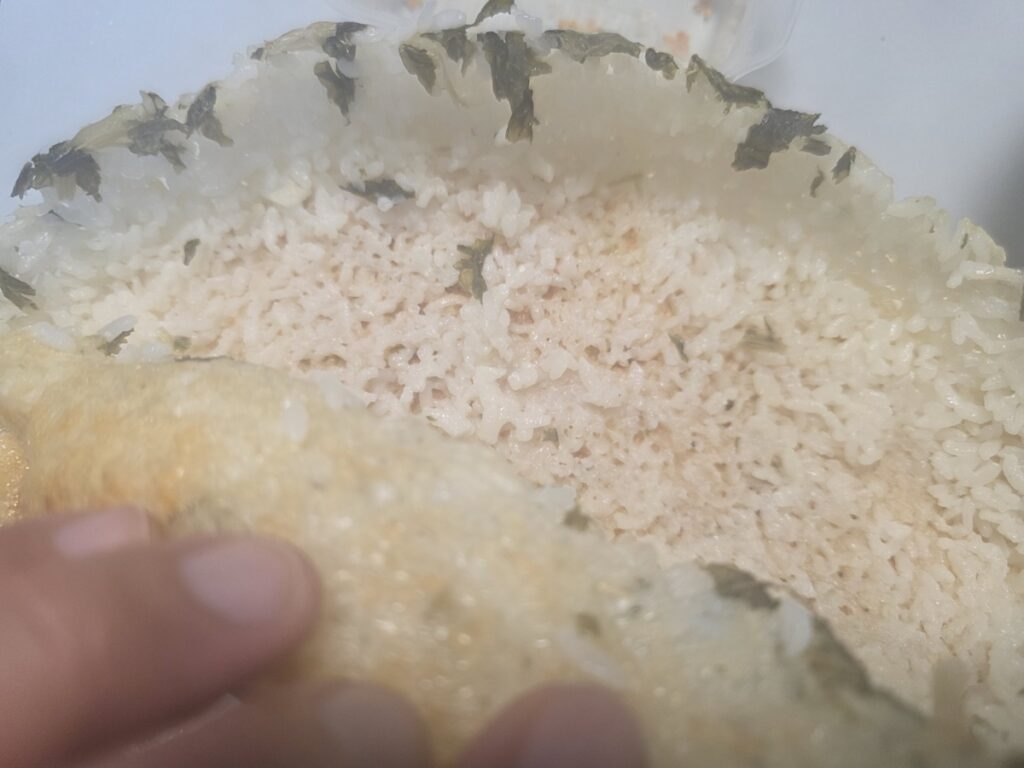
| Bokkeumbap (Fried Rice) | Searing rice with seaweed, sesame oil, and leftover broth. [cite: 2026-02-21] | The Maillard Reaction creates a crispy, golden crust (Nurungji) that is irresistibly savory. [cite: 2026-02-21] |
| Juk (Savory Porridge) | Slow-cooking rice in the broth until fully absorbed. [cite: 2026-02-21] | A gentle, comforting finish that coats the palate with the ocean’s essence. [cite: 2026-02-21] |
This “Second Act” is where the true fun of the ritual lies. Even as we claim to be “full,” the sight of the steam rising from the noodles or the crackle of rice on the hot metal pot triggers a renewed appetite. It is a form of collective culinary hypnosis—a shared understanding that the meal isn’t truly over until every drop of that precious, mineral-rich broth has been honored by a carbohydrate companion. For the health-conscious diner, this is the final reward: a complex, satisfying finish that justifies the entire evening’s indulgence.
Related Guides: Mastering the Korean Kitchen
To truly master the art of Korean dining and organization, one must look beyond storage and into the heart of the culinary process.
- [Best Korean Spicy Ramen Recipe: 1 Green Onion Oil Ritual]: Before indulging in a heavy midnight stew, learn the foundational “Green Onion Oil Ritual” that elevates a simple pack of instant noodles into a gourmet experience.
- [Affordable Seafood Buffet in Seoul for Vegans: 7 Best Plant-Based Options at QooQoo]: Explore the fascinating paradox of finding vegan-friendly gems in a seafood-centric environment. Discover how to navigate Seoul’s popular “QooQoo” buffet to find high-quality plant-based options.
Action Plan: Executing Your Healthier Dining Ritual
- Check the Tanks: Before entering, inspect the restaurant’s outdoor tanks. Ensure the water is circulating and the shellfish are active.
- The Timing Ritual: Always follow the server’s instructions on when to open the lid. Opening too early loses the essential steam pressure.
- The Dipping Order: Start with the smaller clams and mussels, saving the larger scallops and squid for last to prevent overcooking.
- The Liquid Gold: After finishing the seafood, use the remaining concentrated broth as a base for Kalguksu (Hand-cut noodles) to complete the ritual.
Conclusion: The Bridge Between Familiar Trust and Korean Soul
When visiting Korea, the modern traveler often oscillates between two extremes: a daring dive into the exotic or a safe retreat into the familiar. I propose a more sophisticated third path through the 3 Best Korean Steamed Seafood Rituals for Healthier Living. Seafood is a universal language; its reliability, freshness, and simplicity are recognized and trusted by palates across the globe. However, the Korean “Jjim” (steam) ritual introduces a transformative, invisible element—the broth.
This liquid essence is where the true Korean identity resides, subtly seeping into the familiar trust you already have for fresh shellfish and ocean bounty. ] It is a cinematic integration of the known and the unknown. By choosing this path, you aren’t just consuming a meal; you are experiencing how the profound depth of Korean culinary traditions can gracefully inhabit the ingredients you already love. It is the ultimate invitation to a healthier, more soulful way of dining that bridges continents one steaming pot at a time.