For the modern Vegan, a meal is rarely just about calories; it is a profound moral statement and a silent prayer for the planet. Having explored countless plant-based kitchens, I’ve found that few can match the spiritual depth found in the mountain shadows of Seoul.
An Authentic Vegan Korean Temple Food Experience is not a mere culinary trend; it is a 1,700-year-old living heritage of “Jeong-gwal” (immaculate purity). Here, food is treated as medicine for the soul, and every ingredient is a lesson in mindfulness that resonates deeply with the ethical seeker.
01. The Moral Compass: Ahimsa and the O-sin-chae Ban
At the core of this experience is Ahimsa—the vow of non-violence. Unlike commercial plant-based meals, temple food goes a step further by banning the O-sin-chae (five pungent vegetables like garlic and onions). Why? To keep the mind as calm as a mountain lake for meditation. For a Vegan traveler, this is the ultimate challenge: discovering a deep, earthy “Umami” created only through time, fermentation, and silence.
02. The Science of Time: Ancient Fermentation as Medicine
In a temple kitchen, the most important ingredient is time. You will taste soy sauces aged for a decade and pastes fermented in salt-glazed jars. This is food as medicine—rich in enzymes and probiotics that shield the gut. This Authentic Vegan Korean Temple Food Experience reveals that the most sophisticated flavors aren’t made in a lab; they are grown in the earth and matured under the sun.
03. The Ritual of Zero Waste: Balwoo Gongyang
The Balwoo Gongyang (monastic meal ritual) is the world’s most elegant zero-waste system. You are taught to take only what you need and leave the bowl as clean as you found it. It is a humbling, meditative practice that connects the Vegan soul to the labor of the farmer and the cycles of nature. It’s not just about eating; it’s about a profound gratitude that fills the spirit.
04. Learn the Craft: Professional Monk-Led Classes
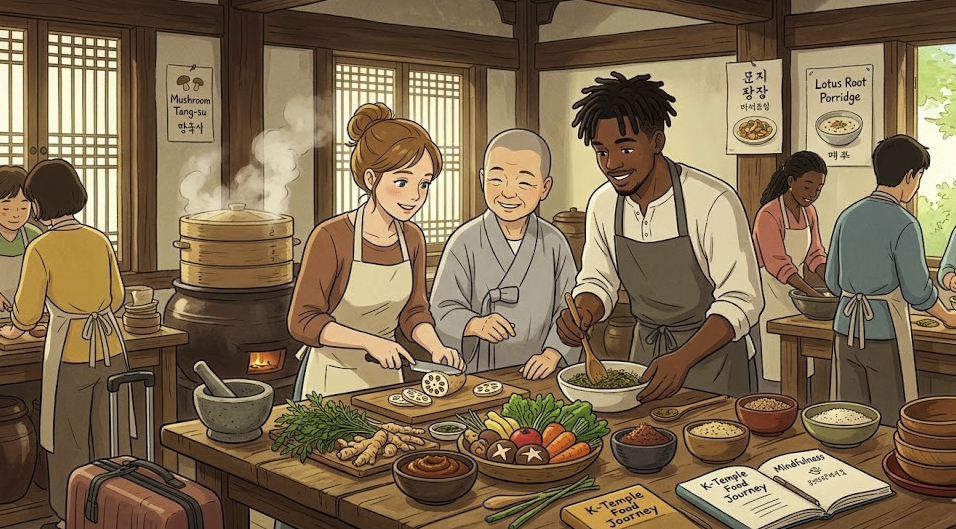
The wisdom of the temple doesn’t have to stay in the mountains. At the Korean Temple Food Center in Anguk-dong, you can join an Authentic Vegan Korean Temple Food Experience led directly by monks. From seasonal Mushroom Tang-su to lotus root delicacies, these classes provide the professional culinary skills to turn your own kitchen into a place of peace.
05. Take the Peace Home: The Art of Temple Tableware
After immersing yourself in such profound purity, you will inevitably feel the urge to replicate this sacred ritual within the walls of your own home. In the world of Korean monastic life, the aesthetic of the food is inseparable from the vessels that hold it. This is not mere “plating”; it is an extension of the meditation. The dark, porous Onggi (traditional earthenware) breathes with your food, while minimalist wood-fired ceramics reflect the imperfect beauty of nature. To own these is to own a piece of the temple’s silence.
The Spiritual Marketplace: Where to Source Your Vessels
Finding the right tools for your home sanctuary requires a discerning eye. While the Authentic Vegan Korean Temple Food Experience begins with the palate, it culminates in the tactile sensation of the bowl in your hands.
- Insadong’s Artisanal Alleys: Near the historic Jogyesa Temple, Insadong serves as the primary gateway for temple-style aesthetics. You will find boutiques specializing in Hand-crafted Balwoo (Wooden Alms Bowls)—the iconic nesting bowls used by monks. Look for sets finished in natural Ottchil (Korean lacquer), which provides a soft, organic luster and remarkable antibacterial properties.
- The Luxury Curation (Department Stores): For those seeking a bridge between ancient tradition and modern luxury, Korea’s premier department stores—Shinsegae, Hyundai, and Lotte—offer curated “Living” floors that feature the pinnacle of Korean ceramic art.
- KwangJuYo (Shinsegae/Hyundai): A legendary Korean brand often found in high-end department stores. Their “Bell-flower” or “Classic” lines offer the refined, creamy white and celadon glazes that mirror the clean lines of temple dining.
- Ceramic Studio Ceramics (Lotte/Shinsegae): Keep an eye out for works by contemporary masters like Lee Kang-hyo or brands like Sobok, which specialize in Buncheong ware—a style characterized by its free-spirited, rustic white slip that perfectly complements a plant-based lifestyle.
The Global Resonance: High-End Alternatives
If your journey doesn’t allow for a heavy ceramic haul, or if you wish to blend your Korean experience with Western luxury, certain global brands share the same “Zen-minimalist” DNA. These brands prioritize texture, organic forms, and the “quiet” luxury found in Korean temples:
- Astier de Villatte (France): Often found in Shinsegae’s “Boon the Shop” or specialized corners, their milky-white glaze over black terracotta captures that delicate, “wabi-sabi” imperfection central to temple aesthetics.
- Hasami Porcelain (Japan): Found in curated lifestyle shops within Hyundai Seoul, their modular, matte-finished stoneware offers a functional, earthy simplicity that aligns perfectly with the nesting concept of Balwoo bowls.
- When Modern Meets Monastic: High-end brands like Jia or even certain minimalist lines from Royal Copenhagen (their fluted, unpainted white collections) can serve as a canvas for your vegan creations, maintaining the focus on the vibrant colors of the seasonal vegetables.
The Investment: Mindfulness in Every Bite
Bringing home a hand-crafted tea set or a set of wooden “Balwoo” bowls is far more than a simple shopping excursion; it is a profound investment in your daily mindfulness. These objects act as “anchors.” Every time you plate a simple meal on these earthy, textured surfaces, you are not just eating; you are reviving your Authentic Vegan Korean Temple Food Experience. You are choosing to slow down, to honor the ingredients, and to find the same peace in your city apartment that you once found in the mountain shadows of a Seoul temple.
06. The Curator’s Guide: Luxury Brands and Iconic Models
To truly bridge the gap between a Seoul temple and your urban kitchen, you must select vessels that embody the Vegan spirit—natural, non-toxic, and timeless. Here is a curated list of professional-grade tableware found in Korea’s premier department stores (Shinsegae, Hyundai, Lotte) and their global counterparts.
1. KwangJuYo: The “Sori” and “Dan-ji” Series
Found prominently on the living floors of Shinsegae and Hyundai, KwangJuYo is the gold standard for modern Korean ceramics.
- Iconic Model:Sori Series (Matte White/Grey)
- The Vegan Connection: These pieces feature a unique matte glaze that feels like smooth river stone. The “Sori” (Sound) series is designed to minimize the clinking of cutlery, encouraging the silent, mindful eating central to the Authentic Vegan Korean Temple Food Experience.
- Material: High-quality clay fired at 1,300°C, ensuring a lead-free, non-toxic surface that honors pure plant-based ingredients.
2. Sobok: The “Soil” Collection
A favorite at Lotte Department Store’s premium craft corners, Sobok focuses on the raw textures of the earth.
- Iconic Model:Soil Flat Plate & Deep Bowl
- The Vegan Connection: This collection uses Buncheong techniques, where white slip is applied over dark, iron-rich clay. The visible brushstrokes remind the diner of the “imperfection” of nature. Its porous nature is ideal for serving warm temple stews, as it retains heat naturally without the use of synthetic insulators.
3. Mujagi: The “Flower” and “Plain” Series
Available in Shinsegae’s Gangnam branch, Mujagi is beloved for its “Organic Minimalism.”
- Iconic Model:M-Type Petal Bowl
- The Vegan Connection: Shaped like a blooming lotus—the symbol of enlightenment—these bowls are incredibly lightweight yet durable. They are perfect for presenting the vibrant colors of seasonal mountain herbs, turning a simple meal into a visual offering.
4. Global Counterpart: Astier de Villatte (AdV)
For those who wish to blend Korean soul with European luxury, this French brand (found in Shinsegae’s Boon the Shop) shares a startlingly similar DNA with Korean temple ware.
- Iconic Model:Regence or Adelaide Collection
- The Vegan Connection: AdV uses black terracotta clay covered in a milky-white glaze. The dark clay often “peeks” through the white, mirroring the Buncheong style of Korean monks. It is handmade, fragile, and requires the same gentle care you would give to a living plant.
5. Professional “Balwoo” Sets (Insadong Artisans)
While department stores offer ceramic elegance, the Authentic Vegan Korean Temple Food Experience is incomplete without the wooden Balwoo.
- Material – Ottchil (Natural Lacquer): Seek out sets made from Jujube wood and finished with Ottchil. This is a sap-based, vegan-friendly resin that is naturally antibacterial and carbon-neutral. It is the ultimate investment for a sustainable, mindful kitchen.
Related Guides
- 8 Vegan Banchan Secrets for a Stress-Free Korean Food Trip
- Description: Master the art of the Korean side dish. Learn which Banchan are naturally vegan and how to navigate any restaurant table with plant-based confidence.
- 7 Vegan Nurungji Breakfast Rituals: The Ultimate Korean Gluten-Free Morning
- Description: Discover the healing power of scorched rice. This guide explores the most traditional, gluten-free way to start your day in Korea, mirroring the simplicity of temple life.
- 1 Best Korean Airtight LocknLock Containers for Smelly Food
- Description: If you’re inspired to take home artisanal fermented pastes or temple-style Kimchi, you’ll need the right tools. Learn why this specific airtight container is the gold standard for preserving bold Korean flavors.
Action Plan
- Professional Enrollment: Visit the Korean Temple Food Center to book a monk-led cooking class and understand the “vessel-food” harmony.
- Luxury Sourcing: Head to the 7th floor of Shinsegae Gangnam or the 4th floor of The Hyundai Seoul to touch the KwangJuYo and Sobok collections firsthand.
- The Insadong Midnight Run: Explore the small workshops near Jogyesa Temple for authentic Ottchil wooden bowls that will last a lifetime.
- Zero-Waste Practice: Plate your next vegan meal using a single, deep ceramic bowl to practice the monastic focus on a single source of nourishment.