Dangerous Midnight Food in Korea often appears in the quietest hours of the night, disguised as a warm, comforting hug. It was 1:00 AM. My apartment was a battlefield of seasonal transition—winter blankets vacuum-sealed, heavy coats banished to the back of the closet, and the dust of a dying season settling on my skin.
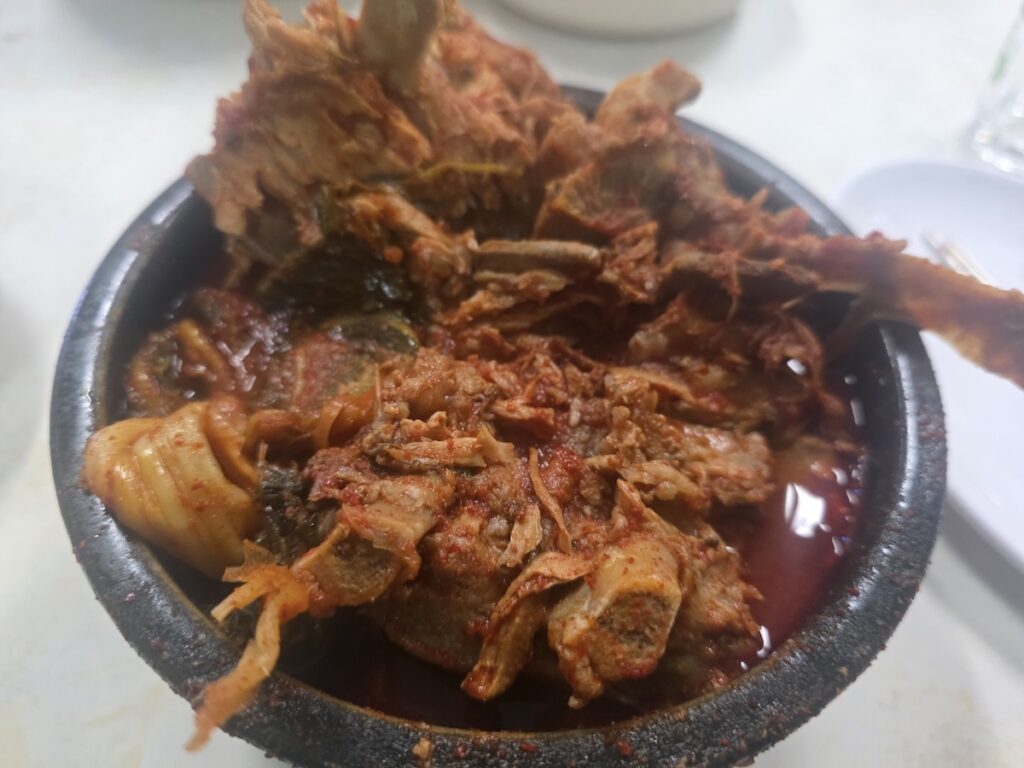
The labor was done, but the exhaustion had bred a reckless hunger. Since tomorrow was Saturday, I decided to embrace a beautiful ruin. I stepped out into the crisp air for the most Dangerous Midnight Food in Korea: a steaming bowl of 24-hour Gamjatang.
The Universal Craving: The Global Obsession with Bone-Attached Meat
What makes the Dangerous Midnight Food in Korea so globally relatable? It is our primal, evolutionary connection to meat on the bone. Whether it is the Osso Buco of Italy, the BBQ Ribs of Texas, or the Oxtail Stew of Jamaica, culinary connoisseurs worldwide know that the most flavorful meat resides closest to the bone.
The meat attached to the pork spine in Gamjatang is rich in Connective Tissue (Collagen). When simmered for hours, this collagen transforms into gelatin, providing a tender, almost buttery texture that “muscle-only” cuts simply cannot replicate. For the “bone-in maniacs,” the joy lies in the manual labor—using chopsticks or fingers to pry every succulent morsel from the complex architecture of the vertebrae.
The Alchemist’s Broth: Why Koreans Worship “Guk-mul”
In the context of the Dangerous Midnight Food in Korea, the broth (Guk-mul) is not merely a side element; it is the liquid soul of the dish. Korea is a “Soup Nation,” where the quality of a meal is often judged by the depth of its broth.
The broth of Gamjatang is a result of Long-term Marrow Extraction. As the bones simmer, they release minerals and fats that emulsify into the spicy base of Gochugaru (red chili flakes) and Deulkae-garu (perilla seeds). For a Korean worker finishing a grueling late-night task, this liquid heat provides a physical sense of “Haesoo” (resolution), warming the core and replenishing the spirit in a way solid food alone cannot.
The Climax of the Ritual: Starch and Stew Synergy
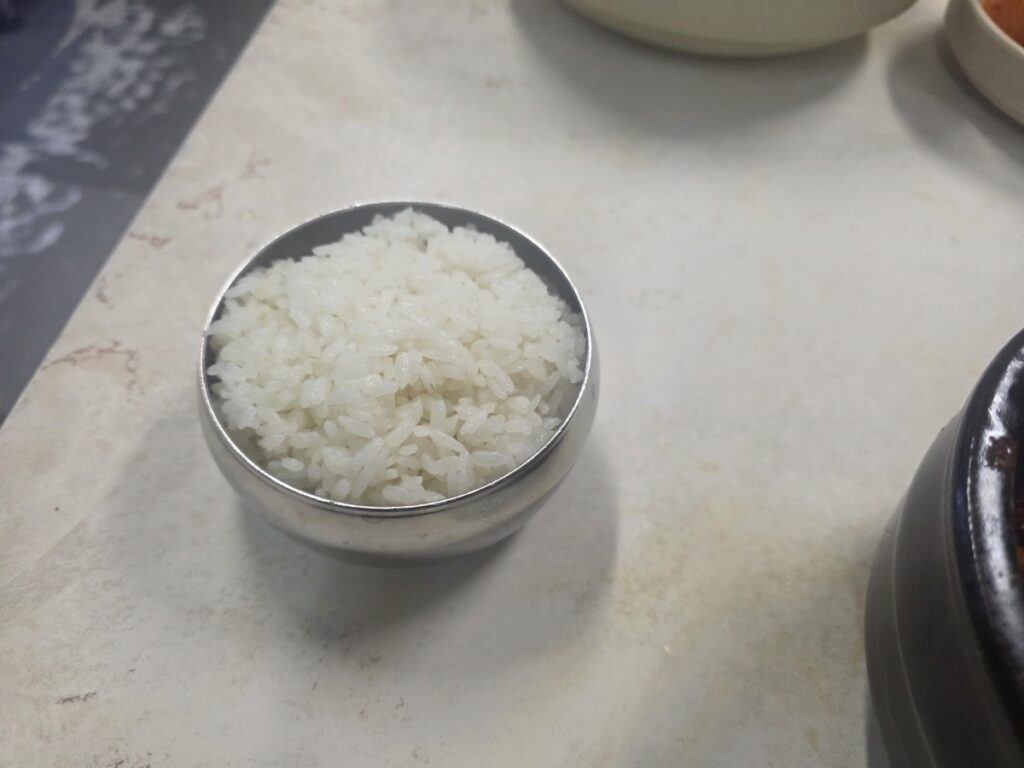
The true “danger” of this Dangerous Midnight Food in Korea reaches its peak during the final ritual: Rolling the Rice (Mal-a-meok-gi). Unlike Western cultures where rice is often a separate side, in Korea, the union of white rice and spicy broth is a sacred alchemy.
| Phase of the Meal | Action | Sensory Experience |
| The Extraction | Picking meat from the bone | Intense savory umami with a gelatinous texture |
| The Integration | Adding rice to the remaining broth | Starch molecules thicken the soup, creating a rich porridge |
| The Final Scorching | Frying the leftover rice (Bokkeumbap) | The Maillard reaction creates a crispy, concentrated flavor bomb |
When you “roll” the rice into the soup, the grains absorb the spicy, lipid-rich broth, turning every spoonful into a perfect balance of carbohydrates and protein. This is why, at 1:30 AM, you find yourself scraping the bottom of a stone bowl, completely surrendered to the temptation.
The Science of Midnight Satisfaction: Why We Can’t Say No
The Dangerous Midnight Food in Korea works on a chemical level. The combination of high-fat pork marrow, high-carb rice, and the endorphin-releasing heat of Korean peppers creates a “Reward Circuit” in the brain. After the stress of spring cleaning, your body craves this specific caloric density to signal that the work is over and rest has begun. It is a psychological transition as much as a physical one.
Action Plan: Executing Your Midnight Escape
- Check the 24-Hour Status: Use the Naver Map app to search for “24시 감자탕”. Ensure it has a “Media Mention” (방송 출연) tag for a guaranteed traditional taste.
- The Bone-First Strategy: Do not rush the rice. Spend the first 10 minutes meticulously extracting the meat to fully appreciate the Dangerous Midnight Food in Korea.
- The Starch Transition: Only add your rice when you have 1/3 of the broth left. This ensures the perfect “Rice-to-Soup” ratio.
- Morning After Recovery: Drink a glass of warm barley tea (Bori-cha) when you wake up to help process the midnight sodium and lipids.
🛠️ Related Guides: Mastering the Korean Kitchen
To truly master the art of Korean dining and organization, one must look beyond storage and into the heart of the culinary process. If you have embraced the Dangerous Midnight Food in Korea, you are now ready to fill your table with world-class flavors and explore the diverse dining landscape of Seoul.
[Best Korean Spicy Ramen Recipe: 1 Green Onion Oil Ritual]
Before indulging in a heavy midnight stew, learn the foundational “Green Onion Oil Ritual” that elevates a simple pack of instant noodles into a gourmet experience. This guide walks you through the cinematic process of searing aromatics to create a smoky, rich broth that rivals any professional ramen shop. It is the perfect companion piece to understanding how to handle bold Korean flavors.
[Affordable Seafood Buffet in Seoul for Vegans: 7 Best Plant-Based Options at QooQoo]
While our midnight guide focuses on the rich, meat-heavy traditions of Gamjatang, this article explores the fascinating paradox of finding vegan-friendly gems in a seafood-centric environment. Discover how to navigate Seoul’s popular “QooQoo” buffet to find high-quality plant-based options. It’s an essential read for those who appreciate the meticulous organization and diversity of Korean food culture.