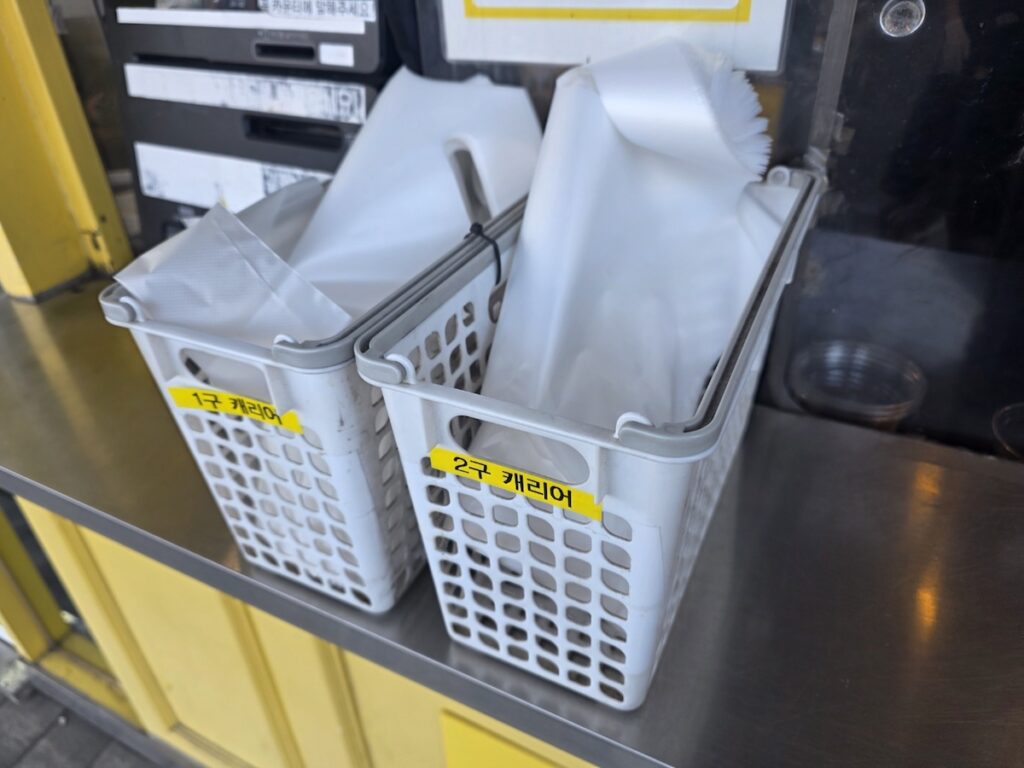
Quick Answer: How do you handle grilling at a Korean BBQ restaurant?
When eating Korean BBQ, the person holding the tongs and scissors controls the grill. If a staff member or a designated companion is grilling, it is best to let them finish without interfering. Criticizing someone’s grilling technique or flipping the meat prematurely is a major social faux pas. Additionally, modern hygiene standards dictate that you should never use your personal chopsticks to flip meat on the communal grill; always use the provided tongs or request an extra pair of chopsticks for handling raw or cooking meat.
Sitting around a smoke-scented grill in a lively Seoul neighborhood reveals that Korean BBQ etiquette is far more than just a meal; it is a complex social ritual deeply rooted in respect, pride, and shared space. When you walk into a crowded restaurant in Hongdae or a sleek eatery in Yeoksam-dong, you are not just ordering food. You are participating in a cultural performance where the tools, the timing, and the technique matter just as much as the quality of the meat itself.
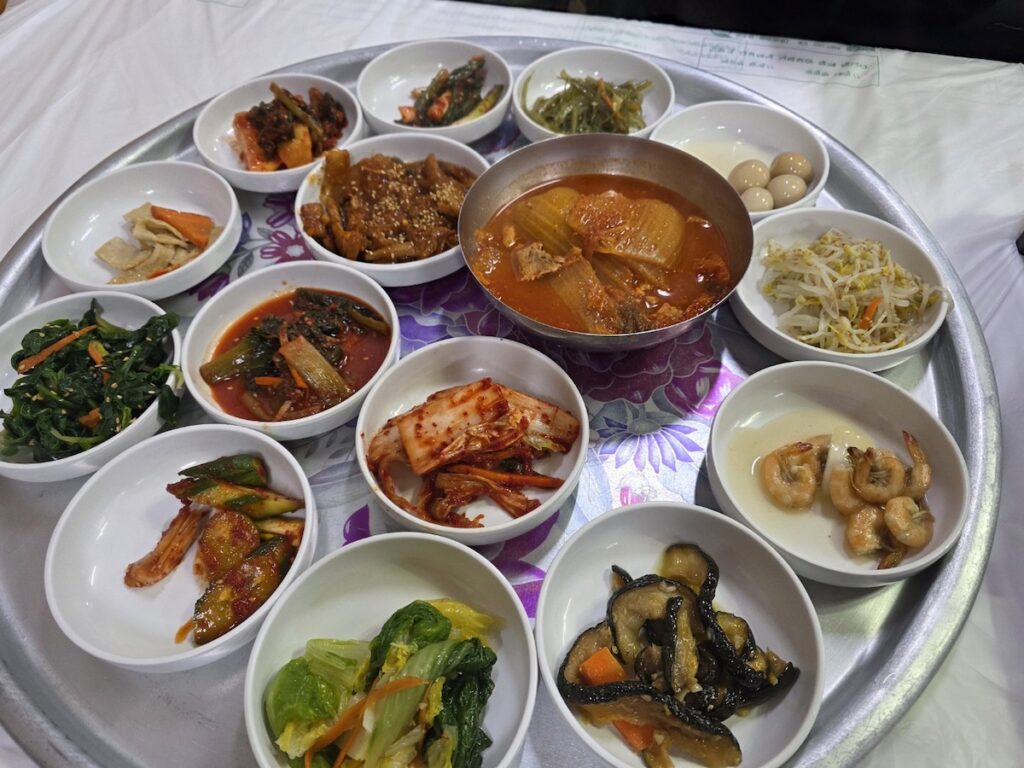
For first-time visitors, the setup can feel overwhelming. A hot grill sits in the center of the table, surrounded by an array of small side dishes, known as banchan. Soon, a plate of raw pork arrives. In many Western countries, dining out means waiting for a chef to prepare your meal entirely behind kitchen doors. In Korea, the cooking happens right in front of you, and that shift changes the entire dynamic of the dinner table. It introduces a unique set of unwritten social rules that locals navigate instinctively, but can easily catch foreigners off guard.
The Social Politics of the Grill Master
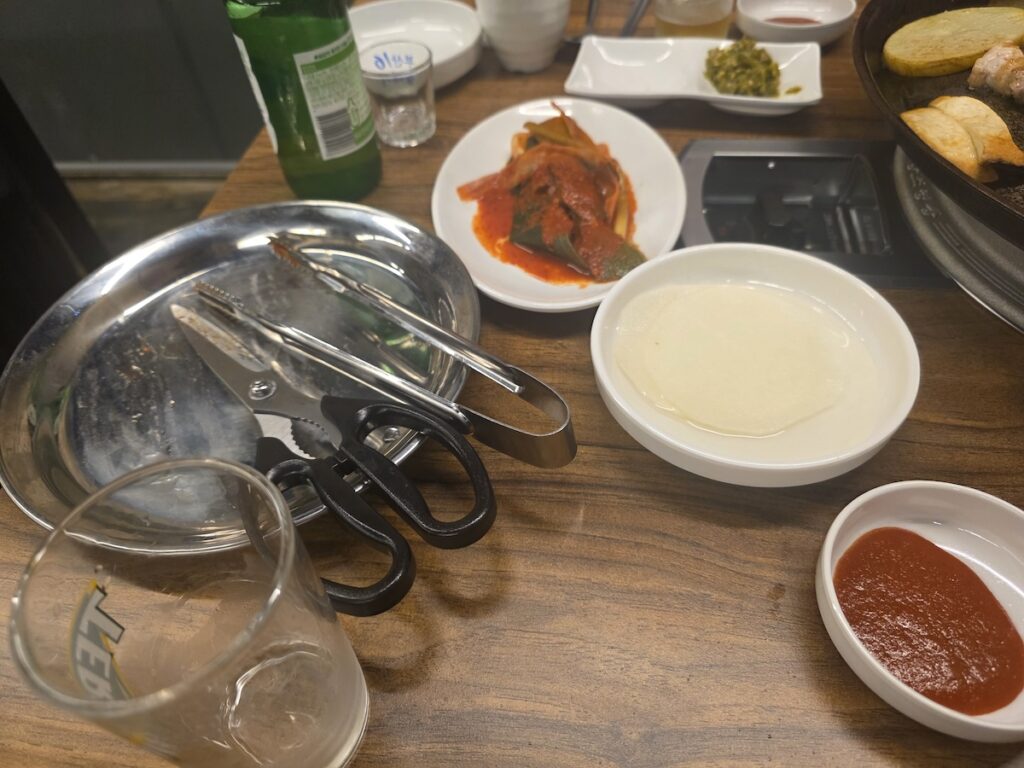
At any Korean BBQ table, leadership is established the moment someone picks up the heavy metal tongs and the oversized scissors. This person becomes the designated grill master. In Korean dining culture, taking care of the grill is often seen as an act of service and hospitality. Traditionally, the youngest person or the host might take on this role to show respect to others at the table. However, among groups of friends or coworkers, it often falls to the person who possesses the most confidence in their culinary skills.
There is a distinct sense of pride associated with grilling meat perfectly. Many locals, particularly men, view their ability to grill pork belly to a precise crispiness as a badge of honor. Because of this unspoken pride, interfering with the person cooking is highly discouraged.
If you are sitting at a table and someone is actively managing the grill, the worst thing you can do is reach over and flip a piece of meat because you think it is cooking too slowly. Commenting on the size of the cuts or telling the grill master that they are flipping the meat too early is often taken as a direct insult to their capability.
This sensitivity stems from how pork is viewed in Korea. While it is an everyday comfort food, gathering for BBQ is still treated as an investment in a good night out. Meat can be expensive, and a bad griller can ruin a high-quality cut of pork. Therefore, if someone has taken the responsibility to cook for the group, give them the space to do it their way. Trust the process, and wait until the meat is placed on the edge of the grill before reaching for a piece.
Navigating the New Standards of Table Hygiene
Korean dining has traditionally been highly communal, with everyone sharing from the same stews and side dishes. While that communal spirit remains alive, hygienic practices around the grill have shifted significantly in recent years.
In the past, it was common for anyone at the table to lean in with their personal chopsticks to turn a piece of pork that looked close to burning. Today, that behavior is increasingly frowned upon in Seoul’s restaurants.
[Proper Chopstick Etiquette at the Grill]
Your Personal Chopsticks ──> ONLY for eating cooked meat from your plate.
The Communal Tongs       ──> ONLY for flipping raw or cooking meat on the grill.
Using chopsticks that have already been in your mouth to touch raw or partially cooked meat on a shared grill violates modern local hygiene standards. If you notice a piece of meat burning and the grill master is distracted, do not use your own utensils to fix it. Instead, look for the extra pair of long tongs provided at the table, or ask a companion if you can use the main tongs for a moment. If those are not nearby, it is acceptable to use a clean, unused pair of chopsticks from the table dispenser to adjust the meat, ensuring that the utensils touching the communal cooking surface remain sanitary.
Samgyeopsal vs Ogyeopsal: Understanding Your Cuts
To fully appreciate the grilling process, you need to understand exactly what you are putting on the fire. The two most popular cuts of pork pork belly you will encounter in Seoul are samgyeopsal and ogyeopsal. While they look incredibly similar on the plate, they offer completely different textures due to how they are butchered.
- Samgyeopsal (Three-Layer Pork): This is the classic pork belly found everywhere from convenience store bento boxes to high-end restaurants. The name literally translates to “three-layered flesh,” referring to the visible alternating strips of lean meat and rich fat. When cooked correctly, the fat renders down, creating a juicy, tender bite with a crispy exterior.
- Ogyeopsal (Five-Layer Pork): This cut includes the exact same layers as samgyeopsal, but with one crucial addition: the skin is left intact. This adds two more layers to the structure, making it “five-layered flesh.” Ogyeopsal is a specialty often associated with Jeju Island pork. The presence of the skin gives the meat a distinct, gelatinous chewiness and an extra level of crunch when the exterior is thoroughly crisped.
Choosing between the two depends entirely on your preference for texture. If you prefer a clean, traditional melt-in-your-mouth fat layer, stick with samgyeopsal. If you enjoy a more complex, structural bite with a distinct skin-on crunch, opt for ogyeopsal.
The Science of Grilling the Perfect Pork Belly
Grilling pork belly is not a casual task of tossing meat onto hot metal; it requires an understanding of heat distribution and fat rendering. The goal with thick cuts of pork is to achieve a deep golden-brown crust on the outside while keeping the inside tender and moist. Doing this efficiently relies entirely on the proper use of two simple tools: the tongs and the heavy-duty kitchen scissors.
Unlike thin slices of marinated beef like bulgogi, thick pork belly should not be moved constantly. When the raw meat hits the hot grill, let it sear undisturbed on one side. This allows the Maillard reaction to occur, creating that rich flavor profile on the surface. Forcing a flip too early will cause the wet meat to stick to the metal, tearing the surface and losing precious juices.
Once the bottom side has developed a distinct golden crust, flip the entire slab over to sear the opposite side. Only after both major sides are thoroughly seared should you pick up the scissors. Holding the slab firmly with the tongs, cut the meat into uniform, bite-sized strips.
After cutting, arrange the pieces in rows. This maximizes the surface area touching the grill, allowing the rendering fat to fry the edges of the pork in its own oils. Keep a close eye on the heat; pork fat flares up easily on charcoal grills, and managing the flame is part of the grill master’s art.
| Feature | Korean BBQ Experience | Western Grilling / Dining |
| Cooking Location | Done entirely at the table by diners or staff | Prepared in the kitchen or outside by a single host |
| Tool Control | The holder of the tongs directs the pace of the meal | Individual plates are served completely finished |
| Utensil Rules | Dedicated tongs are used for raw meat; personal chopsticks stay away | Fork and knife are used freely across the personal plate |
| Meat Preparation | Thick slabs are cut into bite-sized pieces during the cooking process | Steaks or chops are served whole and cut by the individual |
| Meal Structure | Shared communal protein surrounded by rotating refillable banchan | Individual portions with set, static side dishes |
What to Expect: Staff-Driven vs Do-It-Yourself Restaurants
As you explore Seoul, you will find that restaurants generally fall into two categories regarding who does the actual cooking. Knowing what to expect before you sit down will save you from awkward moments of hesitation.
Premium, Staff-Guided Restaurants
In many upscale or trendy establishments, particularly those specializing in aged pork or premium ogyeopsal, the waitstaff handles the entire cooking process from start to finish. The servers are highly trained to monitor the exact temperature of the grill using infrared thermometers.
When dining at these venues, do not touch the tongs. The staff will periodically stop by your table, flip the meat at the exact correct second, cut it into mathematically perfect pieces, and stack the finished morsels on a small metal raised rack on the grill. Reaching for the tools in these restaurants can disrupt their service flow and implies you do not trust their expertise. Sit back, enjoy your drinks, and wait until the server explicitly tells you that the meat is ready to eat.
Local Do-It-Yourself Spots
In older, more traditional neighborhood spots, or budget-friendly joints near universities, you are entirely on your own. The server will drop off the charcoal, place the meat on the table, and walk away.
In these environments, someone at your table must immediately step up and take control of the tongs. Do not let the raw meat sit on the cold grill before the metal is hot, and do not leave it unattended. If the grill surface becomes heavily blackened or charred during the meal, do not try to wipe it yourself. Catch the eye of a server and politely ask them to change the grill plate by saying, “Bulpan bakkwa juseyo.” They will swiftly swap out the dirty metal plate for a clean one using specialized hooks.
Essential Tips for First-Time Diners
To make the most of your Korean BBQ meal without feeling out of place, keep these practical dining habits in mind:
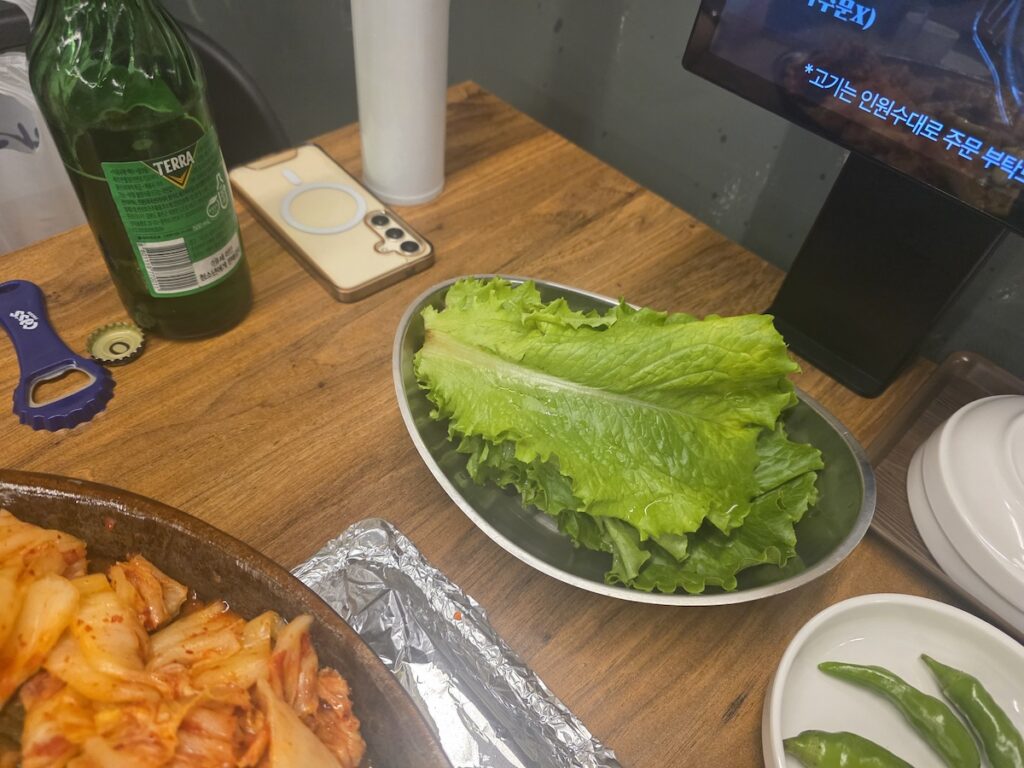
- Embrace the Ssam (The Wrap): Eating the meat by itself is perfectly fine, but the local way is to create a wrap using perilla leaves or lettuce. Take a leaf, place a piece of grilled pork inside, add a dab of ssamjang (a thick savory paste), and perhaps a slice of grilled garlic or pickled radish. The golden rule: eat the entire wrap in one single bite. Biting a wrap in half often causes it to fall apart, making a mess.
- Utilize the Chair Storage: The smell of pork smoke is delicious while you are eating, but it clings to fabric permanently. Almost every Korean BBQ restaurant uses round stools or chairs with hollow seats. Lift the cushion of your seat before you sit down; you will find a hidden storage space designed specifically for your winter coats, backpacks, and bags to keep them safe from stray grease and smoke.
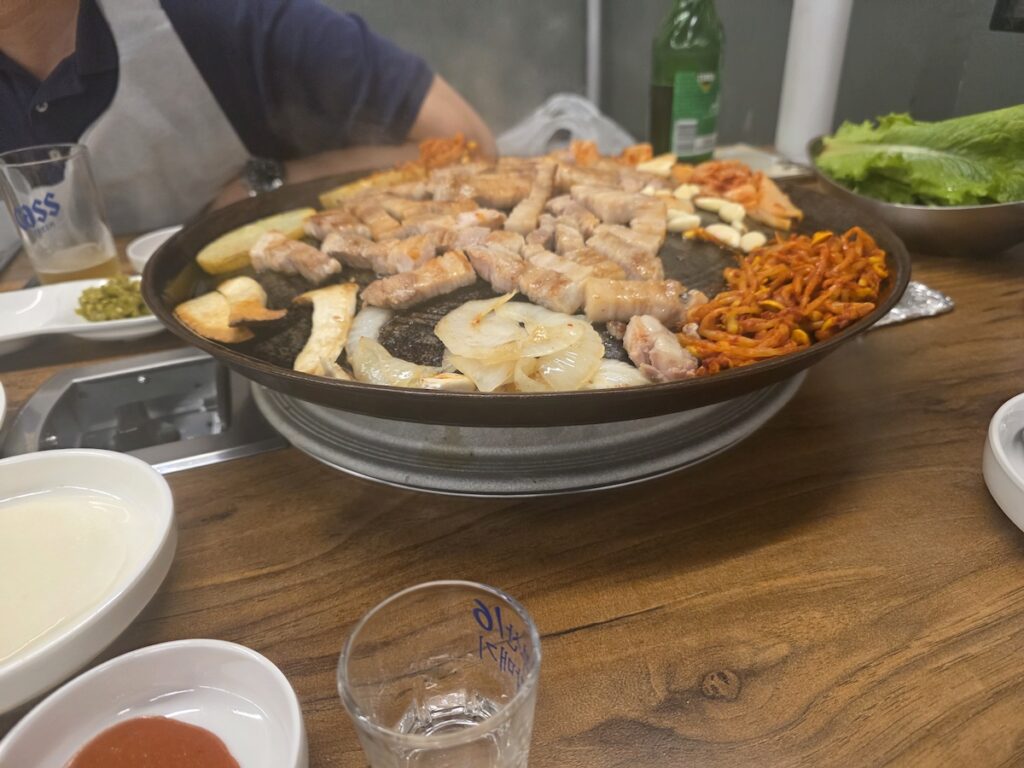
- Roast the Banchan: Do not hesitate to put your side dishes onto the grill plate. Raw garlic cloves, kimchi, and seasoned bean sprouts taste incredible when roasted in the residual pork fat running off the edges of the grill. Place them downstream from the meat so they absorb the flavors without burning.
Navigating the Cultural Landscape of the Table
Understanding Korean BBQ etiquette changes the entire atmosphere of your evening. Once you view the meal through the lens of local customs, you begin to see that the quirks of the table—the protection of the tongs, the meticulous cutting of the pork belly, and the boundaries of utensil hygiene—are all parts of a collective respect for food and company.
By honoring the role of the grill master, understanding the difference between your cuts of meat, and keeping your personal chopsticks away from the raw fire, you blend seamlessly into the rhythm of Seoul’s culinary nightlife. You transition from an outside observer to an active participant in one of Korea’s most cherished social traditions. Gather your friends, find a bustling spot filled with local chatter, and let the grill master lead the way to an unforgettable dinner.