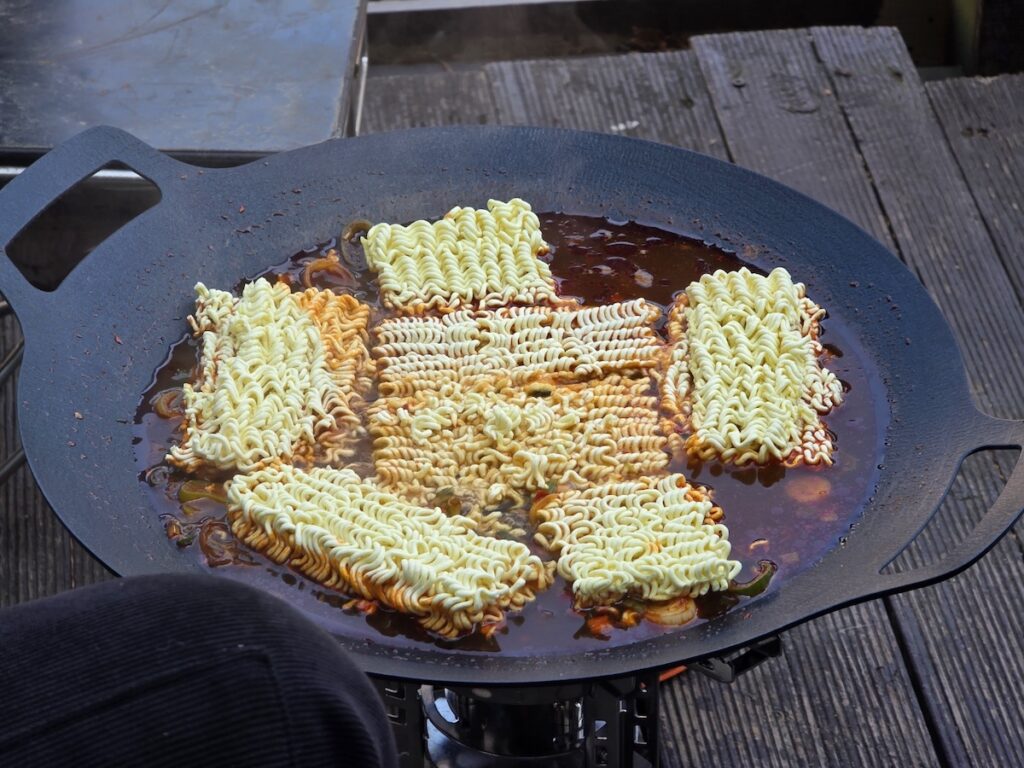
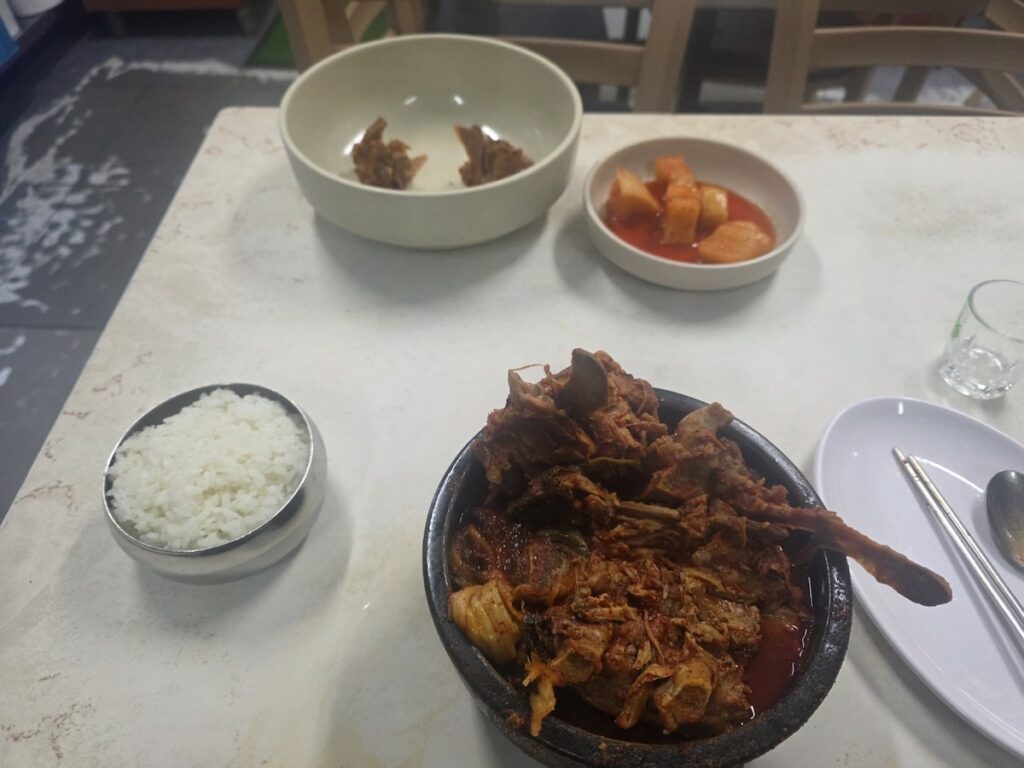
What to eat in Korea if you don’t like kimchi is probably one of the most common concerns for first-time visitors, even if they don’t always say it out loud.
I remember sitting at my first meal in Seoul, looking at the table filled with small side dishes. Kimchi was right there, of course. Everyone around me seemed completely comfortable with it—but I wasn’t sure if I could enjoy it the same way.
And honestly, that’s completely normal.
You Don’t Have to Love Kimchi to Enjoy Korean Food
Not everyone enjoys it right away
Kimchi is one of the most famous Korean foods, but it’s also one of the most misunderstood.
For many first-time visitors, the combination of:
- Fermented smell
- Sour taste
- Spicy flavor
can feel overwhelming at first.
And here’s the important part—you’re not the only one.
Even locals don’t always prefer strong kimchi
One thing that surprised me is that not everyone in Korea eats extremely strong or spicy kimchi all the time.
There are different styles, and some are much milder than others.
But more importantly, kimchi is just one part of the meal—not the entire experience.
A Taste of Summer in Korea: Oiji Beyond Restaurants
There’s something about Korean food that you don’t really understand until you see it outside of restaurants.
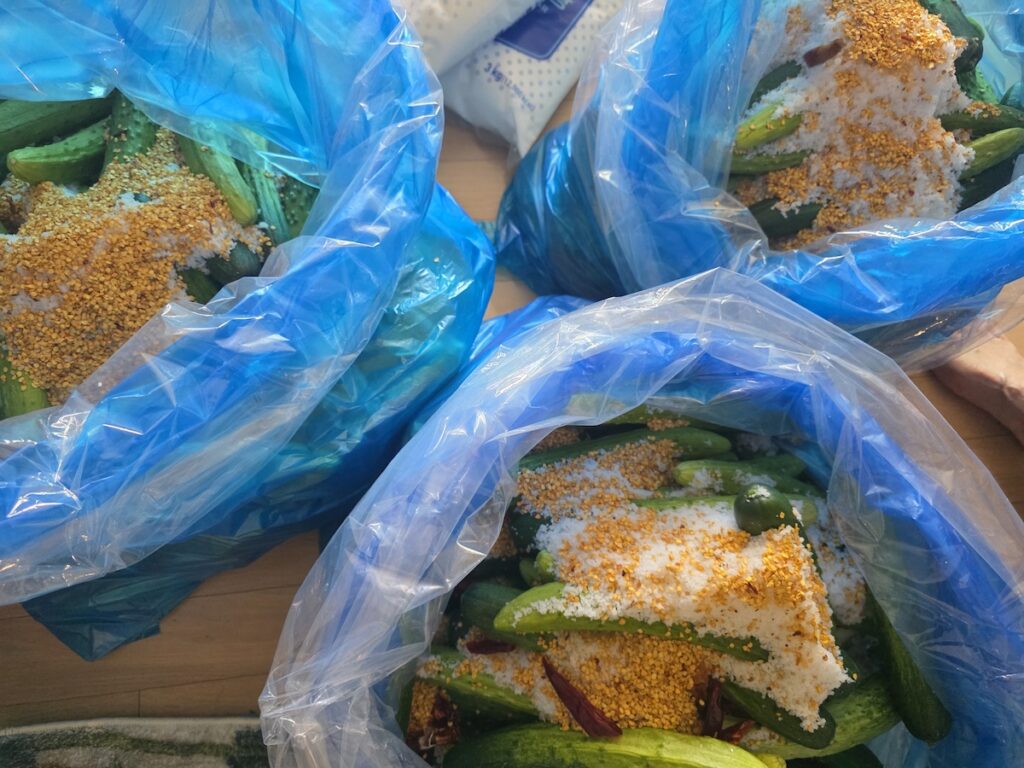
Not long ago, my mother started making oiji at home. It wasn’t planned or special—it was just something people do when cucumbers are in season and the weather starts getting warmer.
No recipe discussion, no big preparation. Just part of a rhythm that repeats every summer.
When food becomes a habit, not a choice
What surprised me wasn’t how it tasted, but how it was eaten.
On hot, humid days—when even the idea of a full meal feels heavy—there’s a simple way people eat at home.
Cold water poured over rice.
A few slices of oiji on the side.
That’s it.
No side dishes stacked on the table. No effort to make it “complete.”
And somehow, that simplicity works.
This is not restaurant food
You won’t really find this experience in most restaurants.
It doesn’t look impressive. It doesn’t photograph well. And it’s not something people recommend in travel guides.
But it’s real.
It’s the kind of food that exists because people need something easy, cooling, and familiar—not because it’s meant to impress anyone.
Why this changes how you see Korean food
If kimchi feels too strong, it’s easy to assume Korean food might not suit you.
But moments like this show a different side.
Not everything is bold, spicy, or intense.
Some of it is quiet. Functional. Even a little understated.
And sometimes, that’s exactly what makes it approachable.
What to Eat in Korea If You Don’t Like Kimchi
Korean BBQ (Samgyeopsal)
Grilled pork belly is one of the easiest foods to enjoy.
You don’t need kimchi to like it.
You can wrap it in lettuce, add garlic, and dip it in sauces—it’s flexible and beginner-friendly.
Kimbap (Korean Rice Rolls)
Simple, clean, and easy to eat.
No strong smell, no overwhelming flavors.
It’s often one of the safest choices for first-time visitors.
Bibimbap (Mixed Rice Bowl)
You control how it tastes.
If you’re worried about spice, you can add less sauce or mix gently.
It’s balanced and approachable.
Fried Chicken
Crispy, flavorful, and very familiar.
Korean fried chicken is often slightly sweet or savory rather than spicy.
Oiji (Korean Pickled Cucumbers)
This is where things get interesting.
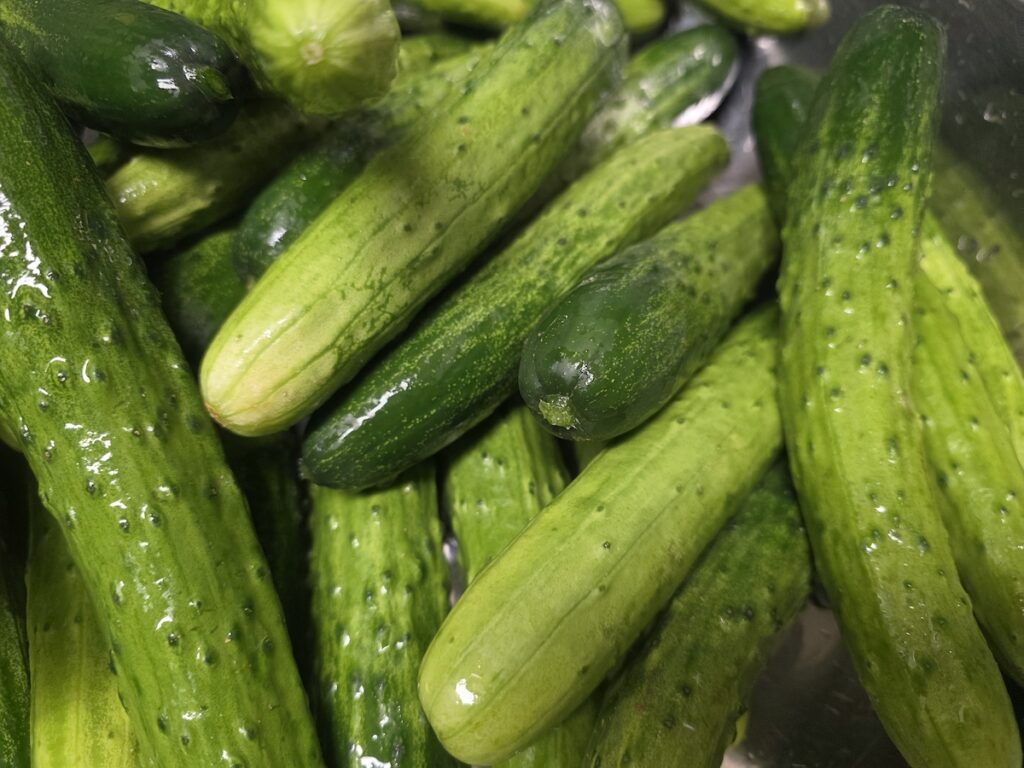
Oiji is a type of Korean pickle, but it’s very different from kimchi.
- Not spicy
- Not strongly fermented
- Light, salty, and refreshing
If kimchi feels too strong, oiji is a much easier starting point.
Nutritional Benefits of Oiji (Korean Pickled Cucumbers)
| Nutrient / Feature | Oiji (Korean Pickled Cucumber) | Why It Matters |
|---|---|---|
| Calories | Low | Good for light meals, especially in summer |
| Water Content | High | Helps with hydration during hot weather |
| Sodium | Moderate to high | Replenishes salt lost through sweat (but should be eaten in moderation) |
| Fat | Very low | Easy to digest and not heavy |
| Fiber | Moderate | Supports digestion |
| Fermentation | Mild or none | Easier for beginners compared to strong fermented foods like kimchi |
| Flavor Profile | Salty, refreshing | Stimulates appetite when you don’t feel like eating |
Oiji is often seen as a simple side dish, but it actually fits well with how people eat during hot Korean summers. Its high water content and light texture make it easy to eat when your appetite is low, while the saltiness helps balance the loss of electrolytes in humid weather.
Unlike strongly fermented foods like kimchi, oiji is much milder, which makes it a more approachable option for first-time visitors who may not be used to bold flavors.
How Korean Side Dishes Actually Work
You don’t have to eat everything
When food is served in Korea, you’ll often see several small side dishes.
But there’s no rule saying you have to eat all of them.
You can:
- Focus on what you like
- Skip what you don’t
- Try things at your own pace
Meals are flexible
Korean meals are more flexible than many people expect.
You can build your own experience based on what feels comfortable.
And that’s what makes it easier than it looks.
A Simple Comparison That Helps
| Food | Flavor Profile | Beginner Friendly |
|---|---|---|
| Kimchi | Sour, fermented, spicy | Moderate |
| Oiji | Mild, salty, refreshing | Very easy |
| Kimbap | Neutral, clean | Very easy |
| BBQ | Savory, rich | Very easy |
This is where many travelers start to relax—there are plenty of options beyond kimchi.
What Most First-Time Visitors Realize
At first, kimchi can feel like a barrier.
But after a few meals, you start to notice something:
👉 Korean food isn’t built around one dish.
It’s built around variety.
Final Thoughts: You’ll Be Fine Without Kimchi
If you’re still wondering what to eat in Korea if you don’t like kimchi, the short answer is simple—you have plenty of options.
You don’t need to force yourself to enjoy something right away.
Start with what feels comfortable, explore at your own pace, and you’ll find your way into Korean food naturally.
And who knows—you might even come back to kimchi later and see it differently.