1. The Shock of the Local: Why Your First Sip in Eumseong Changes Everything
Welcome to the ultimate Regional Makgeolli Guide for travelers who seek the authentic heartbeat of Korea. Whenever I leave the gray concrete jungle of Seoul and head toward the rolling hills of the Korean countryside, my first mission is never to find a famous cafe or a trendy photo spot. Instead, I look for the local brewery. For me, traveling through Korea is a journey of the palate, and specifically, a quest to taste the soul of each region through its rice wine. This Regional Makgeolli Guide aims to explain that there is a profound magic in drinking a bottle of rice wine that was fermented just a few miles from where you are sitting. It is the most honest way to consume the terroir of a place—the water, the air, and the specific variety of rice that defines that land.
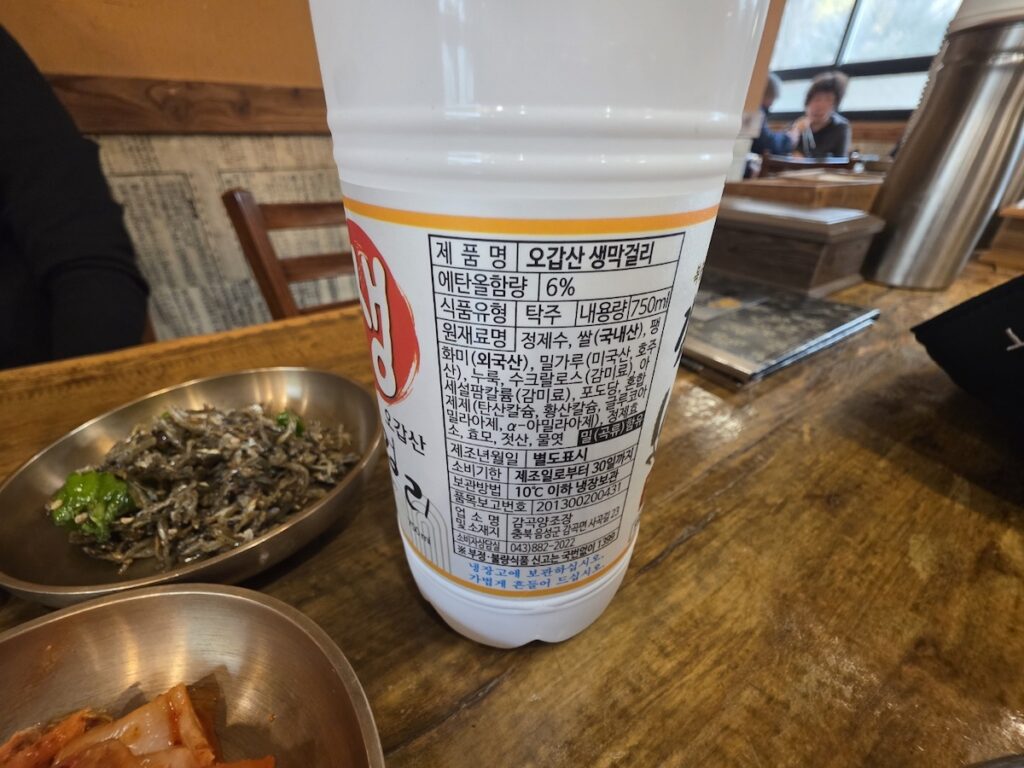
Recently, my travels took me to Eumseong in Chungcheongbuk-do, a region famous for its quiet landscapes and high-quality produce. There, I encountered Gamgok Saeng Makgeolli. In Seoul, most visitors are accustomed to the consistent, carbonated snap of Jangsu Makgeolli, which is the undisputed king of the capital. But in Eumseong, the experience was entirely different. This Regional Makgeolli Guide must be honest: not every regional brew is a 100-point masterpiece. Some are too tart, some lack carbonation, and others might feel a bit too rustic for the modern palate. However, the true joy of being a traveler doesn’t lie in finding industrial perfection; it lies in the authenticity of the moment.
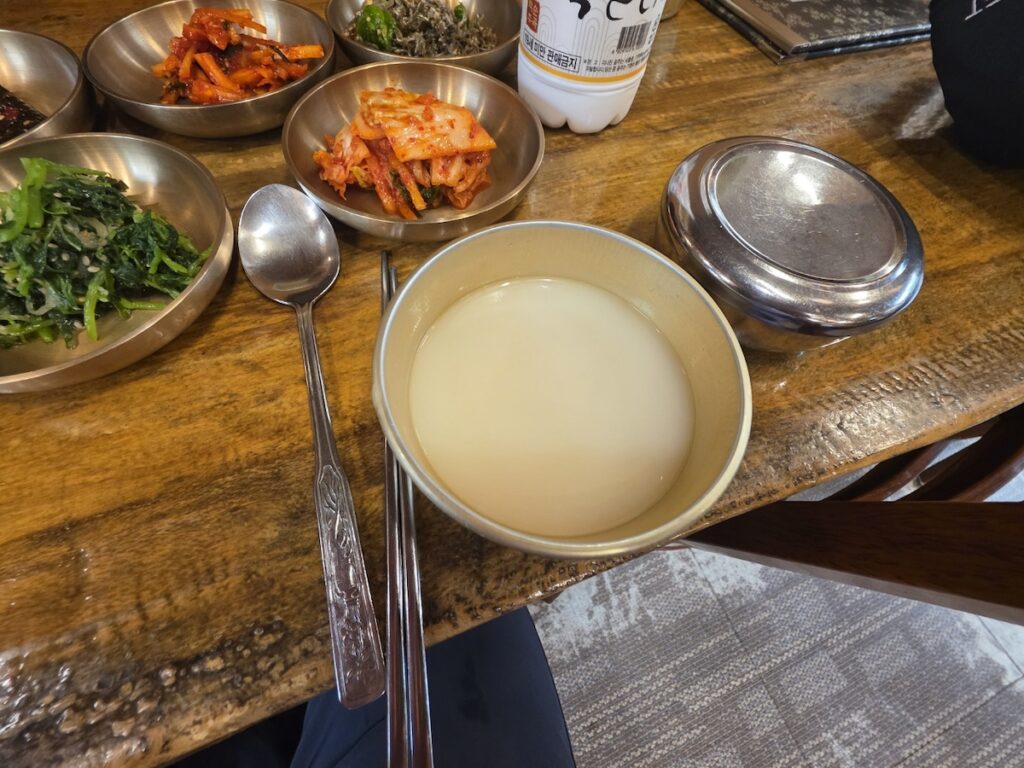
When you sit in a local restaurant in Eumseong, looking out at the very fields where the rice was grown, and take a cold sip of Gamgok Makgeolli, you aren’t just drinking alcohol. You are participating in a ritual that has existed for over a thousand years. This liquid rice is a bridge between the traveler and the local soil. This Regional Makgeolli Guide highlights that the real charm of these local brews is the sensory experience of seeing the town with your eyes and feeling its history in your mouth. Whether it is a hit or a slight miss, that sip represents the unique identity of that specific village. It is a raw, unpasteurized connection to the local culture that no mass-produced beverage in a Seoul convenience store can ever replicate. Embracing these local differences is what transforms a simple trip into a legendary culinary exploration.
2. Drinkable Rice: The Deep Cultural Bond Between Koreans and Their Grains
To understand Makgeolli, one must first understand the Korean obsession with rice. For thousands of years, rice has been more than just a staple carbohydrate; it has been the very foundation of Korean identity. In the past, your wealth was measured by how many bags of rice you had in your granary, and even today, the standard Korean greeting is “Have you eaten rice (bap)?” Makgeolli is the ultimate evolution of this obsession. It is, quite literally, “Drinkable Rice.” It is the result of what happens when Korean love for the grain meets the patience of traditional fermentation.
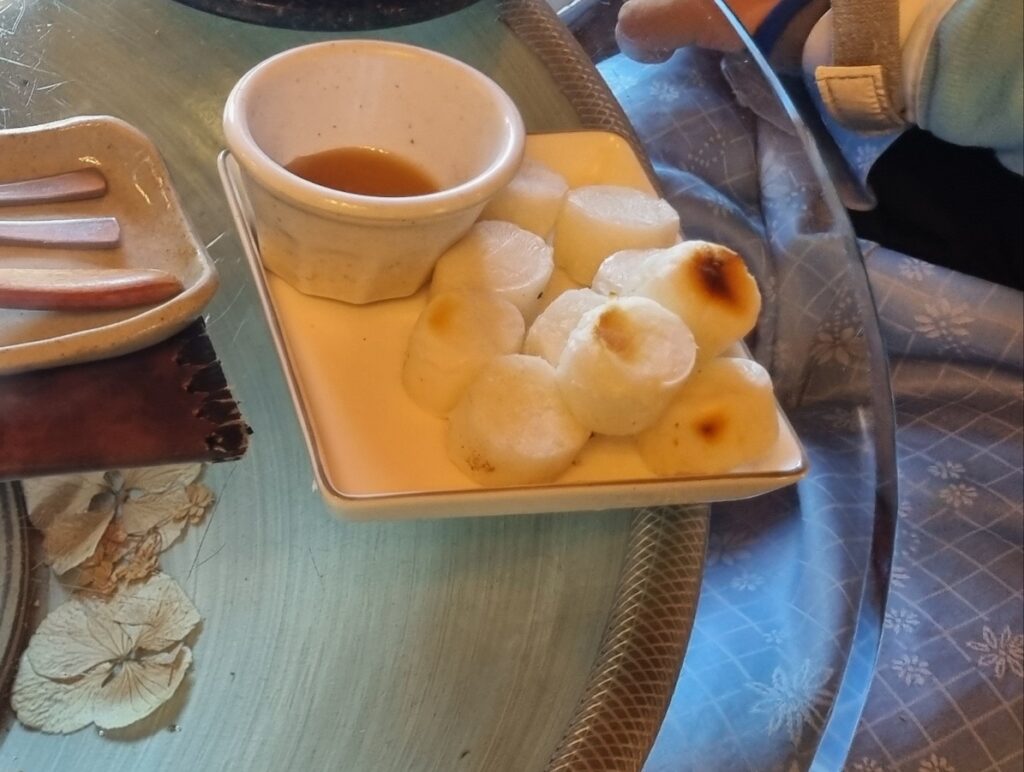
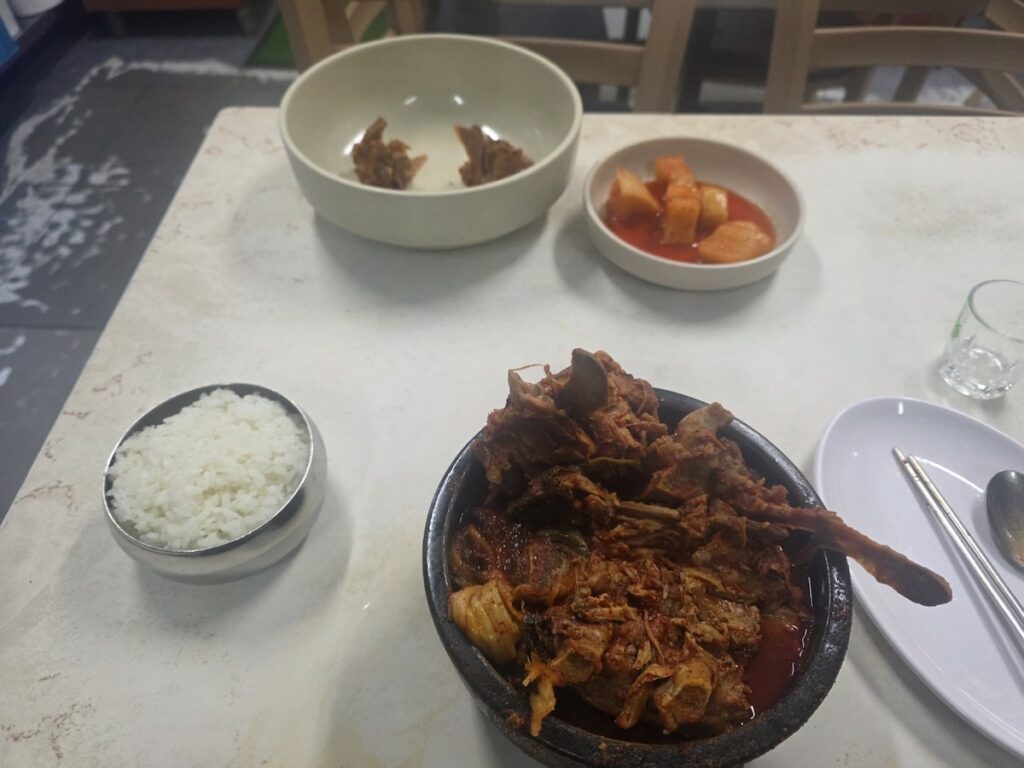
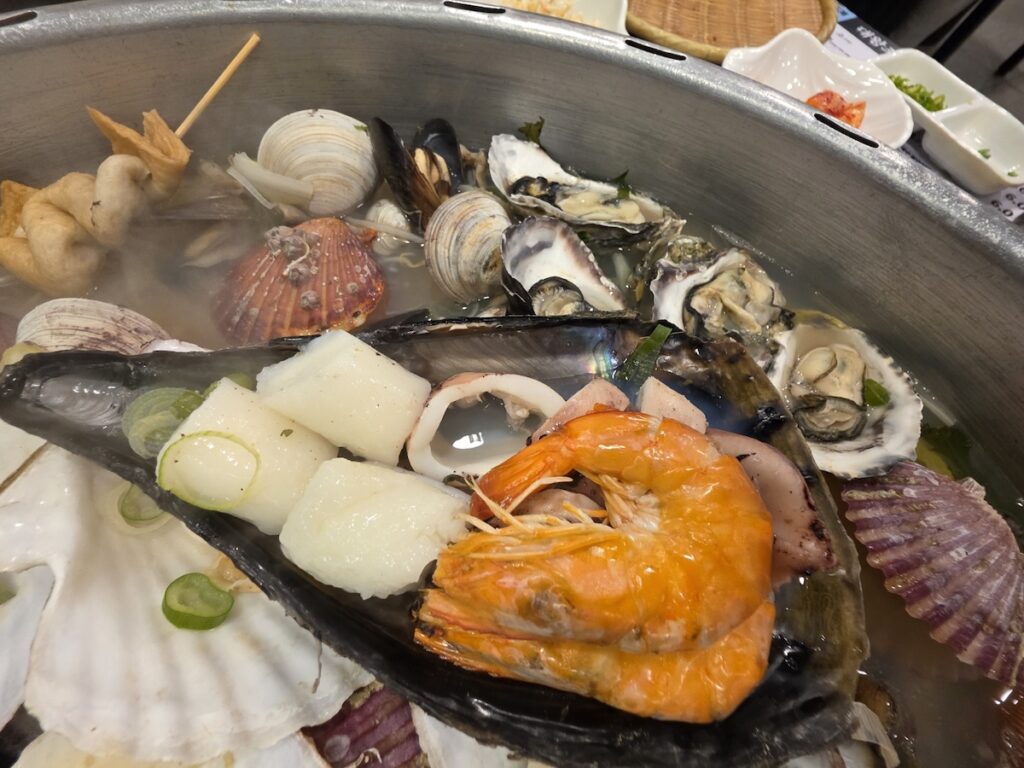
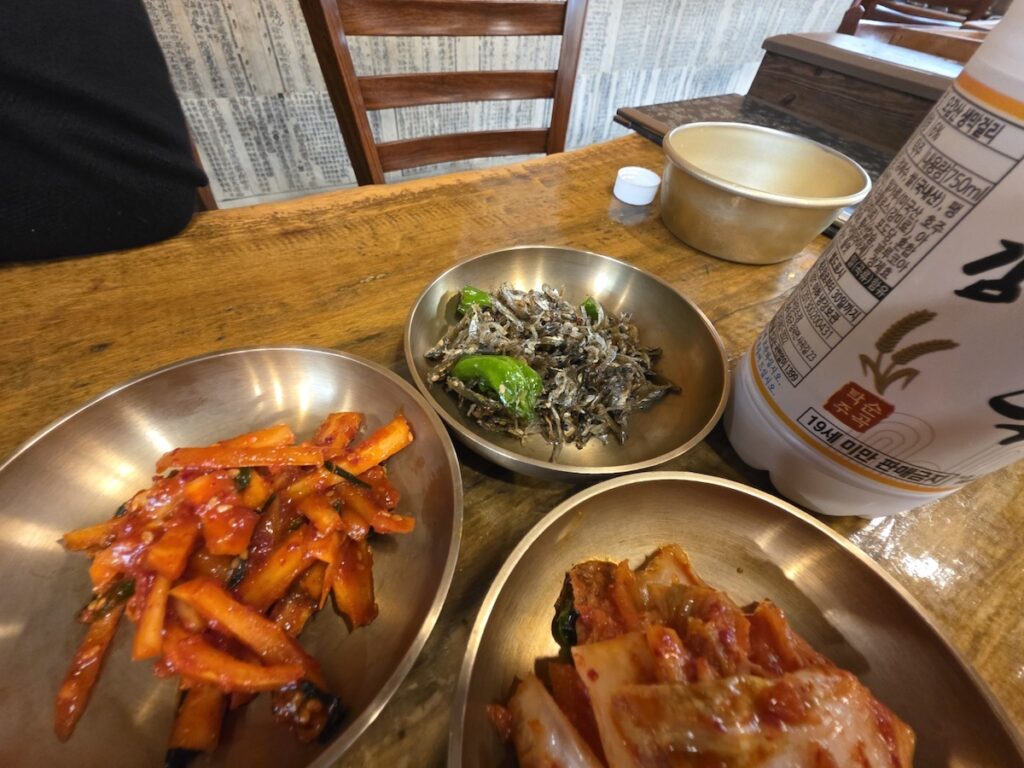
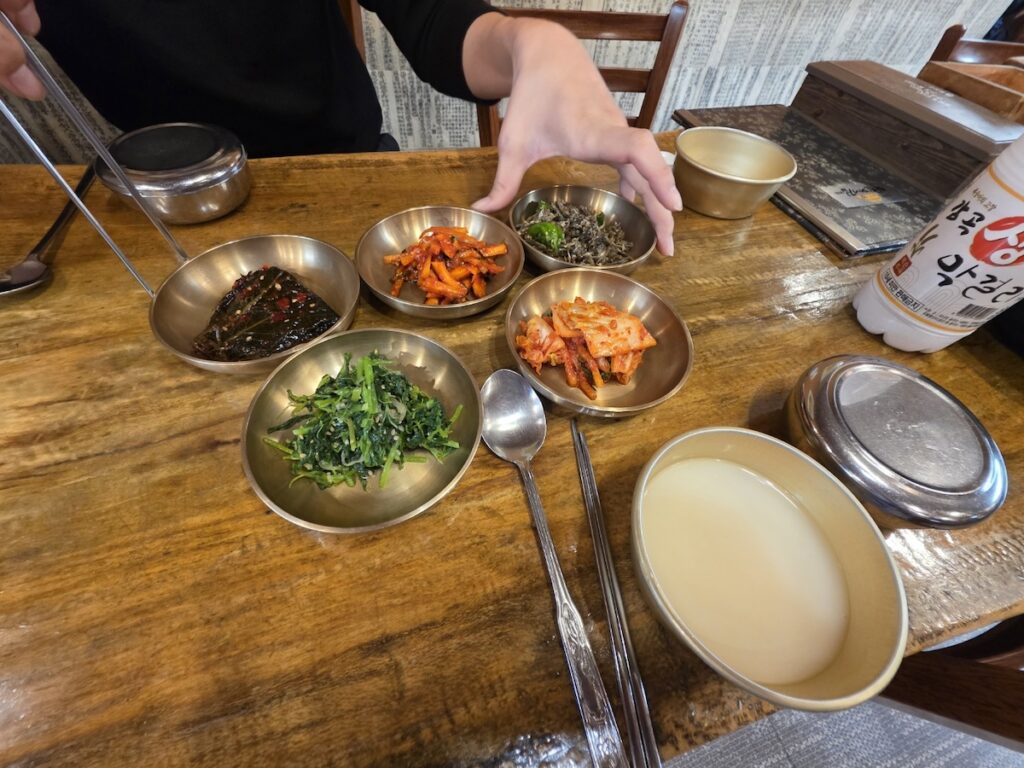
As you can see in the images of a typical Korean table, Makgeolli is rarely served alone. It is part of a grander symphony of “Banchan” (side dishes). This what is why how guide explained why Makgeolli is the perfect companion for the humble, rustic flavors of the Korean countryside. Whether it is a simple plate of seasoned wild greens (namul), a pungent bowl of Cheonggukjang, or salty fermented fish, the creamy and slightly sweet profile of Makgeolli acts as a neutralizer. It cleanses the palate from the bold spices of Korean cuisine while adding a layer of probiotic richness that aids digestion.
This deep connection to the earth is why Koreans feel so much affection for this cloudy, milky brew. While whiskey is about time and aging, and wine is about the vintage, Makgeolli is about the “now” and the “here.” It is a living beverage, filled with active yeast and lactobacillus. When you drink regional Makgeolli with local banchan, you are consuming the very essence of the Korean farming spirit. It is a humble drink, born from the hands of farmers, yet it carries a cultural weight that rivals the most expensive spirits in the world. It is the liquid manifestation of “Jeong”—the unique Korean sense of warmth and shared community.
3. The 2024-2025 Regional Map: From Busan’s Creamy Sparkles to Seoul’s Modern Classics
If you are planning a trip to Korea in 2026, you will find that the Makgeolli market is currently in a “Golden Age” of diversity. Based on the latest trends and expert blind tests, the landscape of Korean rice wine has shifted from cheap plastic bottles to a sophisticated spectrum of flavors. According to data from the 2024-2025 season, the “Big Three” still dominate the mass market, but the “Premium” and “Regional” sectors are where the real excitement lies for true foodies.
In Seoul and Gyeonggi-do, “Jipyeong Saeng Makgeolli” has taken the lead in popularity due to its clean, slightly sweet finish that appeals to younger generations. Meanwhile, “Neurin Maeul” (Slow Village) remains the gold standard for those who want a pure, additive-free experience, as it changes flavor naturally through the four seasons. However, if you travel south to Busan, you must seek out “Geumjeongsanseong Makgeolli.” Made in the high altitudes of Geumjeong Mountain using traditional “nuruk” (fermentation starter) that is trodden by foot, it offers a sharp, yogurt-like acidity that is legendary among connoisseurs.
For travelers looking for the “Champagne of Makgeolli,” the southwestern region offers “Boksoondoga.” This premium brew is famous for its natural carbonation, which creates a spectacular fountain of bubbles when the bottle is opened. On the other end of the spectrum is “Haechang” from Haenam, known as the “Rolls-Royce of Makgeolli.” It is thick, heavy, and incredibly rich, sometimes reaching up to 18% alcohol content. This what is why how guide explained that whether you are in Jeju sipping on “Jeju Pink Makgeolli” made with volcanic water or in Gangwon tasting “Corn Makgeolli,” every province has a 1-tier legend waiting to be discovered. The price points are equally attractive, ranging from a humble 2,000 KRW in a local market to 15,000 KRW for a premium artisanal bottle.
4. The Traveler’s Ritual: Celebrity Picks and the Regional Makgeolli Map
Exploring the world of Makgeolli is not just a culinary journey; it is a dive into the heart of modern Korean pop culture. While regional breweries have always been the backbone of rural communities, their popularity has exploded in the global scene thanks to the influence of Korean celebrities and idols. Many travelers are surprised to find that their favorite K-Pop stars or K-Drama actors are often the biggest advocates for local rice wines. This celebrity endorsement has transformed Makgeolli from a “farmer’s drink” into a sophisticated cultural icon that bridges the gap between generations and borders.
For instance, the global fashion world was stunned when a specific sparkling Makgeolli was chosen as the official toast for high-end luxury brand events. This not only raised the status of the drink but also encouraged younger travelers to seek out artisanal bottles during their trips. When you see a famous idol mentioning a specific brewery on a variety show or a veteran actor praising a heavy, rustic brew on a talk show, it creates a “pilgrimage” effect where fans travel to small towns like Eumseong or Haenam just to taste what their icons enjoyed.
To help you navigate this vast and diverse landscape, we have compiled a comprehensive list of regional legends, their flavor profiles, and their surprising connections to Korean cultural figures.
[Regional Makgeolli & Celebrity Connection Map]
| Region | Makgeolli Name | Flavor Profile | Celebrity / Cultural Connection |
| Seoul | Jangsu Makgeolli | Refreshing, crisp, high carbonation | The “Standard” often seen in K-Dramas as the people’s choice. |
| Gyeonggi | Neurin Maeul | Creamy, pure, no artificial additives | Loved by food-conscious idols for its clean, honest production. |
| Busan | Geumjeongsanseong | Tart, yogurt-like acidity, traditional | Frequently featured in travel variety shows like “2 Days & 1 Night.” |
| Jeolla | Haechang | Thick, rich, premium “Rolls-Royce” style | Famous as the favorite of veteran actors and top business CEOs. |
| Ulsan | Boksoondoga | Sparkling, “Champagne” of rice wine | The toast of luxury fashion events and global cultural summits. |
| Chungcheong | Gamgok Saeng | Rustic, fresh, local brewery style | A hidden gem for travelers seeking authentic, non-commercial tastes. |
| Jeju | Jeju Pink | Sweet, clean, made with volcanic water | A must-try for celebrities filming on the island, often seen in vlogs. |
This what is why how guide explained that whether you are following in the footsteps of your favorite star or creating your own path in a town like Eumseong, the ritual remains the same. The price points remain incredibly accessible, usually between 2,000 and 5,000 KRW in local markets, making it the most affordable high-culture experience in Korea. To truly master this ritual, many travelers now join professional food tours. These guided experiences provide the perfect opportunity to taste 10+ different types of Korean food and regional wines while learning the stories that even the labels don’t tell you.
5. The Traveler’s Ritual: How to Master the Art of Makgeolli and Banchan Pairing
Navigating the world of Makgeolli as a foreigner can be intimidating, but it is one of the most rewarding cultural skills you can acquire. The first thing you must learn is the “Shake.” Because Makgeolli is unfiltered, the nutritious rice sediment settles at the bottom. A gentle, circular shake is required to mix the flavors perfectly, but be careful—if the bottle is highly carbonated like Boksoondoga, opening it too fast will result in a rice wine shower. The ritual of opening the bottle and pouring it into brass or ceramic bowls is the moment the meal truly begins.
The real secret to enjoying Makgeolli like a local is the pairing. While “Pajeon” (green onion pancake) is the most famous partner, don’t be afraid to pair it with the simple, spicy banchan found in local markets. The acidity of the rice wine cuts through the oiliness of fried foods and balances the heat of red pepper flakes. This what is why how guide explained that the best way to experience this is through a “Traditional Market Food Tour.” These tours, which often include tasting 10+ different types of Korean foods, allow you to see how different regional Makgeollis interact with various textures—from chewy rice cakes to crunchy fermented radishes.
For those who find the pungent smell of traditional breweries too strong, modern “Makgeolli Bars” in areas like Hongdae or Insadong offer a curated selection of regional bottles in a more accessible environment. However, nothing beats the experience of sitting on a wooden bench in a rural village, sharing a pot with friends as the sun sets over the mountains. It is a budget-friendly joy that offers a high-return on cultural insight. As you plan your itinerary, make sure to leave room for these spontaneous “Makgeolli stops.” It is in these moments—holding a bowl of cold, milky wine and a pair of chopsticks—that you will truly find the heart of Korea.