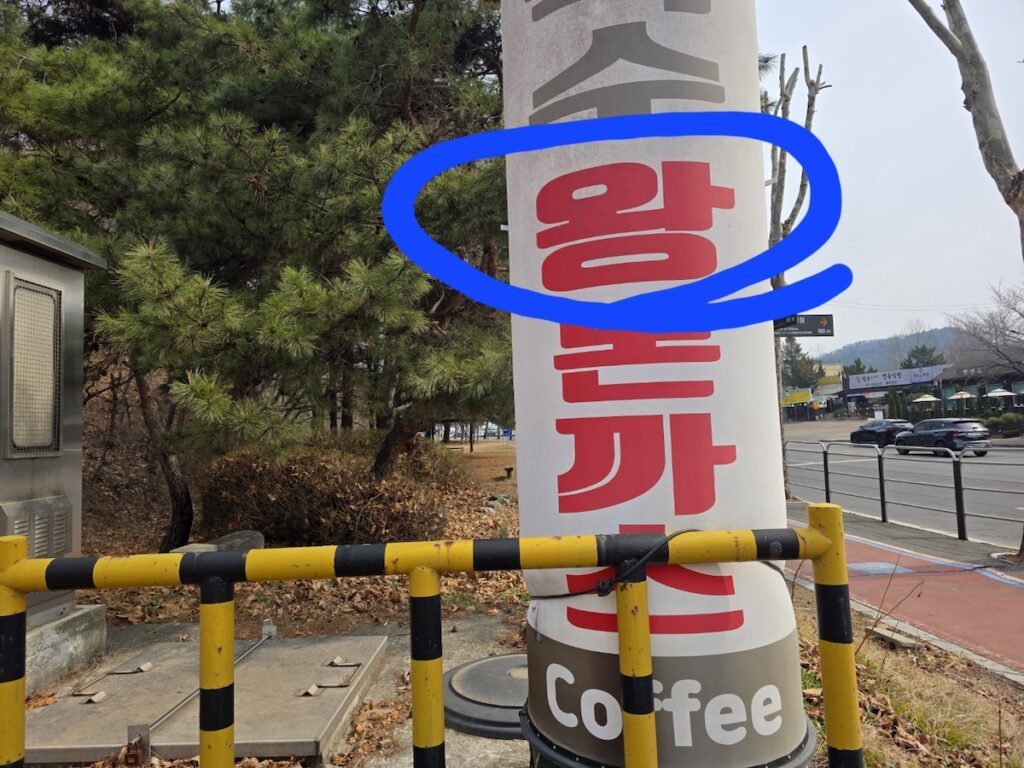
The blue circle indicates the massive scale of the King-sized Donkatsu compared to a standard plate.During my recent weekend getaway to Heyri Art Valley in Paju—a sophisticated hub of architecture and modern art—I encountered a culinary phenomenon that perfectly encapsulates the Korean psyche: the King-sized Donkatsu (Wang-Donkatsu). In the Korean language, the prefix “Wang” (King) is not merely a measurement of size; it is a psychological promise of abundance, respect, and the ultimate “Bon-jeon” (value for money).
The Philosophy of “Wang”: Why “King-sized” is a Korean Promise
In the West, “King-sized” is often just a cold measurement of dimensions—a larger bed or a bigger chocolate bar. But in Korea, when we add the prefix “Wang” (King) to a dish like King-sized Donkatsu, it is a psychological contract of Abundance and Superiority.
Beyond the Size: The “Bon-jeon” Logic
To understand the “Wang” spirit, you must understand the Korean drive for Bon-jeon—the inherent need to ensure that every won spent returns a massive, tangible value. A King-sized Donkatsu is intentionally priced higher than a standard cutlet, but it offers a visual and physical volume that dwarfs the price increase. It is a bold statement from the chef: “You are paying for the best, and you will receive a portion that justifies every single cent.” It is a meal for those who refuse to settle for “average” and demand a sensory overload that matches their investment.
When Should You Choose the “Wang”?
If you find yourself wandering the artistic streets of Paju Heyri and feel a primal, hollow hunger that a delicate salad cannot fix, this is your signal to seek the “Wang.”
- If you are starving: Don’t waste time with appetizers. The King-sized Donkatsu is a caloric fortress designed to satisfy the deepest hunger.
- If you want the “Real Korea”: Skip the global chains. To eat “Wang” style is to participate in the authentic Korean lifestyle—where generosity of portion is the highest form of hospitality.
When you sit down and face this “monument of fried gold,” you aren’t just eating a pork cutlet. You are experiencing the Korean definition of Premium Abundance. It is the ultimate fail-safe for any traveler who wants to feel like royalty without the pretense, trading the small, dainty fork for the massive, efficient blade of the scissors.
Surgical Efficiency: The “Scissors over Knife” Ritual
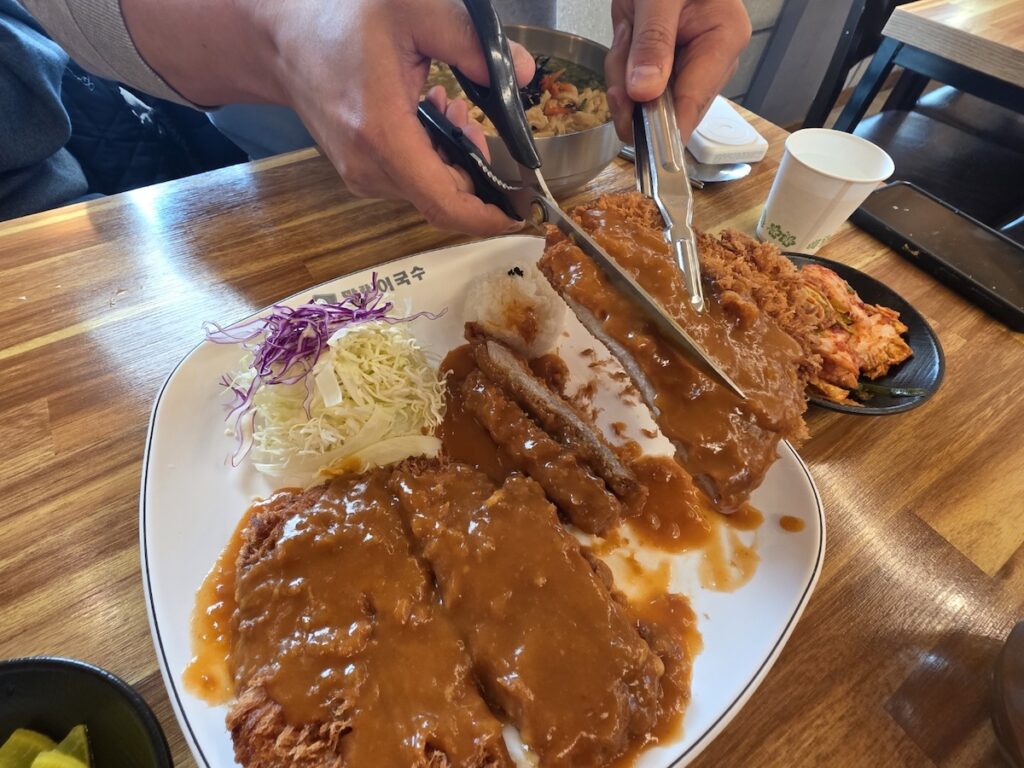
As the massive plate arrived, I prepared myself for a sophisticated Western dining experience. I reached for the polished fork and knife, intending to enjoy my meal with the elegance one might expect in a refined art village. However, the Korean dining ritual had other plans.
Trading the Knife for the Blade
Before I could make my first surgical cut with a butter knife, my companion had already reached for the true tool of the Korean table: The Scissors. Within seconds, they had “processed” the entire King-sized Donkatsu into perfect, bite-sized squares using a pair of heavy-duty kitchen scissors and tongs.
In Korea, Scissors Culture is the ultimate expression of pragmatism. While a knife is a symbol of individual elegance, scissors are a tool of communal efficiency. They allow a massive, steaming cutlet to be shared and consumed with lightning speed. The “sophisticated” act of sawing through meat was replaced by the “surgical” precision of the blade, proving that in the world of Korean dining, speed and shared convenience always trump the aesthetics of the cutlery.
The Tongs: Not a Serving Tool, But a Surgical Extension
In a Western dining context, Tongs are usually relegated to the buffet line or the hidden depths of the kitchen. They are a communal tool for transferring food from a shared platter to an individual plate. But in the Korean Scissors Culture, the tongs undergo a radical transformation: they become a precision instrument, a literal extension of the diner’s hand.
The Anatomy of the “Pincers and Blade” Strategy
While my companion grabbed the scissors, their other hand was already clamped onto the King-sized Donkatsu with a pair of stainless steel tongs. This is where the cultural shock for many Westerners begins. In a steakhouse in Paris or New York, you would never see a diner gripping their meat with industrial-strength pincers while their partner hacks away at it.
However, at the Korean table, the tongs provide the necessary tension for the “Perfect Cut.” They hold the steaming, breaded cutlet firmly in place—preventing the delicate crust from crumbling—while the scissors perform their rapid, surgical bisection. It is a high-speed, two-handed operation that prioritizes the integrity of the food and the speed of the service over the slow, individual labor of the knife.
A Tool of Communal Care
The use of tongs at the table also signals a shift from “individual consumption” to “communal care.” When your companion uses the tongs to hold the King-sized Donkatsu for you to cut (or vice versa), it is an act of shared labor. You aren’t just cutting meat; you are preparing a feast for the entire group. In this ritual, the tongs represent the bridge between the raw abundance of the “Wang” portion and the bite-sized efficiency of the Korean meal. They prove that in Seoul, the most “sophisticated” tool isn’t the one that looks the best on a white tablecloth, but the one that gets the job done with the most heart and precision.
The “Schnitzel on Steroids”: Why You Must Try This in Seoul
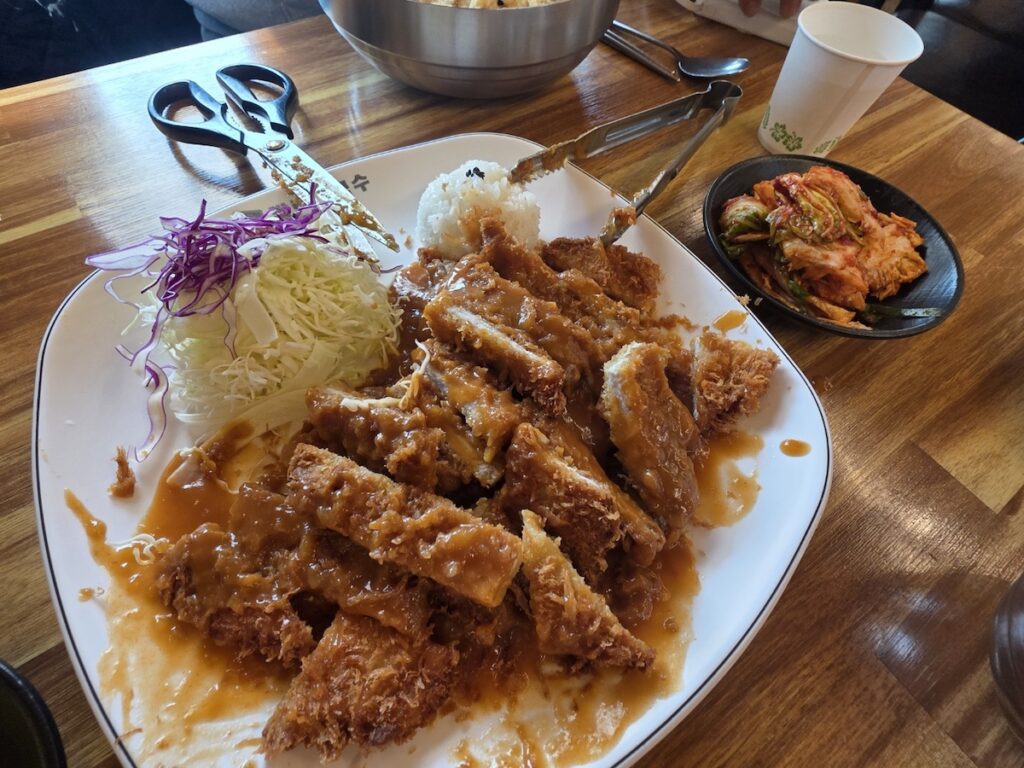
For Western travelers, the first sight of a King-sized Donkatsu might feel strangely familiar. If you’ve ever had an Austrian Schnitzel or an American Pork Cutlet, you know the basic architecture: meat pounded thin, breaded, and fried to a golden crisp. But make no mistake—the Korean version is the “evolved” cousin of the European original. It is larger, bolder, and designed for a level of satisfaction that borders on the extreme.
The Magic of the “Sweet & Savory” Brown Sauce
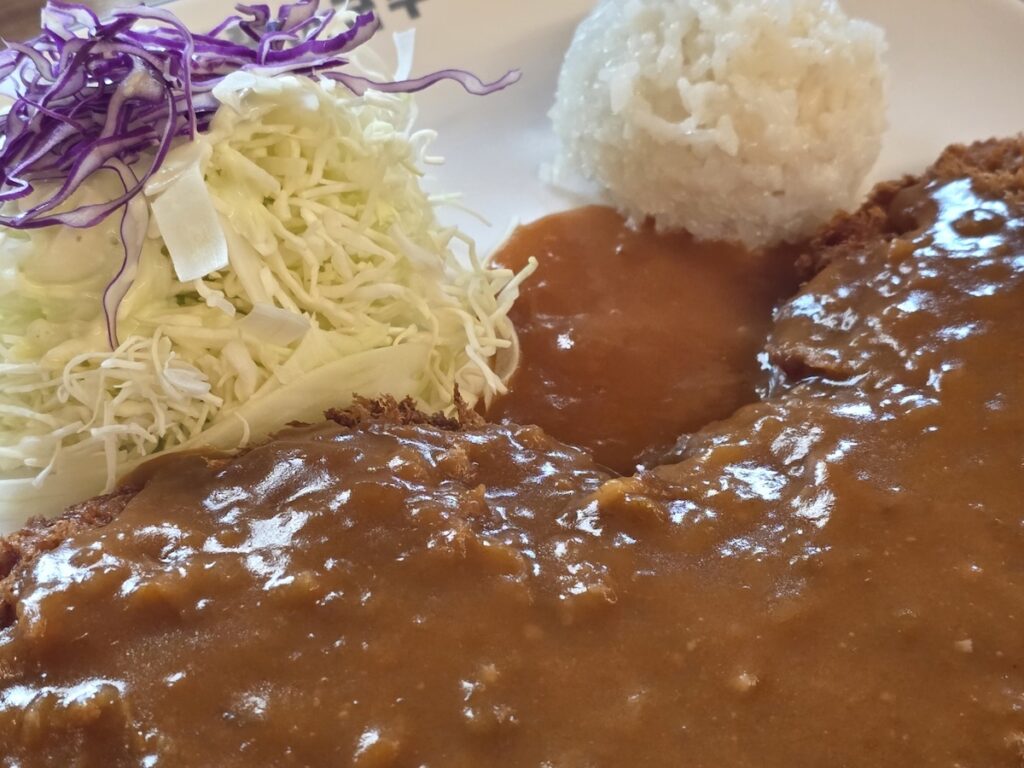
The defining feature that separates King-sized Donkatsu from its dry Western relatives is the sauce. While a Schnitzel is often served with a simple squeeze of lemon or a side of lingonberry jam, the Korean Donkatsu is drowned in a rich, velvety Demi-glace style brown sauce.
- The Flavor Profile: It is a sophisticated balance of sweet and savory (the legendary Korean ‘Dan-jjan’ profile). Imagine a deep, beefy gravy infused with the sweetness of apples and onions, with a hint of tanginess that cuts through the richness of the fried pork.
- The Attraction: For the Western palate, this sauce is instantly addictive. It transforms a dry fried cutlet into a succulent, gravy-soaked feast that feels like a “Hug in a Bowl.” If you enjoy a good Sunday roast or a classic steak Diane, this sauce will be your new obsession.
A Challenge for the Bold Traveler
When you land in Seoul, forget the standard burgers. Look for the sign that says “Wang-Donkatsu.” It is the ultimate Best Comfort Food in Korea for a reason.
- The “Soggy vs. Crispy” Debate: In Korea, we call it ‘Bu-meok’ (pouring the sauce over). This allows the breading to absorb the sweet nectar, creating a unique texture that is both soft and crunchy.
- The Action Plan: Don’t be intimidated by the size. Grab the tongs, summon the surgical precision of the scissors, and dive into the sea of brown sauce. It’s the most approachable yet surprisingly deep culinary bridge between the West and the East.
Why Paju Heyri is the Ultimate Donkatsu Destination
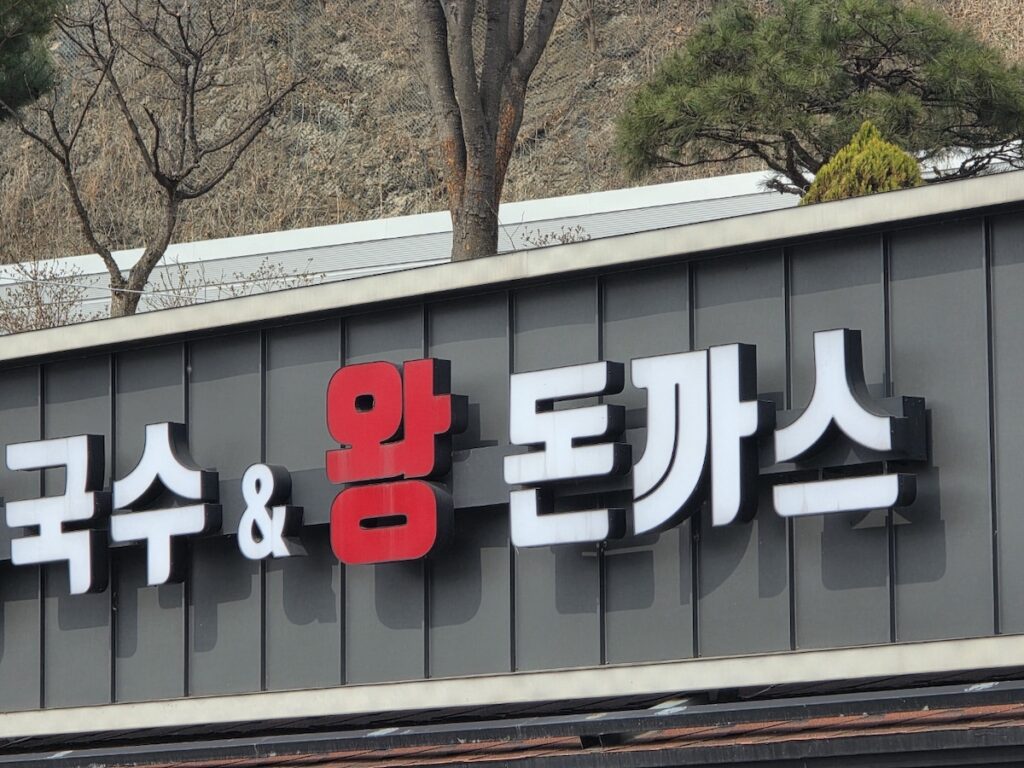
If you are planning a Paju Travel Guide for 2026, a stop for King-sized Donkatsu is mandatory. It provides the necessary “caloric foundation” before you spend hours walking through the sprawling galleries of Heyri.
- The Contrast: There is something deeply satisfying about eating a “monstrous” portion of fried pork surrounded by the most sophisticated architecture in the country.
- The Fail-safe Meal: Donkatsu is the one dish in Korea that never fails. It bridges the gap between generations and cultures, making it the safest yet most rewarding choice for international travelers.
Related Insights: Deepen Your Understanding of Korean Food Rituals
Before the massive King-sized Donkatsu became the titan of the Korean table, the humble “Pink Sausage” ruled our lunchboxes. Explore the cinematic nostalgia of these retro snacks and how the evolution of Korean frying techniques led to the crispy, golden monument of pork you see in Paju today.
The perfect “Dan-jjan” (sweet and savory) finish to a heavy King-sized Donkatsu meal isn’t a complex latte, but a paper cup of 300-won vending machine coffee. Discover the hidden “Premium Sugar” ratio that Koreans use to balance their palates after the rich demi-glace sauce of a “Wang” sized feast.
While the Best Comfort Food in Korea provides the fat and crunch, it is the sharp, fermented kick of Green Onion Kimchi that cuts through the oil. Learn why this specific variety is the ultimate “Internal Fire Extinguisher” for travelers who want to enjoy a massive fried cutlet without the metabolic heaviness.
Make the Most of Your Paju Trip
If you’re heading to Heyri for this king-sized donkatsu, don’t miss out on the other gems in Paju. From DMZ tours to artistic village strolls, Paju has so much more to offer.
👉 [Check out the Best Paju & DMZ Day Tours on Klook]
Conclusion: Embodying the “Wang” Spirit and the Blade
The King-sized Donkatsu experience at Paju Heyri is a profound lesson in Korean priorities. We value the “Wang” (King) size because it represents a heart of overwhelming generosity, and we trade the knife for the scissors because we value the communal time spent eating over the individual labor of cutting. This is not just a “Schnitzel on Steroids”—it is a sophisticated evolution of a Western classic, perfected with a velvety brown sauce that offers a “sweet and savory” embrace unlike anything in Europe or America. Whether you are an art lover in Heyri or a hungry traveler in Seoul, this meal is the ultimate bridge between familiar comfort and radical efficiency.
Action Plan
- Look for the “Wang” Sign: When navigating a Paju Restaurant Guide or wandering through Seoul, prioritize spots that advertise “Wang-Donkatsu” for the most authentic and massive portion.
- Master the Two-Handed Operation: Put down the fork. Grab the tongs in your left hand to stabilize the meat and the scissors in your right to perform rapid, bite-sized “surgery.”
- Embrace the Sauce (Bu-meok): Don’t fear the gravy. Let the crispy breading absorb the sweet, savory demi-glace sauce to experience the true “soft yet crunchy” texture that defines the Best Comfort Food in Korea.
- Share the Abundance: Use the communal nature of the scissors to share your massive cutlet with your travel companions, turning a simple meal into a shared cultural ritual.