Traditional Korean Vending Machine Coffee Ritual is a phenomenon that transcends the simple act of consuming caffeine. As a man standing 180cm and weighing 100kg, I often find myself seated in the sleek, minimalist interiors of Seoul’s high-end cafes, holding a tall glass of iced Americano. It is sophisticated, refreshing, and modern.
Yet, there are moments—often in the biting chill of a Garak Market morning or after a long, draining shift—where the Americano fails to fill the spiritual void. In those moments, I find myself standing before a weathered, humming metal box: the vintage coffee vending machine.
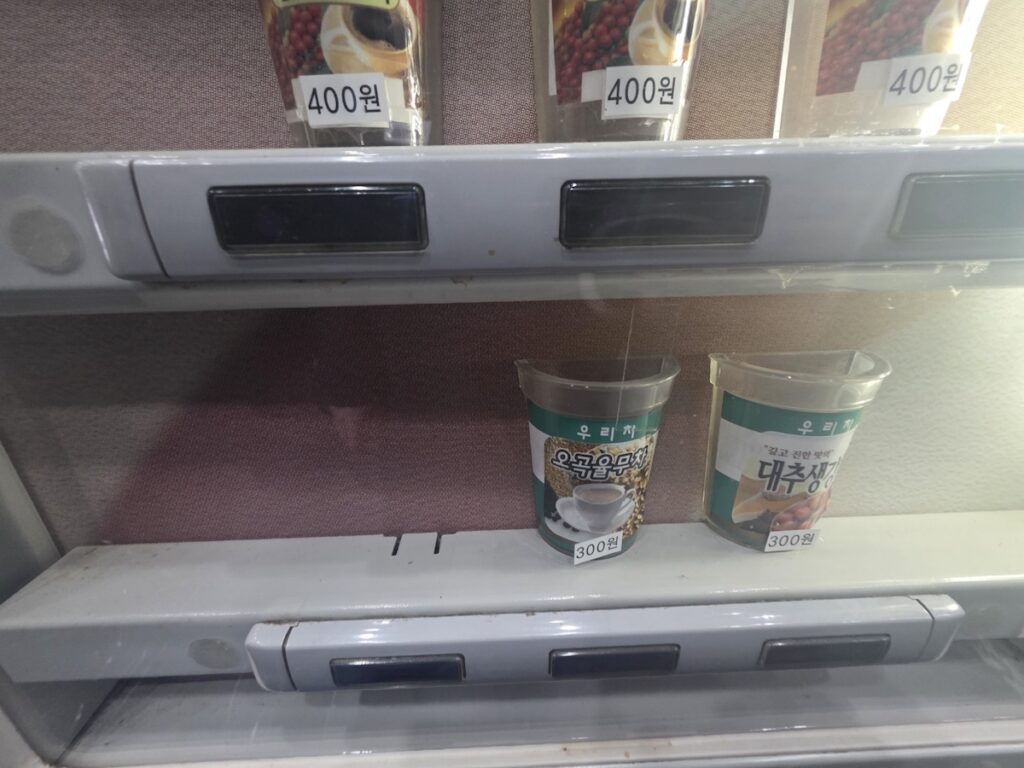
The ritual begins with the metallic chime of a 300-won coin falling into the slot. This sound is the heartbeat of 20th-century Korea, a relic of a time before the city was conquered by espresso machines. For me, and for many Koreans who lived through the rapid growth of the late 1900s, this 300-won paper cup is not just a drink; it is a warm, liquid sanctuary that offers a mental and physical reset that a cold, bitter Americano simply cannot provide.
1. The Architecture of Nostalgia: A 20th-Century Soul
The Traditional Korean Vending Machine Coffee Ritual served as the social lubricant of a developing nation. In the 1990s, long before the proliferation of Wi-Fi and social media, the vending machine was the “Water Cooler” of the Korean campus and workplace. It was the site of a senior’s silent encouragement—a simple “click-thud” of a cup being bought for a struggling junior. It was the backdrop of clumsy romances, where couples would linger under the warm glow of the machine’s light, holding the thin paper cups to warm their hands while searching for the right words.
For the working class, this machine offered a momentary escape. Whether you were a high-flying businessman in a suit or a laborer at the docks, the vending machine did not discriminate. It offered the same consistent, scalding comfort to everyone. While the “cool” urbanites of the time might have opted for a “Black Coffee” to show off their sophisticated, Westernized tastes, the vast majority reached for the sugar-laden embrace of the “Mixed” option to fuel their “Pali-Pali” (hurry-hurry) lifestyle.
2. The Anatomy of Choice: Decoding the Paper Cup Menu
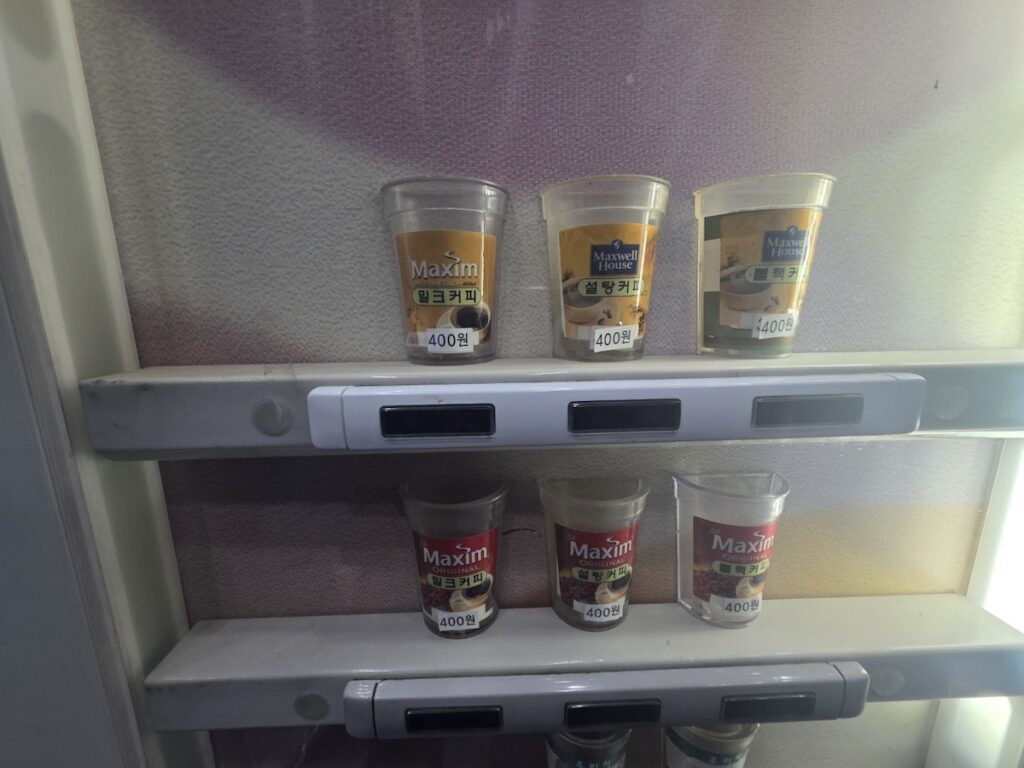
To truly master the Traditional Korean Vending Machine Coffee Ritual, one must understand the specific chemistry of the options available. These machines are the gatekeepers of a unique Korean flavor profile that balances sweetness, creaminess, and traditional medicinal notes.
| Menu Option | Composition & Ingredients | Cultural Context |
| Mixed Coffee (Milk Coffee) | Instant Coffee + Non-dairy Creamer + Sugar | The “Golden Ratio.” The ultimate energy booster for the tired soul. |
| Sugar Coffee | Instant Coffee + Sugar (No Creamer) | For those who want the caffeine kick and sweetness without the heaviness. |
| Black Coffee | Instant Coffee Only (No Sugar, No Creamer) | Once a symbol of urban sophistication and “modern” tastes in the 90s. |
| Yulmu-cha (Job’s Tears) | Powdered Job’s Tears + Nuts + Creamer | A thick, savory, meal-like drink often preferred in the winter. |
| Daechu-Saenggang-cha | Jujube (Red Date) + Ginger Extract + Sugar | A medicinal, spicy-sweet ritual to ward off the common cold. |
The foundation of the coffee options is a trio of ingredients: freeze-dried instant coffee, “Frima” (a ubiquitous non-dairy creamer brand), and white sugar. In the “Mixed” version, these three components achieve a velvet-like harmony that coats the tongue and provides an immediate spike in blood sugar—a vital necessity in the high-stress environment of 20th-century Seoul.
Related Guides
- 10 Best Korean Foods for Weight Loss: A Calorie-Driven Ritual (2026) If the sweet indulgence of vending machine coffee has you watching your waistline, explore this strategic guide to the traditional Korean dishes that balance flavor with nutritional precision.
- 3 Best Korean Fermentation Rituals for Gut Health Science The chemistry of Korean health begins with fermentation. Dive into the scientific rituals behind Kimchi and Doenjang to understand how this ancient wisdom supports a modern, healthy lifestyle.
- The Science of Texture 2026: Why “Sticky” Fails to Define the Korean Palate To truly understand why the viscosity of a 300-won Mixed Coffee or a cup of Yulmu-cha is so satisfying, you must master the complex linguistic and sensory world of Korean food textures.
3. The Duel of the Titans: Maxim vs. Maxwell House
When you look closely at the vending machine, you will notice two dominant names: Maxim and Maxwell House. While both are produced under license by the same Korean powerhouse, Dongsuh Food, they cater to different palates within the Traditional Korean Vending Machine Coffee Ritual.
| Feature | Maxim (맥심) | Maxwell House (맥스웰하우스) |
| Manufacturer | Dongsuh Food (Korea) | Dongsuh Food (Korea) |
| Roasting Style | Medium Roast (Smooth) | Darker Roast (Bold) |
| Flavor Profile | Balanced, aromatic, and silky. The “standard” of Korean coffee. | Intense, nutty, and robust with a lingering bitter-sweetness. |
| Target Ritual | Daily comfort and smooth social connection. | A strong morning “wake-up” call or post-lunch heavy hitter. |
- Maxim (The Sophisticate): Often associated with the “Yellow Stick” (Mocha Gold), Maxim uses a freeze-drying method that preserves the delicate aroma of the beans. It is the choice for those who seek a creamy, velvety texture where no single ingredient overpowers the other.
- Maxwell House (The Heavy Lifter): Known as the original global coffee brand, the Korean version of Maxwell House leans into a more “classic” and masculine coffee flavor. It has a slightly stronger “roasted” scent that cuts through the creamer, making it the favorite for those who need a serious physical boost.
4. The Enduring Ritual: Why It Still Matters in 2026
Even in 2026, where specialty beans and oat milk lattes are everywhere, the Traditional Korean Vending Machine Coffee Ritual persists. It exists because it represents a different kind of luxury—the luxury of simplicity. When you stand in front of a vending machine at a bus terminal or a public park, you are stepping out of the frantic pace of modern life and into a 30-second pause.
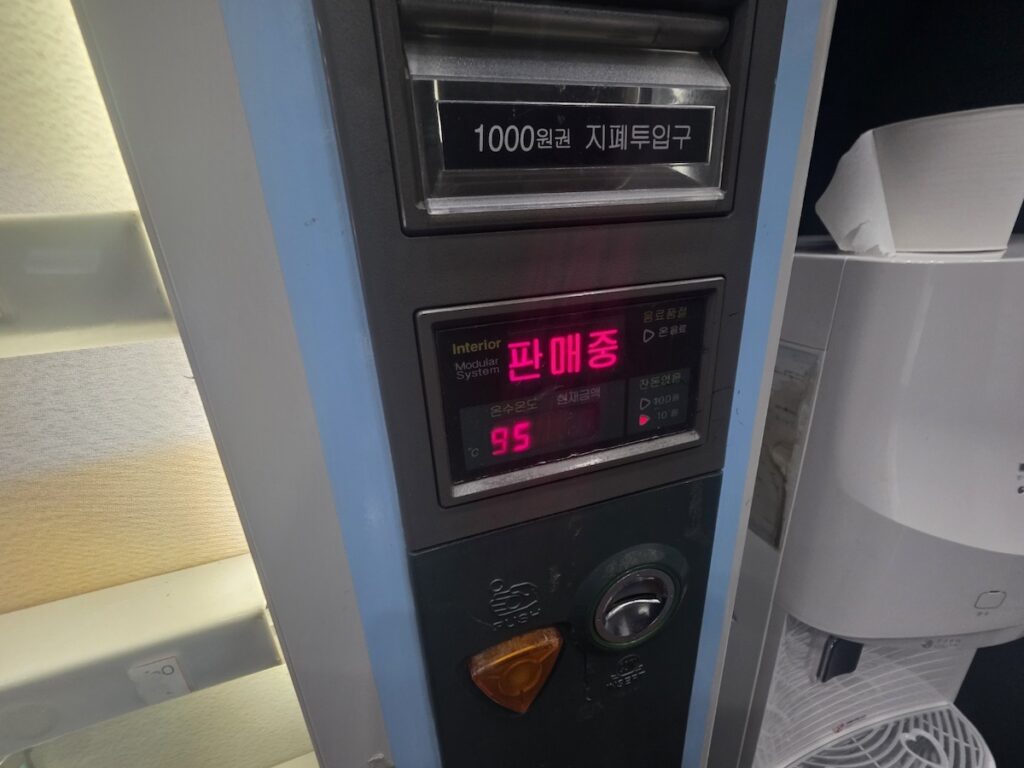
The act of stirring the bottom of the paper cup with a tiny plastic stick (or folding the top of the coffee stick itself to stir) is a meditative practice. It is a reminder of where we came from. For the 180cm man who seemingly has everything in a modern world, that 300-won cup is a bridge back to a time when a warm drink and a kind word from a senior were enough to get through the day. It is the “Soul of the 20th Century” served at 85°C.
Action Plan
- Find the Relic: Seek out an older public building, a local hospital, or a mountain hiking entrance. Look for the yellow or brown machines labeled “Coffee.”
- The Coin Preparation: Keep a 100-won or 500-won coin ready. While some modern machines accept cards, the “clink” of the coin is essential for the full auditory ritual.
- The Tasting Order: Start with the Mixed Coffee to understand the baseline. Then, try the Yulmu-cha on a cold day for a savory, nutty experience that feels like a warm hug.
Conclusion: Drink the Soul of 20th Century Korea
The Traditional Korean Vending Machine Coffee Ritual is more than a caffeine fix; it is a time machine. While the world moves toward 10,000-won artisanal lattes and high-speed efficiency, this 95°C paper cup stands as a stubborn, beautiful reminder of the human connections that built modern Seoul. It is the taste of a senior’s silent support, the warmth of a first date under a flickering streetlamp, and the humble fuel of the hardworking “Garak Market” spirit.
If you find yourself in Korea, do not just stay within the glass walls of trendy cafes. Look for the yellow machine in the corner of a subway station, a public park, or an old hospital lobby. Prepare your coins, listen for the mechanical symphony of the cup falling, and take a sip. You aren’t just drinking instant coffee; you are drinking the resilience, the romance, and the soul of the Korean people. It is the most affordable, yet most profound, cultural experience you will find in this city.