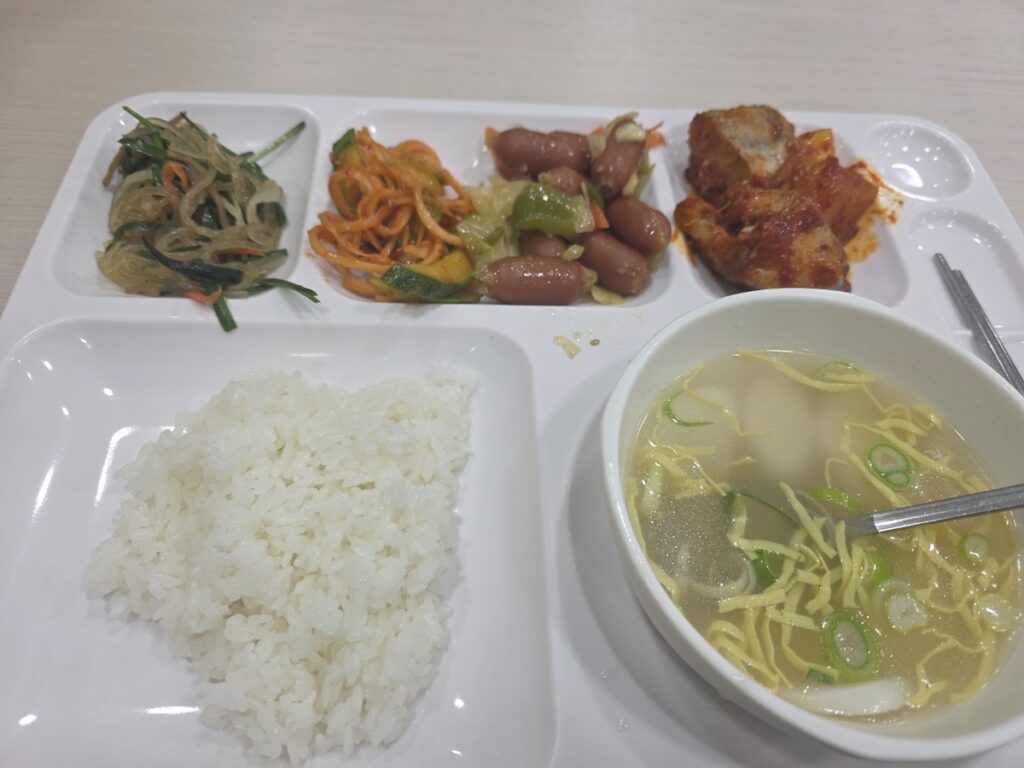
Gangnam Lunch Ritual is a high-stakes race against time, and everywhere in the world, a place that is both affordable and delicious is destined for popularity. But in the high-pressure heart of Seoul, this ritual is not just about the food—it’s about the surgical precision of timing.
Today, as the elevator descended from my office, I found myself participating in the Gangnam Lunch Ritual by tapping my feet in a frantic rhythm of impatience. In the life of a Seoul office worker, a one-hour lunch break is a sacred, finite resource. There is no time to waste in a long queue. We must secure a table, finish the meal, grab a coffee, and squeeze in a few minutes of conversation before the clock strikes one.
“Safe!” I thought, as I stepped into the humble eatery. By securing this 8,000 KRW (approx. $6.00 USD) Kimchi-jjigae, I hadn’t just bought a meal; I had won a small victory in the Gangnam Lunch Ritual. While a standard lunch in Manhattan or London easily exceeds $15–$20, this $6 experience remains a sanctuary for the resilient Seoul office worker.
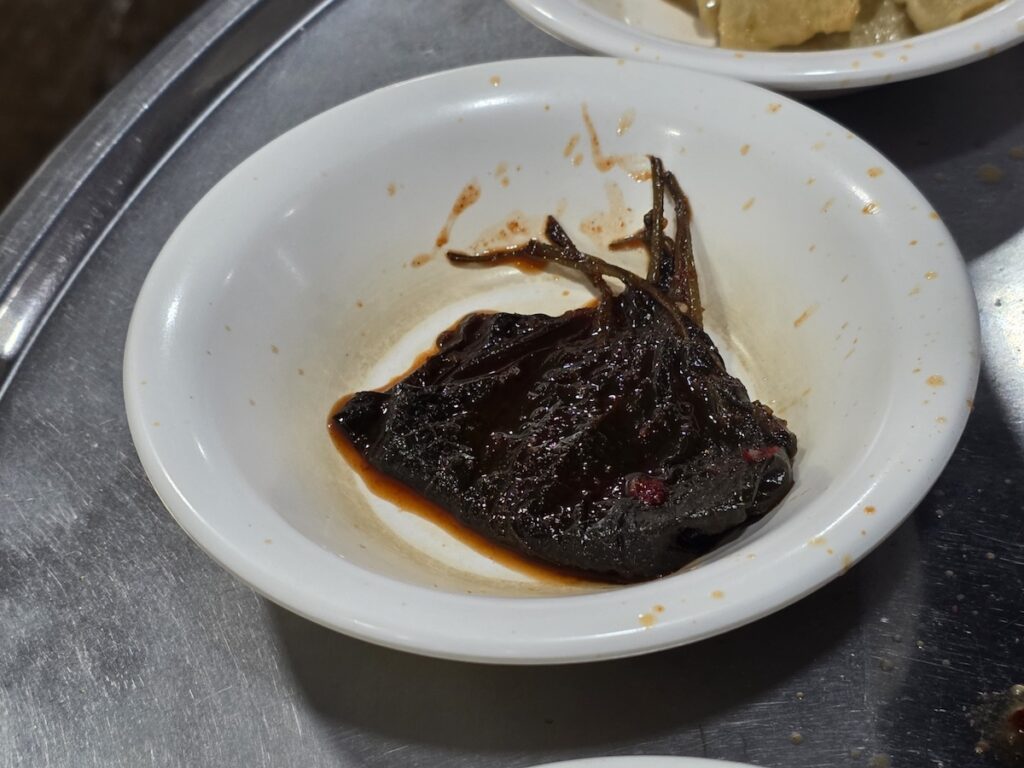
The $6.00 USD Gastronomy: A Global Comparison
In the relentless landscape of Gangnam real estate, an 8,000 won price point is a miracle of efficiency. This is a space where the Gangnam Lunch Ritual thrives on high turnover and communal speed. It’s not about flickering candles or soft jazz; it’s about the rapid arrival of a steaming pot and the rhythmic clinking of metal spoons. This affordability ensures that even in a fluctuating economy, the spirit of the Korean worker remains well-fed.
The Triple Side Dish Ritual: A Masterclass in Korean Hospitality
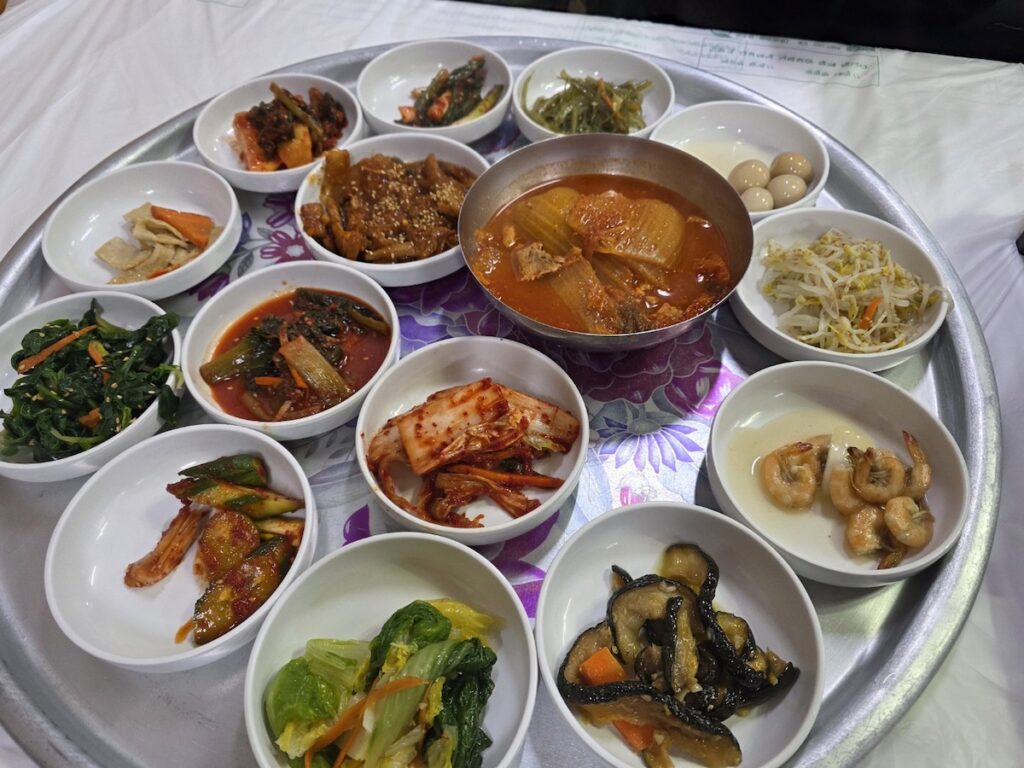
What truly elevates this Gangnam Lunch Ritual is the “Banchan” (side dishes). To a foreign observer, these are “free,” but to a Korean, they are the soul of the meal. Today’s table offered a minimalist yet powerful trinity that exemplifies the efficiency of Korean gastronomy.
The Trinity of Side Dishes: A Nutritional and Pop-Culture Analysis
In the Gangnam Lunch Ritual, the three side dishes served alongside your stew are not random. They are a curated balance of texture, temperature, and taste. Here is the deep dive into the “Trinity” you encountered today.
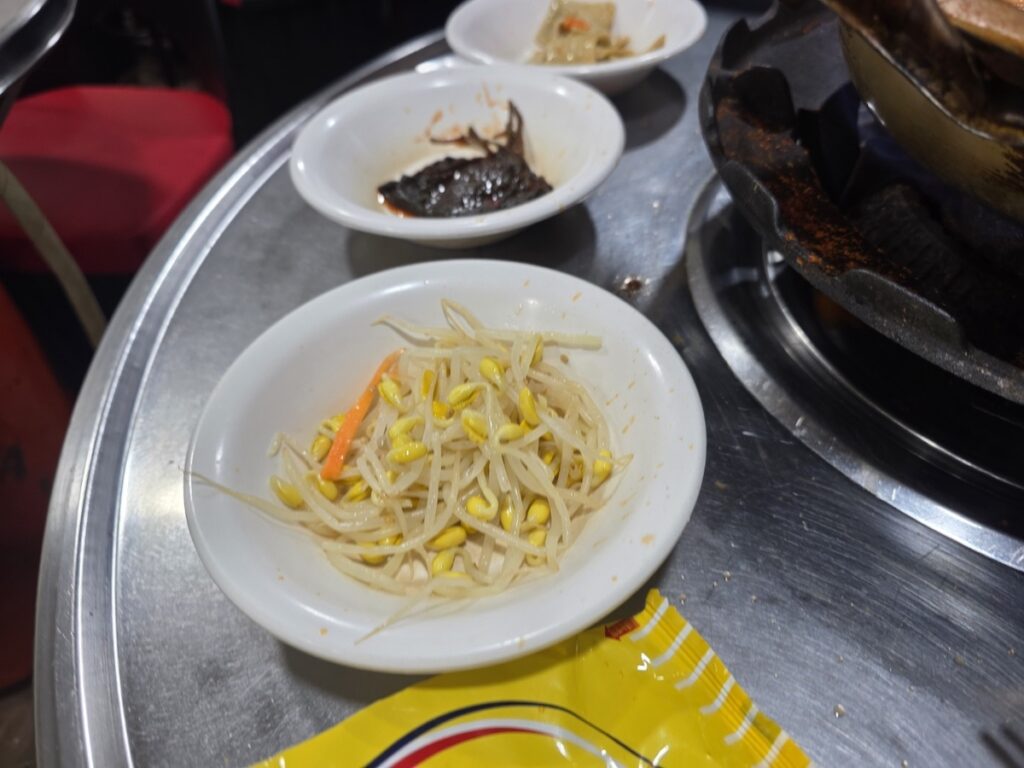
1. Mung Bean Sprouts (Kongnamul-muchim)
- The Ingredients: Fresh mung bean sprouts blanched and seasoned with toasted sesame oil, minced garlic, and a pinch of sea salt.
- The Science: High in Vitamin C and Aspartic Acid, it is the ultimate “recovery” vegetable.
- Pop-Culture Connection: BTS’s Jin is famously known for his love of traditional Korean home-style cooking, often highlighting simple, healthy sides like Kongnamul as essential for maintaining energy during world tours. It represents the “purity” of the Korean table.
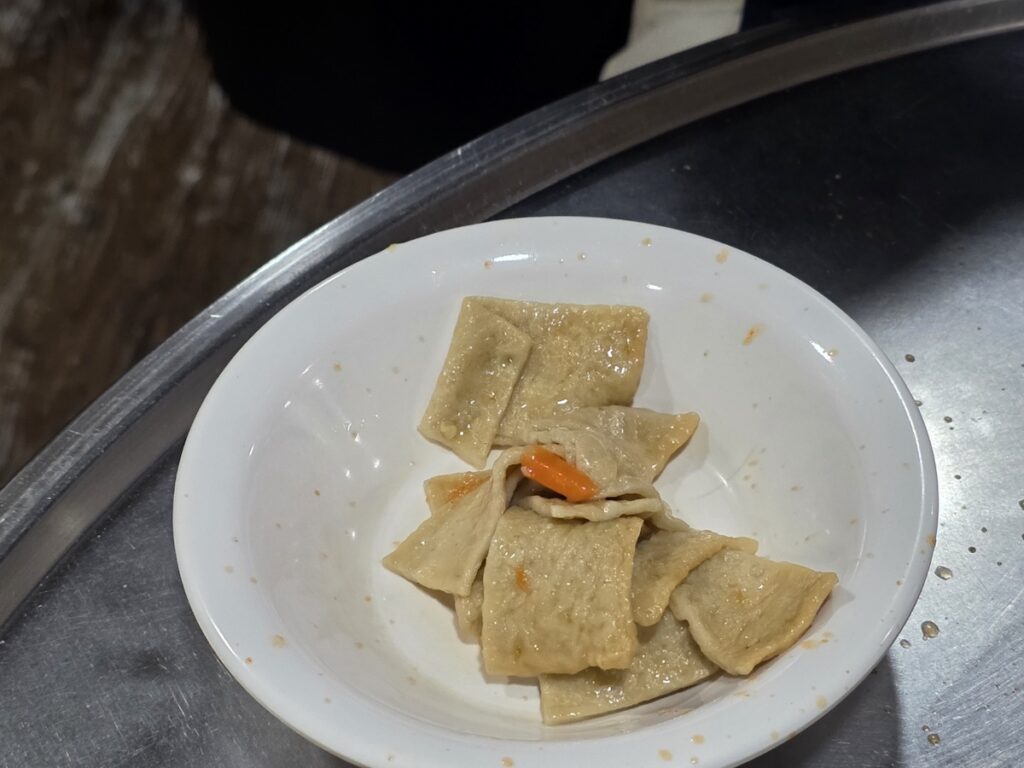
2. Stir-fried Fish Cakes (Eomuk-bokkeum)
- The Ingredients: Thinly sliced fish cakes stir-fried with soy sauce, a touch of corn syrup (for that signature gloss), and scallions.
- The Starch Balance: Providing a savory, chewy protein source, it serves as the perfect bridge between the spicy soup and the plain white rice.
- Celebrity Insight: BLACKPINK’s Jisoo has mentioned her fondness for classic Korean comfort foods and “school-style” snacks. Eomuk is the quintessential “soul food” for the younger generation, bridging the gap between street food nostalgia and office lunch reality.
3. Perilla Leaf Pickles (Kkaetnip-jangajji)
- The Ingredients: Perilla leaves marinated in a potent mixture of soy sauce, red pepper flakes (gochugaru), and garlic.
- The “Rice Thief” Status: Known as a Bap-doduk (rice thief), its intense aromatic profile encourages you to finish every grain of rice in your bowl.
- The Viral Ritual: You may have heard of the “Perilla Leaf Debate” that took the K-Pop world by storm. Idols like Stray Kids and EXO have engaged in heated discussions about the social etiquette of helping a friend peel off a single leaf. This side dish is more than food; it is a cultural conversation starter.
The Philosophy of “Free”: Why Banchan is More Than a Side
In the Gangnam Lunch Ritual, the concept of free refills for these three side dishes is a social contract. It reflects a culture of Jeong (정)—a deep-seated generosity that persists even in the most capitalist corner of Seoul. When the server silently refills your fish cakes without being asked, they are acknowledging your hard work and ensuring your 8,000 won stretches as far as possible.
🏮 Related Guides for Your Culinary Journey
Expand your exploration of the Korean table with these essential guides to our daily rituals and culinary science.
- 5 Strategic Secrets of the 12 PM Korean Lunch Rush in Seoul If you found the pace of our Gangnam Lunch Ritual intense, this guide breaks down the strategic navigation required to survive the peak 12 PM rush in Seoul’s busiest business districts.
- The Art of the Ramyeon Sari: Why South Koreans Turn Stews into a Culinary Rebellion Discover the science behind adding a ‘Sari’ to your stew. Learn how starch transforms a simple meal into a sophisticated deviation from the standard Gangnam Lunch Ritual.
- 7 Best Korean Spicy Raw Fish Salad Spots Near Incheon Airport to Visit For those arriving in Korea and looking for their first ritualistic meal, we’ve curated the best spots near the airport to experience the vibrant, spicy flavors of the peninsula.
- Korean Food Rituals 2026: The Philosophy of Sundays, Soup, and the Meat Debate While the Gangnam Lunch Ritual is about the survival of the professional, our Sunday rituals explore the restorative philosophy of family soups and the cultural meat debate.
The Kimchi-jjigae Safety Net: Why We Say “Let’s Just Have Stew”
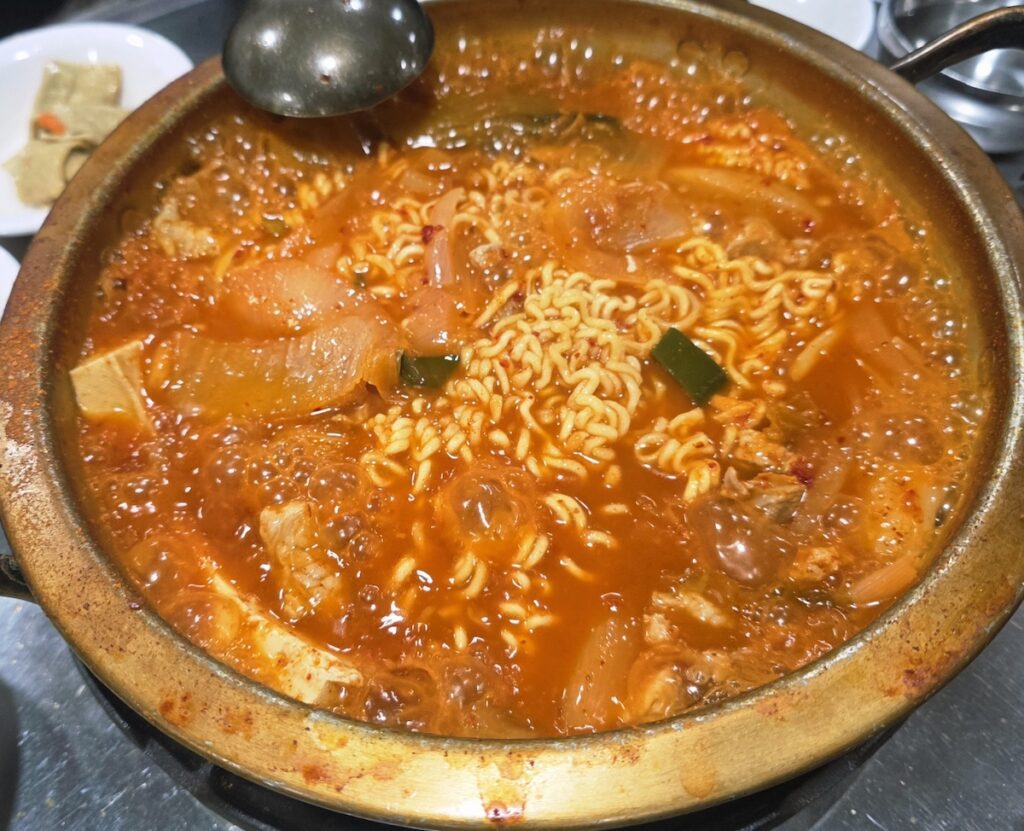
In the complex hierarchy of Korean office culture, the phrase “Kimchi-jjigae-na meok-ji, mwo” (Let’s just have Kimchi-jjigae) carries a profound, bittersweet weight. It is the language of the Korean Patriarch and the overworked professional seeking a moment of absolute certainty in an uncertain world.
1. The Ultimate Culinary Safety Net
When a Korean office worker says “Let’s just have Kimchi-jjigae,” they are opting for the “Zero-Risk Choice.” Unlike trendy fusion pastas or expensive sushi that can vary wildly in quality, Kimchi-jjigae has a remarkably consistent flavor profile across the nation. It is an “anchored” taste—sour, spicy, and deeply familiar. For the head of a household juggling mortgage payments and rising tuition costs, spending 8,000 KRW ($6.00 USD) on a guaranteed soul-warming meal is a rational, protective act of consumption.
2. The Emotional Economy of the Patriarch
There is a quiet sacrifice in this choice. While the world of Gangnam offers 30,000 KRW steaks and $20 salads, the Korean father often steers toward the red, bubbling pot. It is a ritual of Financial Resilience. By saving on a “fancy” lunch, he preserves the family budget, finding his satisfaction in the familiarity of the fermented broth rather than the novelty of a high-priced menu. In this context, Kimchi-jjigae is not “boring”—it is a loyal companion that never lets you down when you need to be smart with your wallet.
3. The Ritual of “Just This Once”
The irony of the Gangnam Lunch Ritual is that while we dismissively say “Let’s just have it,” the first sip of that fermented, umami-rich soup invariably triggers a deep sense of relief. It is the taste of “home” found in a crowded, noisy basement restaurant. For the 12,000 office workers descending the elevators of Gangnam every day, Kimchi-jjigae is the Invisible Anchor that keeps their spirits grounded.
🏮 Final Action Plan for Success
- Step 1: Reflect on your own “Safety Net” meal. What is your 8,000 won ritual?
- Step 2: Visit the back alleys of Gangnam at 11:45 AM to witness the high-speed hospitality firsthand.
- Step 3: Don’t forget to appreciate the “free” banchan—it’s the heart of the Korean table.
Conclusion: The $6.00 Sanctuary of the Resilient Seoulite
Ultimately, the Gangnam Lunch Ritual is far more than a race against the clock or a search for a cheap meal. It is a cinematic reflection of the modern Korean spirit—fast-paced, intensely practical, yet deeply rooted in a culture of shared generosity.
When we settle for that 8,000 KRW ($6.00 USD) Kimchi-jjigae, we aren’t just saving money; we are embracing a “Safety Net” that has supported the Korean patriarch and the office worker for decades. The familiar hum of the crowded basement, the clinking of metal chopsticks, and the silent refill of the Triple Side Dish are the invisible threads that keep us grounded in a city that never stops moving.
In the heart of Gangnam, excellence isn’t always found in a Michelin star. Sometimes, it’s found in a boiling red pot, three humble side dishes, and the quiet satisfaction of a hardworking individual who knows the true value of a well-earned break. The next time you find yourself tapping your feet in a Seoul elevator, remember: the 8,000 won miracle is waiting, and it is exactly what you need to face the rest of your day.