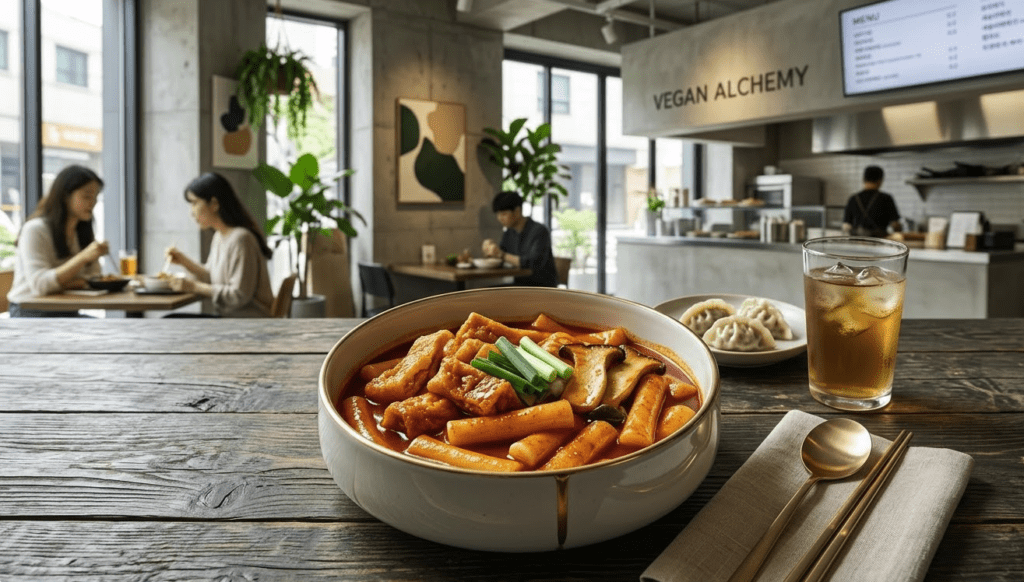
Vegan Tteokbokki Ritual 2026 is not merely a dietary alternative; it is a sophisticated declaration of Korea’s evolving cultural hospitality. As we look toward the global landscape of 2026, the Korean street food scene has transcended its traditional boundaries to embrace a new era of inclusivity. We are no longer just a nation of meat and fish; we are a society that has prepared a seat at the table for the plant-based soul. The Vegan Tteokbokki Ritual 2026 is the ultimate proof that our most beloved comfort food can remain authentic while becoming universally accessible.
A Nation Ready to Embrace: The New Social Contract
For many years, international travelers following a plant-based lifestyle viewed Korea with a mix of curiosity and hesitation. The fear of “hidden” animal products in every broth and sauce was a significant barrier. However, the Vegan Tteokbokki Ritual 2026 represents a fundamental shift in our Professionalism. We have recognized that the vegan community is not a peripheral group but a core pillar of the modern global market.
Today, when you enter a trendy district like Seongsu-dong or a historic alley in Insadong, you are participating in a new Social Contract. We have done the work to ensure that our culture is as attractive to you as it is to any local. This readiness is not just about changing ingredients; it is about a deep-seated respect for the diverse values that travelers bring to our shores. The Vegan Tteokbokki Ritual 2026 is our way of saying: “We have prepared this for you, and we are proud to share it.”
The Alchemy of Vegan Tteokbokki: Beyond Substitution
To master the Vegan Tteokbokki Ritual 2026, one must understand that this is an act of Alchemy, not just subtraction. It is a common misconception that veganizing a dish results in a loss of depth. In reality, the plant-based approach often reveals a cleaner, more vibrant “Scent of Romance” that was previously obscured by heavy animal fats.
1. The Broth Transformation
In the traditional ritual, the soul of the sauce was built on dried anchovies and kelp. In the Vegan Tteokbokki Ritual 2026, we elevate this by using a concentrated base of dried shiitake mushrooms and charred leeks. This transition is a mark of Professionalism. The mushrooms provide a natural source of guanylate, a compound that creates an intense umami sensation that lingers on the palate far longer than fish-based broths.
2. Texture Mastery: The Art of the Yubu
One of the most engaging aspects of the Vegan Tteokbokki Ritual 2026 is how we handle the absence of the fish cake (Eomuk). Instead of leaving a void, professional vegan masters introduce fried tofu skins, known as Yubu. When these porous skins are simmered in the spicy, fermented sauce, they act as sponges, delivering a burst of flavor that mirrors the resilience of the traditional ritual while being entirely plant-derived.
The Anatomy of Vegan Integrity: Deciphering the Ingredients
The core of the Vegan Tteokbokki Ritual 2026 lies in its absolute transparency. For a plant-based traveler, the “Experience” is only as valid as the “Integrity” of the ingredients. In the professional kitchens of 2026, we categorize these elements with surgical precision to ensure a safe and elevated ritual.
1. The Forbidden Rituals: Hidden Animal Products
In traditional street stalls, the “Scent of Romance” often hides ingredients that are strictly off-limits. To maintain professional integrity, one must identify these hidden barriers:
- The Myeolchi-yuksu (Anchovy Broth): The most common “invisible” animal product. Even a trace of fish oil in the base liquid breaks the sacred trust of the vegan ritual.
- The Eomuk (Fish Cake): A staple of the street, yet a complete contradiction to the plant-based soul. Its presence in the pot immediately disqualifies the integrity of the batch.
- The Honey Trap: While rare, some premium recipes use honey for a glossy finish. Professionalism in 2026 demands the use of rice syrup (Jocheong) or organic sugar as a cruelty-free alternative.
2. The Plant-Based Alchemy: Essential Allowed Ingredients
The beauty of the Vegan Tteokbokki Ritual 2026 is that it doesn’t just subtract; it enriches. By focusing on pure, earth-grown elements, we achieve a clarity of flavor that animal fats often muffle:
- The Mushroom Infusion: Dried Shiitake mushrooms provide the deep, earthy umami that replaces beef, creating a sophisticated base for the sauce.
- Kelp (Dashima) and Radish: This combination creates a “Clean Heat” that cleanses the palate while delivering a potent source of natural minerals.
- Fried Tofu (Yubu) & King Oyster: These act as the professional substitutes for fish cakes. Their porous texture makes them superior “flavor sponges,” absorbing the spicy red sauce with every simmer.
3. Professional Integrity Checklist
| Ingredient Category | Forbidden (Animal-Derived) | Allowed (Vegan Standard) | Sensory Benefit |
| Stock Base | Anchovy, Beef Powder | Shiitake, Kelp, Radish | A sharper, cleaner umami profile. |
| Protein Element | Fish Cake (Eomuk) | Fried Tofu, King Oyster | Superior absorption of the sauce. |
| Sweetener | Honey | Rice Syrup, Organic Sugar | Traditional, earthy sweetness. |
| Seasoning | Fish-sauce Gochujang | Vegan Certified Paste | Pure, unadulterated fermentation. |
Why the Non-Vegan Will Love Your Ritual
The most “치명적인” (lethal/captivating) quality of the Vegan Tteokbokki Ritual 2026 is its ability to unite. This is not a dish you eat alone in a corner; it is a meal designed for shared joy. Even a friend who enjoys meat will find themselves reaching for a second helping of your vegan creation.
The reason is simple: Purity of Flavor. Without the oily residue of processed fish cakes or beef-based stocks, the true character of the Gochugaru (chili powder) and the natural sweetness of the simmered cabbage shine through. It is a “Zero-G” culinary experience—high in intensity, yet light on the stomach. Sharing the Vegan Tteokbokki Ritual 2026 with a non-vegan companion becomes a moment of discovery, proving that a plant-based choice doesn’t mean a compromise in satisfaction.
Action Plan: Where to Experience the Ritual 2026
If you are navigating Korea Travel 2026 with a plant-based heart, your journey should be guided by these professional sanctuaries:
- The Seongsu-dong Corridor: Home to innovative chefs who treat the Vegan Tteokbokki Ritual 2026 as a high-gastronomy project. Look for spots using “Vegan Certified” Gochujang.
- Insadong Traditional Tea Houses: Many have integrated a “Meditative Tteokbokki” into their menus, focusing on the historical, soy-sauce-based roots of the dish.
- Home Alchemist Tip: When cooking at home, sear your rice cakes in a bit of sesame oil first. This creates a nutty barrier that enhances the Texture Ritual even before the sauce is added.
🗺️ The Shared Experience Table
| Feature | Why the Vegan Loves It | Why the Non-Vegan Loves It |
| The Sauce Base | Ethical, mushroom-driven umami. | Cleaner, sharper chili notes. |
| The “Protein” | Savory Yubu (Fried Tofu). | Unique, juice-absorbing texture. |
| The Aftermath | No hidden animal byproducts. | No heavy, greasy “food coma” feeling. |
| The Social Ritual | Feeling included in K-culture. | Discovering a “Hip” new way to eat. |
Conclusion: A Ritual of Universal Resonance
The Vegan Tteokbokki Ritual 2026 is more than just a meal; it is a symbol of a Korea that is open, ready, and professional. It proves that our ancient soul food has the power to adapt and resonate with anyone, regardless of their dietary path. By choosing the vegan ritual, you are not missing out on the “real” Korea—you are experiencing a more refined, inclusive, and forward-thinking version of it. As you share a pot of red, simmering rice cakes with friends of all backgrounds, you are fulfilling the ultimate Social Contract of 2026: the belief that the best flavors are the ones everyone can enjoy together.