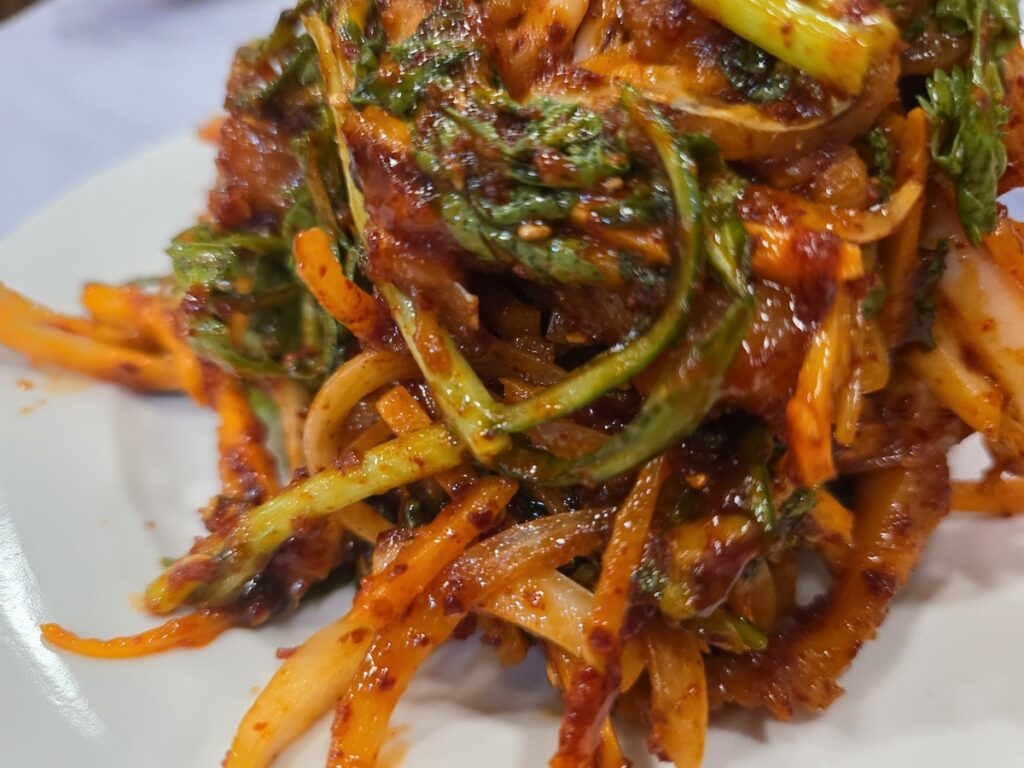
Best Korean Spicy Raw Fish Salad, often known as Hoe-muchim, was the first thing my brother and I sought after standing by the gray, churning waters of the Yellow Sea near Incheon International Airport. In the biting cold of a late winter evening, the wind was sharp—a raw reminder of the elements that define this peninsula. We weren’t looking for a typical tourist meal; we needed something vibrant and restorative that resonated with the cold landscape.
As we shared a plate of this Best Korean Spicy Raw Fish Salad, the intense “Umami” of the fermented sauce and the crisp texture of the seasonal vegetables sparked a deep conversation that lasted far longer than the meal itself. It wasn’t just food; it was a ritual of reconnection through the sophisticated balance of Korean heat.
The Sophisticated Philosophy of Muchim: Beyond the Heat
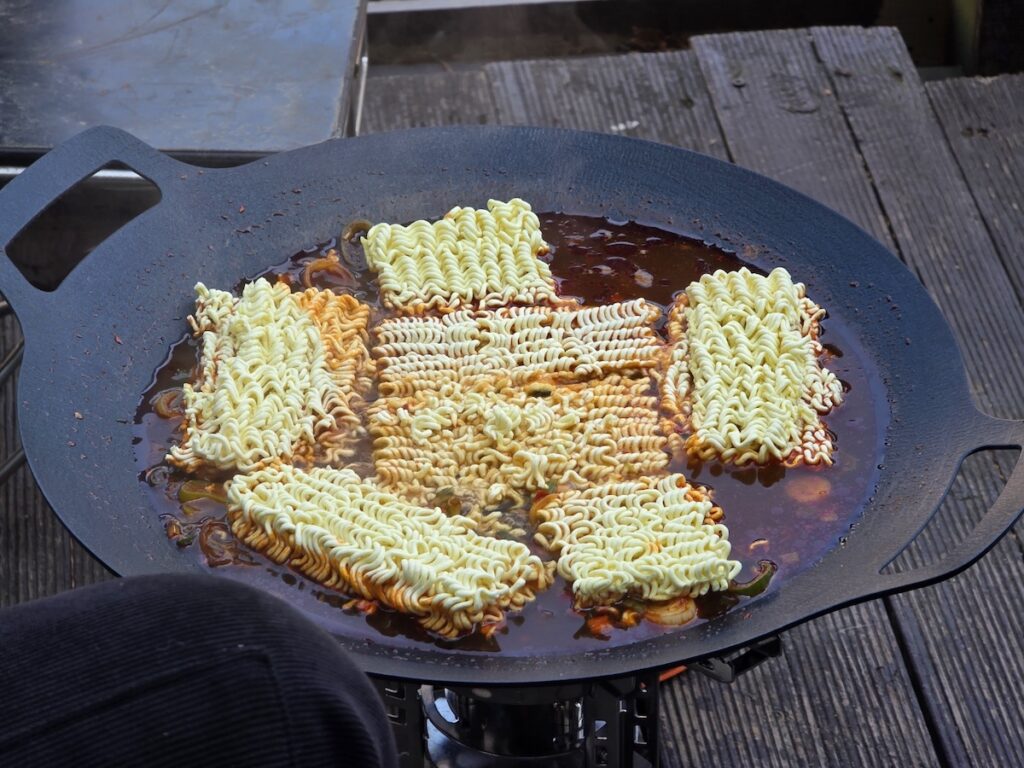
For many international food enthusiasts, Korean “spiciness” is often synonymous with the viral intensity of “Fire Noodles.” However, the true soul of Korean heat lies in the art of Muchim. Unlike heavy stews or fire-breathing snacks, Muchim is a culinary technique centered on “tossing” ingredients with a balance of fermented depth and acidic brightness.
Muchim represents the Korean intuition of Son-mat (the taste of one’s hands). It is a category of dish where raw or blanched ingredients are dressed in a complex sauce of Gochugaru (red chili flakes), Gochujang (fermented chili paste), vinegar, and minced garlic. For the health-conscious or vegan traveler, Muchim offers a sophisticated entry point into Korean cuisine, focusing on the preservation of the ingredient’s natural integrity rather than masking it in grease.
Nutritional Synergy: The Science of the “Hollow Cylinder” and Fiber
The brilliance of Best Korean Spicy Raw Fish Salad lies in its nutritional architecture. It is a calculated balance of high-quality protein and medicinal aromatics.
| Component | Primary Ingredients | Scientific/Nutritional Benefit |
| Protein Base | Fresh Raw White Fish (Flatfish/Rockfish) | Low-fat, high-protein source containing essential amino acids. |
| The “Crunch” | Minari (Water Dropwort), Radish, Cucumber | High fiber content; Minari is known for its detoxifying properties. |
| Aromatic Sauce | Allicin (Garlic), Capsaicin (Chili), Organic Acids (Vinegar) | Enhances metabolism, aids digestion, and provides anti-inflammatory effects. |
| The Ritual Finish | Toasted Sesame Oil & Seeds | Provides healthy fats and Vitamin E for skin health. |
One fascinating scientific aspect of this dish is the use of certain vegetables like green onions or sliced radish, which often act as a Hollow Cylinder in the mix, trapping the sauce within their structure to ensure every bite delivers a burst of flavor without wilting the greens.
Where to Experience the Art: 3 Luxury Destinations Near Incheon
If you are looking for the Best Korean Spicy Raw Fish Salad while staying near the airport, these three luxury establishments offer a refined take on this traditional dish.
1. Grand Hyatt Incheon: Restaurant 8
Located just a 3-minute shuttle ride from Incheon International Airport Terminal 1, Grand Hyatt Incheon serves as a premier gateway for transit travelers and gourmands alike. It is widely recognized as one of the largest Hyatt hotels in the world outside the U.S., holding a prestigious 5-star reputation for its impeccable service and global standards.
Inside, Restaurant 8 is not merely a dining hall but a sophisticated culinary theater featuring eight distinct open kitchens. The Korean station here is legendary among frequent flyers for elevating Muchim to a fine-art form. Their chefs are masters of “Allicin” management, meticulously balancing the pungent garlic to ensure the raw fish is complemented by a sharp yet clean finish that appeals to international palates. Critics often praise Restaurant 8 for its “cinematic atmosphere,” where the modern backdrop of airport runways and departing jets provides a stunning contrast to the ancient, fermented flavor profiles on your plate.
2. Paradise City: On The Plate
As Northeast Asia’s first “Art-Tainment” integrated resort, Paradise City is situated less than 5 minutes from the airport. This 5-star landmark is often described as a “living museum,” famous for housing iconic works like Yayoi Kusama’s “Great Giant Pumpkin”. It has become a must-visit destination for those seeking a blend of high-end luxury, casino excitement, and world-class gastronomy.
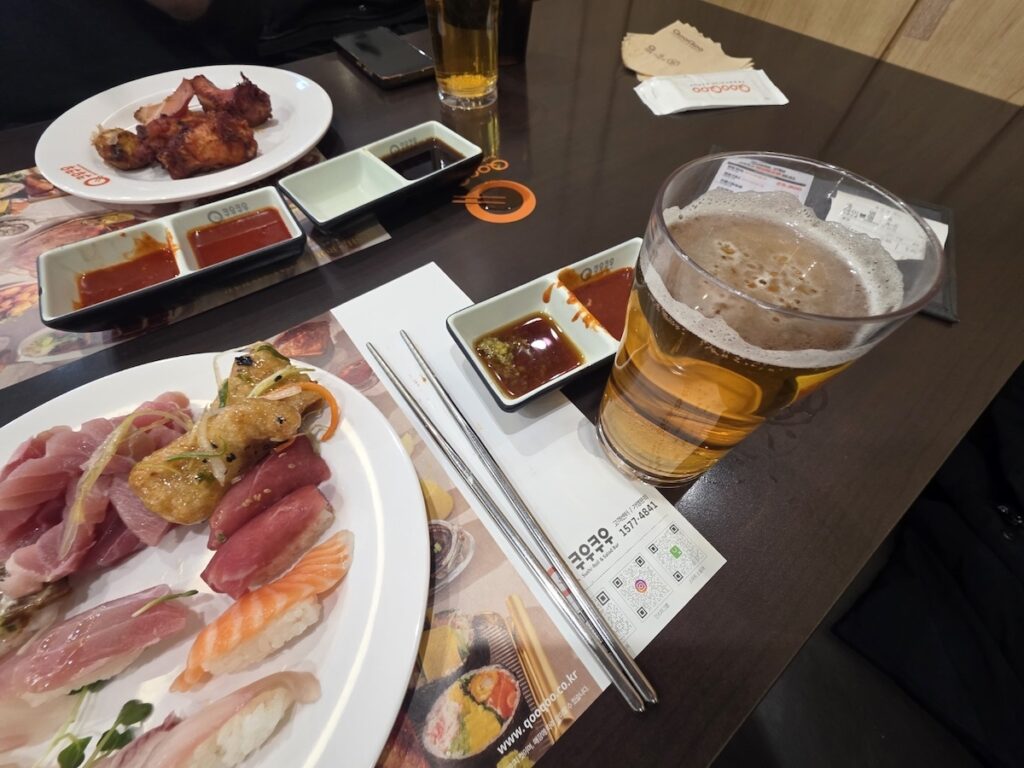
Within this opulent resort, the premium buffet On The Plate remains a centerpiece of the Incheon dining scene. Their seasonal Hoe-muchim is frequently cited in food reviews as a highlight, embodying the “Ritual of Freshness” by utilizing daily catches from the nearby Incheon coast. The culinary team is known for their “Aged Sauce” technique—letting the spice blend rest to mellow the harshness of the chili while deepening the umami. This thoughtful preparation makes it an excellent choice for global travelers who are wary of extreme heat but still crave an authentic Korean spicy experience.
3. Nest Hotel: Platz
For a truly observant and tranquil dining experience, Nest Hotel offers a distinct “Design Hotels” aesthetic about 10 to 15 minutes from the terminal. It is famously known as the first hotel in Korea to be a member of the Design Hotels collective, celebrated for its raw concrete exterior and minimalist architecture that blends seamlessly with the reeds of the Yellow Sea.
The hotel’s flagship restaurant, Platz, is an architectural marvel with terraced seating that guarantees every guest a “stunning vista of the sea”. Externally, Platz is lauded by food bloggers and interior enthusiasts for its “monastic luxury,” providing a meditative space to focus on the nuances of flavor. Their version of Muchim is particularly notable for incorporating unique local greens sourced from the coastal terroir, such as wild sea-aster. The acidity of their dressing is perfectly tuned to cut through the richness of the fish, embodying the “Tangy” essence of Korean coastal cuisine while you watch the tides ebb and flow through the floor-to-ceiling windows.

Nutritional Synergy: Managing Diabetes and Blood Pressure with Muchim
The preparation of Best Korean Spicy Raw Fish Salad is a masterclass in functional food synergy. Beyond its sensory appeal, the dish is built on a foundation of raw, unprocessed ingredients that provide specific physiological benefits, grounded in biochemical principles.
1. The Glycemic Advantage: Blood Sugar Management
For individuals with Diabetes, the structural composition of Hoe-muchim is ideal. Unlike Korean BBQ or stews that may contain hidden sugars or heavy starches, Muchim is inherently Low-Carb and High-Fiber.
- Slow Glucose Absorption: The high volume of raw vegetables—specifically radish and cucumber—provides soluble fiber that slows the absorption of sugar into the bloodstream.
- Vinegar’s Metabolic Role: The acetic acid in the vinegar used for the dressing has been scientifically shown to improve insulin sensitivity and lower post-meal blood sugar spikes.
- Lean Protein: The raw white fish provides a steady source of energy without the saturated fats found in red meats, making it a “Diabetes-friendly” gourmet choice.
2. Cardiovascular Support: Natural Blood Pressure Regulation
The ingredients in Muchim act as natural vasodilators, which is crucial for maintaining healthy Blood Pressure levels.
- The Power of Allicin: The heavy use of minced garlic in Muchim releases Allicin, a compound known to relax blood vessels and improve blood flow, similar to the effects of some ACE inhibitors.
- Potassium-Rich Greens: Ingredients like Minari (Water Dropwort) and green onions are packed with potassium. Potassium helps the body excrete excess sodium, directly counteracting the effects of salt on blood pressure.
- Capsaicin for Circulation: While intense heat can be stressful, the moderate Capsaicin in Korean red chili flakes (Gochugaru) promotes healthy circulation and has thermogenic properties that support heart health.
3. Comparison Table: Muchim vs. Processed Spicy Foods
| Health Metric | Muchim (Spicy Raw Fish Salad) | Processed Spicy Snacks (e.g., Fire Noodles) |
| Glycemic Index | Low (Natural fibers & lean protein) | High (Refined flour & sugar) |
| Sodium Impact | Moderate (Balanced by Potassium) | High (High preservative salt) |
| Nutrient Density | High (Vitamins A, C, and Allicin) | Low (Mostly empty calories) |
| Inflammation | Anti-inflammatory (Garlic & Vinegar) | Pro-inflammatory (High-heat oils) |
By choosing a refined Muchim at a 5-star destination like the Grand Hyatt Incheon or Paradise City, you are not just indulging in a meal; you are participating in a calculated nutritional ritual that supports long-term wellness.
Related Guides: Deepen Your Korean Culinary Journey
To truly master the nuances of Korean gastronomy, explore our curated guides that connect the art of the meal to lifestyle, health, and cultural rituals.
3 Best Korean Semi-Dried Fish Rituals & K-Pop Idol Diet Secrets
If you found the lean protein and high-fiber profile of Muchim intriguing, you must explore the world of semi-dried fish (Gwamegi and Kodari). This guide delves into the traditional drying rituals that concentrate nutrients and flavor without adding calories. Discover why top-tier K-Pop idols incorporate these high-protein, low-fat delicacies into their strict pre-comeback diets to maintain lean muscle while enjoying the intense “Umami” that typically comes from heavier foods. Learn how to replicate these idol-approved rituals at home for a sculpted physique and a satisfied palate.
7 Secrets of the Post-BBQ Meal Ritual in Korea: The Savory Dessert
In Korea, the meat is only the beginning. This guide uncovers the “Savory Dessert” ritual—the essential second act of any BBQ feast. While the world knows Bulgogi, few understand the sophisticated transition to cold noodles (Naengmyeon) or spicy stews (Jjigae) that cleanse the palate and aid digestion. We break down the 7 secrets of why this transition is culturally mandatory, including how the acidity of the post-meal dishes balances the alkaline nature of the grilled meats. Whether it is a fermented soybean paste stew or a tangy kimchi-based finish, find out how to conclude your dining experience like a true Seoulite.
Action Plan for Your Gourmet Journey
To experience the ultimate Muchim during your stay near Incheon, follow these strategic steps:
- Download ‘Catch Table’ App: This is the essential tool for South Korea’s dining scene. Use it to secure a reservation at Paradise City or Grand Hyatt Incheon to ensure you get a seat with a view of the “cinematic” airport runways or the Yellow Sea.
- Request “Deol-maep-ge” (Less Spicy): If you are sensitive to heat but want to maintain the health benefits of the Best Korean Spicy Raw Fish Salad, use this phrase. The chefs at luxury hotels are accustomed to adjusting the Gochugaru levels for international guests.
- The “Ssam” Ritual: Do not eat the Muchim in isolation. Wrap a generous portion of the seasoned fish and vegetables in a fresh perilla leaf (Kkaen-nip). The herbaceous, minty notes of the leaf act as a natural palate cleanser and add an extra layer of fiber.
- Monitor Your Glucose: For those using Muchim as a “Diabetes-friendly” meal option, try pairing it with hot green tea instead of white rice to keep the Glycemic Index at its absolute lowest.
- Check the Shuttle Schedule: Both Grand Hyatt and Paradise City offer free shuttles from Incheon Airport Terminals 1 and 2. Locate the “Hotel Shuttle” signs at the arrivals hall for a seamless 5-minute transition from the plane to the plate.