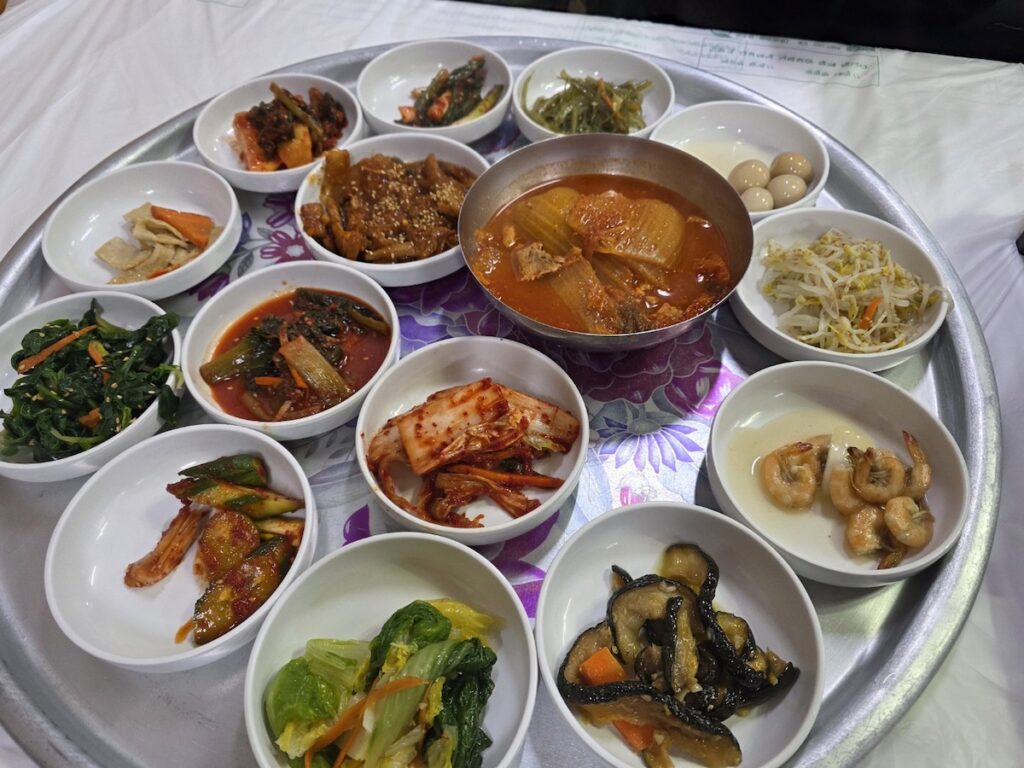
10 Best Korean Foods for Weight Loss offer a masterclass in high-volume, low-calorie dining that defies the restrictive nature of modern dieting. In a global landscape dominated by processed “diet” shakes, the traditional Korean table remains a sanctuary of whole-food satiety. This guide provides a definitive scientific breakdown of the most effective Korean dishes for metabolic health, transforming the “weight loss journey” into a sophisticated daily ritual of nourishment and clarity.
The Personal Narrative: A Ritual of Balance
When I lived in Australia, I often found myself overwhelmed by the heavy, calorie-dense options of the local food scene. It was then that I returned to my roots, rediscovering that the Korean meal structure isn’t just about “eating less”—it’s about “eating right.” By shifting my focus to fiber-rich, fermented, and steamed dishes, I managed to maintain my vitality and weight without ever feeling deprived. These 10 Best Korean Foods for Weight Loss are the exact rituals that sustained me.
The Scientific Calorie Ritual: Data-Driven Satiety
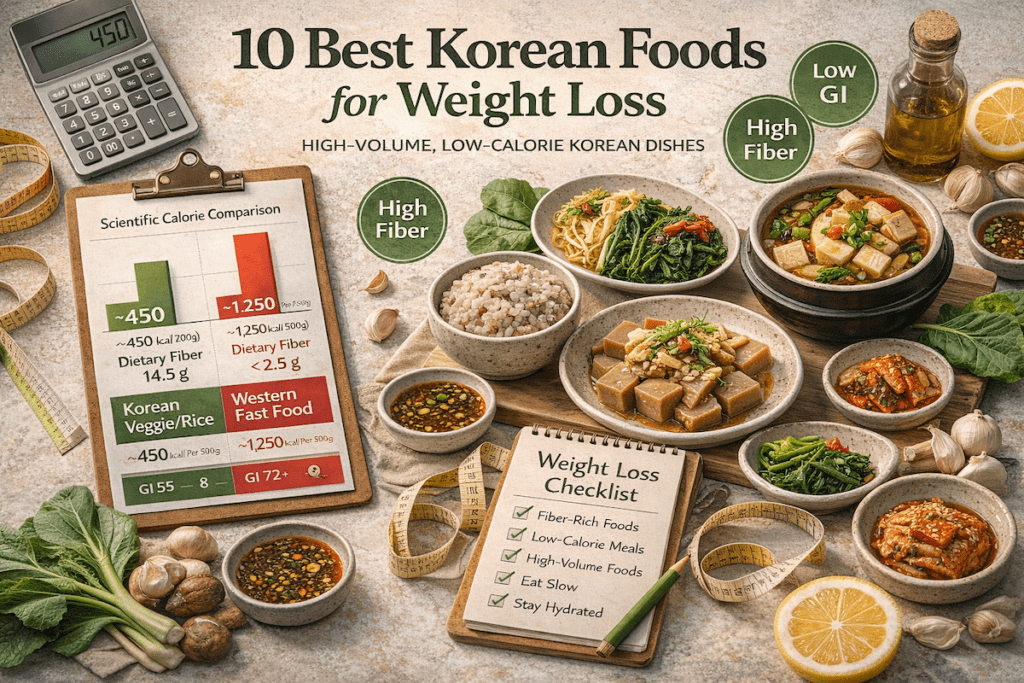
To master weight loss through Korean cuisine, one must understand the “Volume-to-Calorie” ratio. Korean food excels because it provides high physical volume (fiber and water) with remarkably low caloric density.
Comparative Analysis: High-Volume Nutrient Density vs. Caloric Density
(1) Meal Type: Western Fast Food (Burger/Fries)
- Caloric Density: ~1,250 kcal (Per 500g)
- Dietary Fiber: Less than 2.5g
- Glycemic Index (GI): High (72+)
(2) Meal Type: Traditional Korean (Veggie/Rice)
- Caloric Density: ~450 kcal (Per 500g)
- Dietary Fiber: More than 14.5g
- Glycemic Index (GI): Low (55)
Scientific Grounding: The Volumetric Satiety Comparison
The data above illustrates why the 10 Best Korean Foods for Weight Loss are superior for long-term metabolic health. While a standard Western meal packs nearly three times the calories into the same 500g physical volume, the Korean ritual provides over five times the dietary fiber. This structural difference triggers the stomach’s mechanoreceptors—the physical sensors that signal fullness to the brain—long before caloric excess is reached. By prioritizing these nutrient-dense options, you engage a “Natural Caloric Deficit” without the psychological stress of starvation.
Deep Dive: Why These Dishes Work
1. Boribap: The Ancient Fiber Ritual
Unlike white rice, Boribap (Barley Rice) contains high levels of Beta-Glucan, a soluble fiber that slows digestion and prevents insulin spikes. In the context of the 10 Best Korean Foods for Weight Loss, barley is the ultimate “slow-carb” foundation.
Scientific Grounding (Resistance Starch): According to a study published in the American Journal of Clinical Nutrition, the Beta-Glucan found in barley (Boribap) significantly lowers postprandial glucose levels compared to refined white rice. The thermal process of cooking and cooling barley increases its Resistant Starch (RS) content, which bypasses the small intestine and ferments in the colon, effectively acting as a natural metabolic regulator. This makes it an essential foundation for the 10 Best Korean Foods for Weight Loss.
2. Dotorimuk: The Zero-Fat Miracle
Acorn Jelly is perhaps the most underrated tool for weight management. With only 45 calories per 100g, it allows for high-volume consumption while the tannins help inhibit fat absorption—a scientific ritual hidden in plain sight.
Nutritional Biochemistry: Research conducted by the Korean Society of Food Science and Nutrition indicates that the Tannins in Acorn Jelly (Dotorimuk) interfere with the activity of digestive enzymes, thereby partially inhibiting the absorption of dietary fats and cholesterol. Its extremely low caloric density (0.45 kcal/g) combined with high satiety-inducing water content provides a unique “Negative Calorie” effect in a practical culinary ritual.
3. Doenjang Jjigae: The Metabolic Catalyst
The fermented soybean paste in Doenjang Jjigae provides Protease, which aids in breaking down proteins into energy. It is a “thermogenic” food that keeps your metabolism active during rest.
The Luxury Wellness Experience: Where To Dine in Seoul
For those seeking these 10 Best Korean Foods for Weight Loss in a sophisticated environment, Seoul’s luxury hotels offer “Wellness Menus” that prioritize caloric precision without sacrificing the cinematic dining experience.
- Eatanic Garden at Josun Palace: This MICHELIN-starred sanctuary reimagines the 10 Best Korean Foods for Weight Loss through a botanical lens. Their “Wellness Ritual” focuses on seasonal vegetables and rare ferments that optimize gut health.
- La Yeon at The Shilla Seoul: Experience the pinnacle of royal court cuisine, where the “Healthy Longevity” menu focuses on steamed proteins and fiber-rich Banchan, meticulously measured for caloric balance.
- Bicena at SIGNIEL Seoul: On the 81st floor, enjoy a “Light-Hearted Lunch” that uses aged ferments to enhance flavor without adding hidden sugars or fats.
The Professional Standard: Luxury establishments like Josun Palace and The Shilla employ registered dietitians to verify the 10 Best Korean Foods for Weight Loss. They utilize sous-vide and precision steaming techniques to preserve “Heat-Sensitive Nutrients” (Vitamins B and C), ensuring that the 10 Best Korean Foods for Weight Loss serve both aesthetic and physiological excellence.
Related Guides: Mastering Your Rituals
- 3 Best Korean Fermentation Rituals for Gut Health Science: Learn how the probiotics in Kimchi and Doenjang work synergistically with a low-calorie diet to prevent weight rebound.
- 7 Vegan Nurungji Breakfast Rituals for Morning Detox: Discover how the “Dextrinization” of scorched rice provides a clean energy source for your weight loss mornings.
- Beyond Cold: 7 Secrets of the Kimchi Refrigerator & Why You Need One in 2026: Master the storage science required to keep your low-calorie ferments at their peak nutritional value.
Action Plan: Your 7-Day Weight Loss Ritual
- Morning Hydration: Start with a bowl of Miyeok-guk to boost metabolism with natural iodine.
- Lunch Volume: Choose Boribap with at least 5 different types of seasonal Namul (vegetables).
- The “Hidden” Snack: Use Dotorimuk with a splash of soy sauce when hunger strikes between meals.
- Dinner Satiety: Opt for Soondubu Jjigae with extra mushrooms to ensure a high-protein, low-fat conclusion to your day.
- Audit Your Ssam: When eating protein, always use a “2:1 Vegetable-to-Meat” ratio—the ultimate Korean weight loss secret.
Conclusion: The Resilience of the Korean Table
The 10 Best Korean Foods for Weight Loss represent more than a temporary caloric deficit; they are a profound testament to a culture that has mastered the art of “eating for longevity” without sacrificing the soul of the dish. In a world increasingly dominated by the sterile efficiency of ultra-processed diet culture—where nutrients are stripped and synthetic fibers are added—the traditional Korean table remains a vibrant, breathing sanctuary of whole-food integrity. This is the ultimate “Resilience Ritual” for the modern human.
As I documented the intricate data behind Boribap and Dotorimuk, I was reminded of my own journey navigating the dense, high-calorie environments of Sydney and Melbourne. It wasn’t through deprivation that I found my balance, but through the realization that volume and health are not enemies. By embracing these ten culinary anchors, you aren’t just managing your weight; you are engaging in a sophisticated biological dance that optimizes your gut microbiome and stabilizes your metabolic rhythm.
This is the core philosophy of Korea on My Plate: a commitment to unveiling the cinematic and scientific layers of our heritage. These dishes—from the protease-rich Doenjang to the zero-fat miracle of Acorn Jelly—provide a roadmap for a lifestyle that is both physically lean and spiritually rich. We invite you to step away from the treadmill of unsustainable diets and return to the wisdom of the earth, the fire, and the fermented jar. Your weight loss journey shouldn’t be a battle against your body, but a daily celebration of the diverse, nutrient-dense life that the Korean table so generously provides.